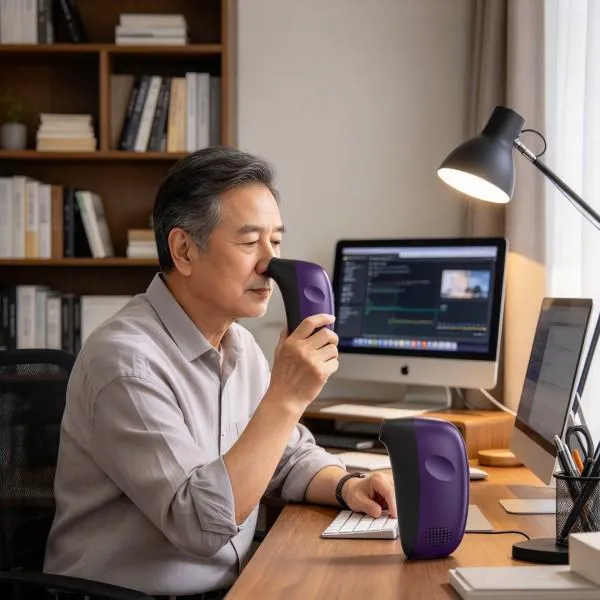
Persistent facial pressure and throbbing nasal congestion stem from trapped inflammatory fluid, swollen mucosal linings, and stagnant microcirculation deep within the maxillary and frontal sinus cavities. Because these air-filled pockets sit behind dense facial bone and cartilage, surface remedies rarely reach the root tissue bottleneck. Targeted 960nm photobiomodulation (PBM) delivers near-infrared light energy past superficial skin barriers directly into inflamed sinus membranes to stimulate cellular ATP production and restore natural lymphatic drainage. Unlike oral decongestants or medicated nasal sprays, this non-invasive physical therapy clears deep tissue stagnation without systemic metabolic toxicity, cardiovascular strain, or rebound congestion.
The Daily Grind of Stubborn Sinus Pressure
Anyone searching for reliable sinus headache cures knows the frustration goes far beyond a simple stuffy nose. It starts as a dull, heavy ache behind your cheekbones or right between your eyebrows the moment you wake up. By mid-afternoon, leaning forward to tie your shoes or look down at a laptop screen triggers a sharp, throbbing wave of cranial tension.
This constant physical drag disrupts basic daily routines:
Sueño fragmentado: Lying flat causes venous blood to pool in the nasal turbinates, turning mild daytime stuffiness into complete airway blockage at 2:00 AM. You wake up with a dry mouth, a pounding skull, and zero restorative rest.
Cognitive Fog: Chronic hypoxia (low oxygen delivery) to the surrounding cranial tissues leaves you mentally sluggish. Concentrating during work calls or driving feels like wading through wet cement.
Sensory Overload: Normal indoor lighting feels harsh, and mild background noise amplifies the dull percussion behind your eyes.
When the pressure spikes, most people cycle through the medicine cabinet in desperation. Yet conventional first-line options hit hard physiological walls:
Topical Decongestant Sprays (e.g., Oxymetazoline): While they shrink swollen blood vessels within minutes, using them for more than three consecutive days triggers rinitis medicamentosa—a severe rebound swelling that leaves your passages tighter than before.
Descongestionantes orales y AINE: Pseudoephedrine raises heart rate and blood pressure while drying out healthy protective mucus. Meanwhile, frequent ibuprofen or acetaminophen use irritates the stomach lining and taxes hepatic filtration without resolving the underlying mucosal edema.
Standard Warm Compresses and Steam: Pressing a hot towel against your face feels soothing on the skin, but thermal conduction drops off within millimeters. The heat simply cannot penetrate the dense cortical bone of the maxillary wall or the frontal sinus plate to reach the swollen inner lining.
The Root Pathology: Why Deep Sinus Tissues Stay Stuck
To understand how to help sinus pressure at its source, you have to look at the microscopic traffic jam happening inside your paranasal cavities. Your sinuses are lined with pseudostratified ciliated columnar epithelium—a delicate tissue layer covered in microscopic hair-like structures (cilia) that sweep mucus toward tiny drainage openings called ostia.
When an irritant, allergen, or lingering viral aftermath triggers an immune response, three things lock your sinuses into a self-sustaining inflammatory loop:
Microvascular Stasis and Tissue Hypoxia: Local capillaries dilate and become leaky, flooding the interstitial space with fluid. This swelling pinches off the tiny drainage ostia (often only 1 to 3 millimeters wide). Once sealed, oxygen levels inside the sinus cavity plummet, starving the mucosal cells of the energy needed to function.
Parálisis ciliar: Without adequate cellular energy, the microscopic cilia slow down or stop beating altogether. Thick, stagnant mucus accumulates, creating a heavy physical weight that presses directly against trigeminal nerve endings—producing that classic, radiating sinus headache.
Acumulación de residuos metabólicos: Sluggish lymphatic drainage allows pro-inflammatory cytokines (such as IL-1β and TNF-α), bradykinin, and lactic acid to pool in the tissue bed. These biochemical irritants continuously sensitize local pain receptors.
Surface-level painkillers merely mute the nerve signals traveling to your brain. They do nothing to clear the pooled fluid, restart ciliary sweeping, or oxygenate the suffocating mucosal lining.
The Biophysics of 960nm Photobiomodulation
In Physical Medicine and Rehabilitation (PMR), breaking a deep tissue metabolic deadlock requires delivering energy directly to the compromised mitochondria without burning the overlying skin. This is where wavelength selection becomes critical.
Why 960nm Outperforms Superficial Red Light
Standard consumer LED masks and basic red-light panels operate around 630nm to 660nm, or occasionally 810nm to 850nm. While 650nm wavelengths work well for superficial skin rejuvenation, melanin and hemoglobin in the upper dermis absorb most of those photons within the first 2 to 3 millimeters.
A Longitud de onda del láser de infrarrojo cercano de 960 nm sits inside a specific optical window that minimizes superficial scattering while maintaining strong affinity for mitochondrial chromophores. When applied externally over the maxillary cheeks, nasal bridge, and supraorbital ridge, 960nm photons penetrate through the epidermis, subcutaneous fat, and thin facial bone to reach the deep mucosal membranes lining the sinus cavities.
The Cellular Repair Cascade
Once 960nm photons reach the swollen sinus lining, they trigger a well-documented photochemical reaction inside the cells:
Activación de la citocromo c oxidasa: Photons are absorbed by Cytochrome c Oxidase (Complex IV), the terminal enzyme in the mitochondrial respiratory chain. Under chronic inflammation, nitric oxide (NO) binds to this enzyme and blocks oxygen utilization.
Fotodisociación del óxido nítrico: The 960nm light energy breaks the bond between nitric oxide and Cytochrome c Oxidase. This simultaneously frees up the enzyme to resume cellular respiration and releases free nitric oxide into the surrounding microvasculature.
ATP Surge and Ciliary Motility: With oxygen consumption restored, the mitochondria rapidly synthesize trifosfato de adenosina (ATP). This burst of cellular energy powers the sodium-potassium pumps to reduce cellular swelling and restarts the rhythmic beating of the mucosal cilia to clear trapped mucus.
Targeted Vasodilation and Lymphatic Clearance: The liberated nitric oxide relaxes smooth muscle in the local arterioles, widening micro-vessels to flush out trapped bradykinin and inflammatory cytokines while pulling excess interstitial fluid back into the lymphatic system.
This is not fringe wellness theory; photobiomodulation is an established modality in clinical rehabilitation medicine, backed by thousands of peer-reviewed trials examining its effects on mucosal edema, trigeminal neuralgia, and chronic rhinosinusitis.
Comparing At-Home Sinus Relief Approaches
When evaluating how do I clear my sinuses safely over the long term, comparing the physiological mechanics and financial realities of each option clarifies why superficial fixes fall short.
Dimensión de evaluación
Medicamentos orales y aerosoles medicinales
Warm Compresses & Standard 650nm Red Light
Fotobiomodulación profunda selectiva a 960 nm
Profundidad de penetración en los tejidos
Systemic circulation or surface mucosa only (0–1 mm topical)
Superficial epidermis and upper dermis (1–3 mm max)
Deep subcutaneous, periosteal, and sinus mucosal layers (up to 30–50 mm optical reach)
Mecanismo celular
Blocks histamine receptors, constricts vessels, or inhibits COX pain enzymes
Mild surface thermal vasodilation; negligible deep mitochondrial stimulation
Activates Cytochrome c Oxidase, boosts ATP synthesis, and releases endothelial Nitric Oxide
Efectos secundarios y riesgo de dependencia
High: rebound congestion (rinitis medicamentosa), elevated blood pressure, GI irritation
Very low: risk of minor skin dryness or superficial heat sensitivity
Minimal: non-pharmacological, zero chemical dependency, non-ionizing optical energy
Usabilidad en el hogar
High convenience, though dosing schedules and duration limits must be strictly tracked
Moderate: towels cool down within 3 minutes; large panels are awkward for facial contours
$180 – $450+ (recurring pharmacy refills, sprays, and co-pays)
$50 – $250 (low upfront cost, but low efficacy often drives repeat spending)
One-time hardware investment ($300 – $600 range) with zero recurring consumable costs
Clinical Case Record: Chronic Maxillary & Frontal Sinus Congestion
To illustrate how targeted 960nm therapy performs outside of a clinic setting, review the following structured clinical log documenting a home-based rehabilitation protocol for recurrent non-infectious sinus pressure.
Parámetro clínico
Detalles del caso documentado
Perfil del paciente
41-year-old male, software systems architect (non-smoker, history of seasonal allergies and dry indoor office exposure)
Clasificación clínica
Recurrent Chronic Rhinosinusitis without Nasal Polyps (CRSsNP); persistent bilateral maxillary and right frontal pressure (VAS Pain Score: 7/10)
Intervenciones anteriores
Daily saline irrigation, fluticasone nasal spray, intermittent oral pseudoephedrine, and nightly warm towel compresses (incomplete relief; severe morning rebound tightness)
Dispositivos y protocolos
Handheld 960nm near-infrared PBM unit (compact ergonomic form factor, 155mm × 50mm × 100mm); continuous/pulsed thermal-gated output
4 minutes per anatomical zone (12 minutes total per session), applied twice daily (7:30 AM and 9:00 PM) with gentle skin contact
Resultados de la semana 1
VAS Pain Score dropped from 7/10 to 4/10. Patient reported noticeable post-nasal drainage within 15 minutes of evening sessions and reduced morning facial heaviness.
Resultados de la segunda semana
VAS Pain Score reduced to 2/10. Nasal breathing remained unobstructed through the night without decongestant sprays. Morning brain fog resolved.
Resultados de la cuarta semana
VAS Pain Score stabilized at 0–1/10. Patient transitioned to a 3-times-weekly maintenance schedule; zero reliance on oral NSAIDs or medicated sprays over the following 60 days.
Real-World Patient Log: In His Own Words
“I spent three winters thinking I just had to live with a permanent brick behind my eyes. Every time the office HVAC kicked on, my right cheekbone would start throbbing by noon, and nasal sprays only gave me two hours of relief before locking my nose up tighter. The first time I held the 960nm unit against my cheek, I expected nothing because it doesn’t buzz or vibrate—it just feels like a clean, steady warmth sinking deep past the skin. About ten minutes after my third evening session, I felt this distinct popping sensation in my upper teeth and my sinuses actually started draining on their own. By week three, I realized I hadn’t reached for ibuprofen or Sudafed once.”
What to Expect: Sensations, Boundaries, and Safety
Establishing realistic expectations is essential before starting any physical therapy modality at home. Photobiomodulation is a biological catalyst, not an instant chemical anesthetic.
What Does 960nm Therapy Actually Feel Like?
Unlike TENS units or ultrasonic massagers, 960nm laser therapy produces sin hormigueo eléctrico, sin vibraciones y sin sensaciones agudas como de pinchazos. Because 960nm sits in the near-infrared spectrum with moderate water absorption, you will experience a gentle, penetrating warmth building steadily beneath the skin surface. This mild thermal comfort reflects increased local microcirculation and is completely distinct from harsh surface heating pads.
¿Quién es el candidato ideal?
Individuals dealing with recurring facial pressure, weather-triggered sinus tightness, or post-viral mucosal sluggishness.
Patients looking to step down from daily oral decongestants, antihistamines, or NSAIDs under their physician’s guidance.
People who need a portable, drug-free routine that fits easily into a morning or bedtime schedule.
Strict Contraindications and Safety Boundaries
To use near-infrared photobiomodulation responsibly, observe the following clinical boundaries:
Protect the Eyes: Never aim the laser aperture directly into the eyes or hold it over closed eyelids. When treating the frontal sinus above the eyebrows, keep the emitter angled upward away from the orbital socket, and wear protective optical eyewear if treating near the upper nasal bridge.
Neoplasia maligna activa: Do not apply light therapy directly over known or suspected cancerous lesions or tumors, as increased cellular metabolism and blood flow are contraindicated in active oncological sites.
Acute Hemorrhage or Active Nosebleeds: Because 960nm stimulates local vasodilation, wait until any active nasal bleeding has fully clotted and healed before resuming sessions.
Implanted Electronic Devices & Pregnancy: Avoid direct application over pacemakers, neurostimulators, or across the abdomen/pelvis during pregnancy. If a physician has explicitly advised you to avoid local heat therapy due to a specific vascular or neurological condition, consult them first.
Realistic Recovery Timeline and the Long-Term Math
Tissue repair follows biological clocks, not marketing promises. When integrating a dedicated home device—such as the clinical-grade handheld systems detailed on the NeuroLumax home sinusitis and rhinitis treatment resource—your recovery typically unfolds across three distinct phases:
Phase 1: Microcirculatory Ignition (Days 1–14)
During the first two weeks, primary changes occur at the vascular and fluid-dynamic level. Nitric oxide release widens constricted capillaries, and localized warmth softens thickened mucus. You will likely notice your sinuses starting to drain shortly after sessions, accompanied by a gradual drop in sharp throbbing behind the eyes and cheeks.
As sustained ATP production restores normal ciliary beating, trapped inflammatory byproducts clear out of the maxillary and frontal cavities. The mucosal lining physically thins out, keeping the drainage ostia open even when barometric pressure drops or indoor air turns dry. Reliance on rescue medications typically drops sharply during this window.
Fase 3: Mantenimiento preventivo (semana 5 y siguientes)
Once baseline comfort returns, daily sessions are no longer necessary. Applying the device for 10 minutes two to three times per week—or immediately after exposure to dust, allergens, or long flights—keeps microcirculation active and prevents minor irritation from snowballing into a full-blown sinus headache.
The Financial Logic of Home Ownership
A single outpatient visit to an ENT specialist or physical therapy clinic for therapeutic laser sessions typically runs between $85 and $150 per appointment, requiring two to three visits per week for a month—easily totaling $1,000+, not counting fuel and lost work hours. Equipping your home medicine cabinet with a compact, durable 960nm handheld unit consolidates that clinical capability into a single upfront purchase. Because the solid-state diodes require no replacement cartridges or gels, the device serves your entire household for years at a fraction of recurring pharmacy and clinic bills.
Preguntas frecuentes
How close should I hold the 960nm emitter to my face during a session?
In my clinical practice, I advise placing the smooth treatment window gently and directly against clean, dry skin over the cheekbone or brow ridge. Direct contact minimizes surface light reflection and allows the 960nm photons to penetrate straight through the tissue rather than scattering into the air. Keep the skin free of heavy creams, oils, or makeup beforehand so nothing absorbs the light at the surface.
Can I combine 960nm photobiomodulation with saline nasal rinses?
Yes, and I actually recommend pairing them in a specific order. Perform your isotonic saline rinse first to mechanically flush out loose surface mucus and allergens from the nasal passages. Wait five minutes, gently blow your nose, and then apply the 960nm laser externally over your maxillary and frontal sinuses. Clearing the outer nasal airway first gives the deep mucosal fluid mobilized by the light therapy an unobstructed exit path.
Why shouldn’t I just use a regular heating pad on my face for sinus pressure?
A standard electric heating pad or hot washcloth relies purely on conductive heat, which warms the top layers of your skin but gets rapidly carried away by superficial blood vessels before ever reaching the sinus wall. Worse, excessive surface heat can actually trigger reflex swelling in superficial facial veins, making nasal stuffiness feel heavier. Targeted 960nm light bypasses this thermal bottleneck by delivering non-ionizing photons directly into the deeper mucosal mitochondria to stimulate cellular energy and lymphatic drainage from the inside out.
La congestión mamaria persistente y las obstrucciones ductales recurrentes se prolongan porque los lechos capilares circundantes pierden líquido intersticial, lo que provoca una inflamación que oprime mecánicamente los delicados conductos lácteos desde el exterior, obstruyéndolos. Para las madres en el posparto que buscan...
La parálisis del nervio facial persiste porque el atrapamiento mecánico dentro del canal de Fallopio, de estructura rígida, obstaculiza la perfusión microvascular del nervio craneal VII, lo que provoca isquemia perineural y bloqueos de conducción que los esteroides orales sistémicos no siempre pueden resolver...
Una fisioterapia eficaz para el codo de golfista debe abordar el colapso circulatorio localizado en el epicóndilo medial, donde el tendón flexor común se une al hueso. La epicondilalgia medial persiste porque las lesiones por microtracción aplastan el escaso...
La rinitis alérgica persistente se convierte en un ciclo crónico cuando el edema de la mucosa no tratado comprime las anillas capilares paranasales, lo que provoca que los líquidos inflamatorios queden atrapados en el tejido más profundo de los cornetes. Aunque los remedios caseros convencionales para la rinitis alérgica se centran...
 Dispositivo terapéutico portátil para uso doméstico