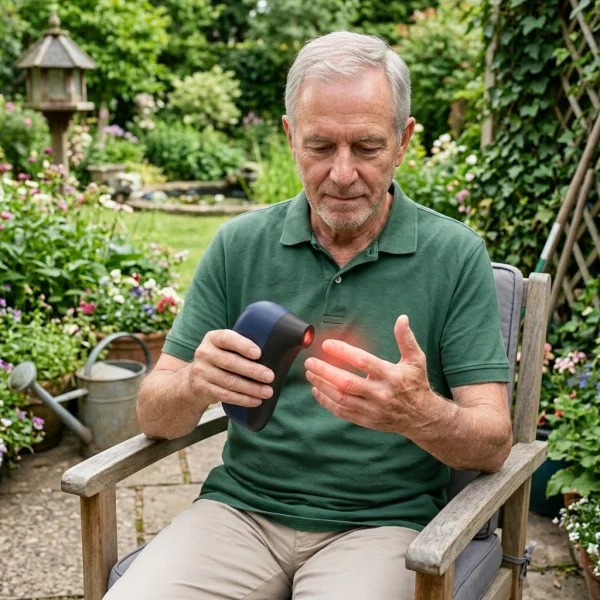
A lasting tennis elbow fix fails to materialize when treatment stops at surface numbing, ignoring the avascular nature of the extensor carpi radialis brevis (ECRB) tendon insertion. Lateral epicondylalgia persists because dense, hypovascular collagen bands lock damaged fibers into chronic micro-ischemia, trapping metabolic pain triggers within the tendon junction. Targeted 960nm photobiomodulation (PBM) breaks this biological deadlock by driving photonic energy through dense fascial layers straight into ischemic tendon attachments. Unlike systemic anti-inflammatory pharmaceuticals that burden gastrointestinal and renal filters, focused 960nm energy promotes local collagen realignment and microvascular washout without systemic toxicity.
The Daily Frustration of Grip Failure and Conventional Treatment Walls
Anyone dealing with lateral epicondylalgia knows how quickly a localized elbow ache disrupts daily routines. It begins as a tight twinge on the outer bump of your elbow, rapidly turning into sharp, burning pain whenever you pick up a full coffee mug, turn a stubborn doorknob, or shake hands.
Working at a desk becomes an ongoing struggle. Typing and gripping a computer mouse trigger an aching burn down the back of your forearm, while resting your forearm against the edge of a desk sends sharp zings across the tendon bone anchor. At night, shifting positions or pulling up bed sheets pulls at the extensor tendon, waking you up with a deep, throbbing ache that makes restorative sleep nearly impossible.
NSAIDs and Oral Pain Relievers: Ibuprofen and naproxen dampen acute pain receptors, but chronic tennis elbow is primarily a degenerative tendinosis (collagen breakdown) rather than an acute inflammatory flare. Pills do not rebuild tendon tissue and carry gastric bleeding and renal risks with prolonged use.
Topical Gels and Counter-Irritants: Menthol, capsaicin, and topical pain creams deliver a distracting surface sensation on the epidermis, yet fail to penetrate the tough, fibrous fascia encasing the lateral epicondyle.
Cortisone Injections: Steroid shots frequently deliver short-term symptom suppression, but clinical trials show they weaken collagen architecture over time, raising long-term relapse and tendon tear risks.
Unstructured Forearm Stretches: Aggressive pulling and wrist flexion on cold, ischemic tendons during acute flare-ups often tears fragile micro-vessels, worsening tendon-bone microtrauma.
Pathological Impasse: The Hypovascular Metabolic Trap in the ECRB Tendon
The biological barrier in chronic tennis elbow lies in the unique micro-anatomy of tendon-to-bone junctions (entheses). Tendons possess less than 10% of the blood flow found in surrounding skeletal muscles.
When repetitive micro-strain overloads the ECRB origin, disorganized scar tissue forms without proper microvascular support. The regional micro-vessels compress, creating a localized hypoxic state.
Without sufficient oxygen supply, local tenocytes (tendon cells) cannot synthesize structural Type I collagen fibers. Instead, immature Type III collagen forms haphazardly, while toxic waste byproducts such as substance P, glutamate, and lactate stagnate around local nociceptors. Surface ice packs or superficial heat cannot flush out this deep chemical stasis because avascular scar tissue acts like a dense biological barricade.
Photobiology at 960nm: Penetrating Dense Tendon Enclosures
Achieving meaningful tissue repair requires delivering therapeutic photon energy through the dense forearm extensor fascia and cortical periosteum without dissipating as skin-level heat.
Skin Epidermis       ───────────────────────────────
                     │  650nm (Trapped in superficial melanin/skin)
Subcutaneous Fat     │  850nm (Absorbed by hemoglobin in muscles)
                     ▼
Dense Tendon Fascia  ════════════════════════════════
ECRB Tendon Origin   │
& Periosteal Surface │  960nm (Optimized deep photon pathway;
                     │        passes through dense collagen matrix)
                     ▼
While 650nm visible red light serves skin wounds and 850nm light supports surface muscle bellies, both scatter significantly when encountering the dense, fibrous layers of chronic tendinopathy. A targeted 960nm wavelength utilizes an optical depth window characterized by low hemoglobin absorption and controlled water affinity, allowing focused photon transmission 15mm to 30mm beneath the surface into dense collagen and bone margins.
Upon reaching hypoxic tenocytes and periosteal beds, 960nm light triggers an evidence-based biological chain:
Mitochondrial Enzyme Excitation: 960nm photons target Cytochrome c Oxidase within the mitochondrial respiratory chain, freeing up enzyme binding sites and boosting adenosine triphosphate (ATP) output.
Tenocyte Bio-synthesis: Increased ATP enables tenocytes to initiate proper protein synthesis, replacing disorganized Type III collagen with resilient, load-bearing Type I cross-linked collagen bundles.
Nitric Oxide Micro-Shunt Activation: Photonic displacement releases endothelial nitric oxide (eNO), forcing constricted microcapillaries to open, washing out acidic metabolites and reducing local nerve hypersensitivity.
Lymphatic Decongestion: Resumed capillary circulation drains fluid stagnation around the epicondyle, easing mechanical tension on the extensor origin.
This mechanism represents an established discipline in modern physical medicine and rehabilitation engineering, delivering verified biophysical stimuli directly where blood flow is chronically limited.
Multi-Modal Treatment Comparison
Evaluation Dimension
Oral NSAIDs & Cortisone Injections
Cold Packs & Standard 650nm Cosmetic Lamps
Targeted 960nm Deep Tissue Photobiomodulation
Tissue Penetration Depth
Systemic circulatory transport
Surface skin (1–3 mm); blocked by dense fascia
Deep structural depth (15–30 mm); reaches tendon-bone enthesis
Cellular Mechanism
Cyclooxygenase (COX) blockade or steroid immunosuppression
Passive epidermal thermal transfer / skin light
Cytochrome c Oxidase activation & collagen fiber remodeling
Recurring drug costs & clinical copays ($300–$800+)
Negligible cash cost; high long-term failure rate
One-time equipment investment; multi-joint family utility
Documented Clinical Recovery Record
This real-world clinical tracking illustrates functional improvements observed during a comprehensive home recovery protocol combining 960nm deep tissue light with controlled physical therapy loading.
Initial Evaluation: PRTEE (Patient-Rated Tennis Elbow Evaluation) Score: 68/100; Maximum Pain-Free Grip Strength: 14 kg (unaffected left side: 42 kg); severe pain upon lifting an electric hand drill
Protocol Setup: Handheld 960nm PBM unit; direct contact perpendicular to lateral epicondyle and ECRB tendon belly; 6 minutes per point (12 minutes total daily session); paired with progressive eccentric wrist extensions
Clinical Progress Tracking Log
Evaluation Interval
PRTEE Score (0–100)
Pain-Free Grip Strength (kg)
Functional Range & Daily Task Tolerances
Day 0 (Baseline)
68
14 kg
Inability to lift a 1-quart carton; sharp pain turning screwdrivers
Week 1 (Day 7)
55
18 kg
Reduction in nocturnal aching; forearm extensor stiffness softens
Week 2 (Day 14)
38
24 kg
Able to hold coffee mugs comfortably; typing no longer triggers burning
Week 3 (Day 21)
22
31 kg
Progressive eccentric dumbbell work tolerated; no reactive next-day swelling
Week 4 (Day 28)
9
39 kg
Unrestricted return to power tools; pain-free grip within 90% of left side
“I spent over a year dreading every turn of a wrench or handshake at work, waking up every morning with that sickening ache on the outside of my arm. Braces and ice packs only masked the problem while I sat still. Using the 960nm wand directly over the sore bone anchor each night loosened that frozen, knotty tension in my forearm. Within three weeks, my grip felt solid again, and I could finally carry heavy equipment without my elbow giving out.”
— Verified home protocol participant record
Operating Boundaries, Physical Sensation, and Safety Limits
Applying a medical-grade 960nm handheld wand produces a deep, soothing sensation of internal warmth. Because this relies on non-ablative photobiomodulation rather than surgical-grade destructive lasers or intense electrical stimulation, you will not experience electrical shocks, sharp skin stinging, or surface burns.
Appropriate Candidates for Self-Directed Home Care
Individuals with chronic, recurrent lateral elbow soreness lasting longer than six weeks.
Professionals, mechanics, athletes, and desk workers who need an evidence-based tennis elbow treatment and exercises routine.
Anyone seeking a non-invasive, drug-free tennis elbow fix to avoid repeated cortisone shots or surgical debridement.
Essential Contraindications and Medical Precautions
Active Oncological Sites: Never apply photobiomodulation directly over known or suspected malignant tissue.
Acute Local Infections: Do not treat areas displaying severe erythema, heat, visible pustules, or open skin ulcerations.
Implanted Medical Electronics: Avoid placing the emitting head directly over internal cardiac or neurological pacing units.
Acute Bleeding Episodes: Do not use over fresh hematomas or areas with active vascular hemorrhage.
Progressive Recovery Phases Combined with Home Rehabilitation
Phase 1: Microvascular Activation (Weeks 1 - 2)
├── Daily 960nm sessions (10-12 mins) to wash out ischemic metabolites
├── Gentle isometric wrist extensions (pain-free static holds, 5 x 30s)
└── Relief of sharp gripping pain and morning extensor stiffness

Phase 2: Collagen Realignment & Load Recovery (Weeks 3 - 4)
├── Maintain daily 960nm therapy directly prior to loading sessions
├── Progressive eccentric training (slow downward wrist lowering with light weight)
└── Significant restoration of grip strength and functional arm use

Phase 3: Functional Durability & Long-Term Maintenance
└── 2-3 weekly maintenance sessions post-heavy exertion to prevent microtrauma buildup
The Cost Reality of Modern Tendon Recovery
Outpatient physical therapy clinics and specialized shockwave therapy courses routinely charge between $100 and $220 per session, quickly climbing past $1,500 for a multi-week package. Integrating an ergonomic, compliant 960nm handheld device provides high-grade physical medicine parameters in your own home, giving your entire family access to targeted joint and soft tissue recovery whenever overuse occurs.
Home Care Questions Answered
Should I combine light sessions with eccentric forearm exercises?
Yes. Photons energize mitochondrial ATP output and stimulate local blood flow, making the tendon more pliable. Performing slow, controlled eccentric wrist extensions right after a 960nm session applies healthy mechanical tension that guides newly synthesized collagen fibers into strong, parallel rows.
How does 960nm light differ from an electric heating pad?
An electric heating pad transfers convective heat strictly to the surface skin, which can dilate cutaneous capillaries without ever passing through the dense extensor fascia. The 960nm near-infrared beam bypasses surface tissue absorption, depositing concentrated photonic energy directly inside the ischemic tendon core.
How long does each home elbow session take?
A standard application takes 10 to 12 minutes per arm. Focus the light aperture on the tender lateral epicondyle bone point for 5 to 6 minutes, then shift the beam slightly down the muscular belly of the forearm extensors for an additional 5 to 6 minutes.
Chronic rhinitis persists because deep submucosal venous sinusoids in the nasal turbinates remain locked in vascular congestion and fluid stagnation, starving local tissues of oxygen. Targeted 960nm photobiomodulation directs near-infrared photon ...
Effective treatment of enlarged prostate symptoms frequently stalls because deep pelvic stromal tissue becomes locked in a cycle of venous stagnation, localized oxygen deprivation, and chronic smooth muscle tension. Targeted 960nm photobiomodulati...
Chronic nasal swelling stems from persistent tissue hypoxia and impaired lymphatic drainage deep within the facial bones. Rather than chemically constricting surface capillaries, targeted 960nm photobiomodulation penetrates the dense nasal bridge ...
 Handheld Home-Use Therapy Device