 휴대용 가정용 치료 기기













약해진 팔뚝 힘줄을 회복시키는 테니스 엘보 치료법
249테니스 엘보를 근본적으로 치료하려면, 총 신전근 건이 상완골 외측에 부착되는 부위의 만성적인 혈류 부족 문제를 해결해야 합니다. 외측 상과통이 오래 지속되는 이유는 요골 측 수근 신전근의 조밀하고 섬유질인 부착부 때문에...
자세히 보기상품 검색게시물 검색
Stubborn facial pressure and throbbing sinus headache treatment challenges persist when deep paranasal sinus linings remain locked in microvascular stagnation, tissue hypoxia, and swollen drainage pathways that oral pills and surface sprays fail to clear. Targeted 960nm photobiomodulation (PBM) transmits near-infrared photons through overlying skin and thin facial bone to stimulate mitochondrial energy synthesis and restore natural sinus drainage without systemic drugs. Unlike recurring painkillers or medicated nasal sprays, this non-invasive physical approach carries zero gastrointestinal toxicity and eliminates the risk of rebound nasal congestion.
Anyone who deals with recurrent sinus pressure knows it is far more than a minor headache. It feels like a tight, pressurized vise gripping the bridge of your nose, radiating deep behind your eyes, and throbbing across your upper cheekbones every time you bend over to tie your shoes.
The disruption touches every part of a normal day:
Most adults cycle through standard pharmacy options for 부비동염 치료 before hitting predictable physiological roadblocks:
To understand why conventional 부비동염 치료법 frequently stall, look inside the narrow ostia—the tiny millimeter-wide channels connecting your paranasal sinuses to your nasal cavity. Healthy sinus linings rely on synchronized microscopic hair cells (cilia) and brisk submucosal blood flow to sweep mucus out continuously.
When prolonged irritation—from environmental allergens, dry heated air, barometric shifts, or lingering post-viral inflammation—inflames those linings, microvascular control breaks down. Rapid arterial-venous exchange slows into sluggish venous pooling.
This circulatory bottleneck starves deep mucosal cells of oxygen, creating localized tissue hypoxia. Deprived of oxygen, cells shift toward inefficient anaerobic metabolism, accumulating lactic acid, pro-inflammatory cytokines (such as IL-1β and TNF-α), and pain-sensitizing bradykinin. At the same time, sluggish lymphatic vessels fail to drain excess interstitial fluid, swelling the sinus ostia shut.
Once those narrow drainage channels seal off, pressure builds inside the closed sinus cavity—producing that unmistakable throbbing facial headache. Surface sprays never reach past the blocked ostia, leaving the hypoxic, swollen tissue trapped in a self-perpetuating cycle.
In physical medicine and rehabilitation engineering, optical wavelength governs biological reach. Standard consumer red light panels rely on 630nm to 660nm wavelengths, which scatter rapidly in skin melanin and superficial hemoglobin within 1 to 2 millimeters. Even common 810nm or 850nm near-infrared LEDs lose significant photon density when encountering facial cartilage and the thin anterior walls of the maxillary and frontal sinuses.
그 960nm 근적외선 파장 occupies a distinct optical window that pairs low melanin scattering with controlled water-chromophore interaction. This optical behavior allows therapeutic photon density to pass through facial skin, traverse thin maxillary and frontal bone plates, and reach the deep mucosal linings of the paranasal sinuses.
Once 960nm photons reach oxygen-starved sinus cells, three well-documented biophysical events unfold:
Modern rehabilitation science treats photobiomodulation as a calibrated, dose-dependent biophysical modality rather than superficial warmth. Applying focused 960nm optical energy directly over external sinus landmarks addresses the exact microcirculatory stagnation driving recurring sinus headaches.
Evaluating sinus headache treatment choices becomes far clearer when you compare tissue penetration depth, cellular impact, and long-term safety across common options.
| 임상적 측면 | Oral Painkillers & Nasal Sprays | Warm Compress & Standard 660nm Red Light | 960nm 표적 심부 광생물조절 |
| 조직 침투 깊이 | Surface nasal mucosa only (sprays) or systemic bloodstream (oral pills). | Superficial (0.5mm to 2mm); blocked by skin barrier and facial bone. | Deep penetration (15mm–30mm), reaching maxillary and frontal sinus linings. |
| 세포적 기전 | Blocks pain receptors, constricts vessels, or suppresses immune signaling. | Surface skin warmth or shallow epidermal photostimulation. | Activates Cytochrome c Oxidase, boosts ATP synthesis, and restores microvascular flow. |
| 부작용 및 의존성 위험 | Stomach irritation, rebound congestion, mucosal bleeding, and drowsiness. | Minimal; potential skin dryness from prolonged hot compresses. | Non-pharmacological; zero chemical dependency, GI strain, or rebound swelling. |
| 일상생활의 편리함 | Easy to carry, yet tied to dosing intervals and recurring pharmacy refills. | Compresses cool within minutes; large LED panels lack focused sinus placement. | Compact handheld form enables dry, targeted 10-minute home sessions. |
| 1년 누적 비용 | $260 to $600+ annually in recurring medications, sprays, and co-pays. | $50 to $200 upfront, with minimal impact on deep paranasal sinus edema. | One-time device investment; zero recurring consumable or refill costs. |
The following structured observation record documents how consistent home application of a handheld 960nm photobiomodulation device (ergonomic 155mm × 50mm × 100mm housing designed for targeted facial sinus and musculoskeletal placement) supported an adult managing recurrent non-bacterial sinus headaches and chronic rhinosinusitis.
| Observation Parameter | Documented Clinical & Home Details |
| Case Tracking ID | PMR-ENT-2026-1128-SH |
| 환자 프로필 | 46-year-old Female, Certified Public Accountant (Non-smoker) |
| 임상 분류 | Recurrent Chronic Non-Bacterial Rhinosinusitis with Maxillary & Frontal Sinus Headaches; 3.5-year history; triggered by seasonal barometric changes and dry office HVAC air; CT-confirmed mucosal thickening without polyps. |
| Baseline Status (Week 0) | SNOT-22 Score: 54/110; Facial Pain/Pressure VAS: 7.5/10 during flares (3–4 days/week). Morning brow and cheekbone tenderness, broken sleep, reliance on ibuprofen 4–5 times weekly plus daily saline rinses. |
| Home Application Protocol | External 960nm near-infrared PBM applied gently over bilateral maxillary sinus zones (beside nasal bridge/under cheekbones) and supraorbital frontal zones. 10 minutes per session (5 minutes per side), once every evening, 5 days/week. |
| Week 2 Assessment | SNOT-22 Score: 38/110; Facial Pain VAS: 4.5/10. Patient reported comforting deep warmth across cheekbones during sessions followed by noticeable sinus drainage sensation and reduced morning brow pressure. |
| Week 6 Assessment | SNOT-22 Score: 21/110; Facial Pain VAS: 2.0/10. Weekly sinus headache days dropped from 4 days/week to 1 mild episode every two weeks; oral NSAID use reduced by over 80%. |
| Week 12 Assessment | SNOT-22 Score: 12/110; Facial Pain VAS: 0.5/10. Restored uninterrupted night sleep and clear daytime focus. Transitioned to preventive maintenance (3 sessions/week, 10 minutes each). |
| Safety & Adverse Events | None reported. Steady, relaxing internal tissue warmth noted during sessions with zero skin irritation or mucosal dryness. |
Setting realistic expectations builds lasting confidence in any physical rehabilitation routine. Because 960nm near-infrared light interacts gently with tissue water while penetrating deeply beneath facial bones, it produces a distinct physical sensation compared to cold red LED lights.
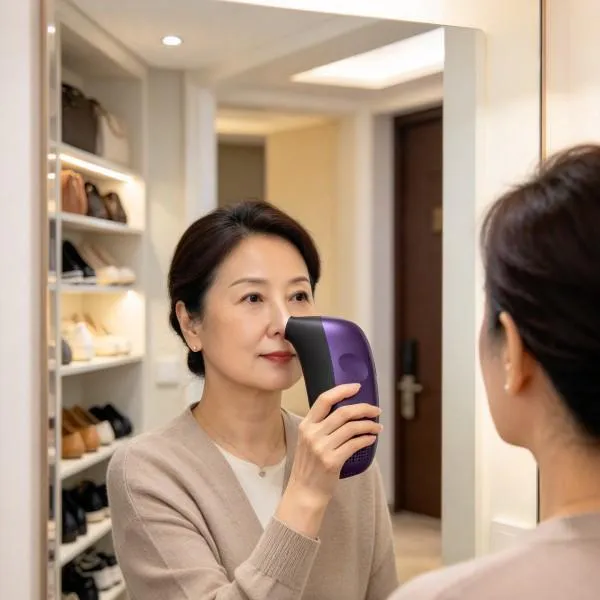
Deep mucosal recovery follows natural biological pacing rather than overnight shortcuts. Consistent sessions allow cellular ATP levels and lymphatic drainage to build cumulative momentum.
Visiting an outpatient physical therapy or integrative ENT clinic for targeted photobiomodulation routinely costs $70 to $125 per session, totaling $840 to $1,500 for a standard 12-session course—before accounting for commuting and missed work hours.
Owning a dedicated handheld 960nm therapy unit transforms that equation. A compact device engineered for precise anatomical placement lets you complete a quiet 10-minute session on the couch before bed without booking appointments or buying monthly painkiller refills. Moreover, because the exact same 960nm penetration depth relieves stiffness in sore shoulders, knees, and wrists, one unit supports practical pain and inflammation care for the whole household over many years.
“Every time a rain front rolled in or the office heat kicked on, I’d get that throbbing pressure right behind my eyes and across my upper teeth. I hated taking ibuprofen four days a week just to get through spreadsheets, and nasal sprays always left me worse off by Friday. When I started using a 960nm handheld light device over my cheekbones and brow every night, the deep, gentle warmth felt like it was finally loosening that locked-up tension inside my face. By week three, I woke up realizing my head actually felt light and clear—no bruised feeling when I washed my face, and no afternoon brain fog. Now I just use it three evenings a week, and those heavy sinus headaches rarely show up anymore.”
— Claire M., 46, Chicago, IL
If you are ready to establish a steady, drug-free physical care routine for stubborn facial pressure and recurring sinus congestion, review the technical parameters and step-by-step placement protocols on the https://neurolumax.com/sinusitis-rhinitis-treatment-at-home/ resource page to see how targeted 960nm photobiomodulation fits into daily home recovery.
1. Where exactly should I place a 960nm handheld device for sinus headaches? I recommend dividing your 10-minute session across the main paranasal sinus zones: hold the emitter gently against the skin beside the bridge of your nose and just below your cheekbones (maxillary sinuses) for 3 to 4 minutes per side, then spend 1 to 2 minutes along the inner brow ridge above your nose (frontal sinuses) with your eyes closed.
2. Can I use 960nm light therapy alongside daily saline sinus rinses? Yes, combining them works very well. I always suggest performing your saline rinse first to clear thick surface secretions, gently patting your face completely dry with a towel, and then applying the 960nm light so near-infrared photons penetrate clean skin without scattering off water droplets.
3. Why does 960nm light reach deeper than standard red light masks? Consumer red light masks use low-power 630nm to 660nm LEDs that scatter within the top 2 millimeters of skin. Because 960nm sits in a deeper optical penetration window with higher targeted energy density, photons pass through thin facial bone to warm and stimulate the underlying sinus mucosa directly.
Few everyday discomforts drain your patience faster than carrying a heavy, throbbing ache behind your eyes from morning until night—wincing when you bend forward, losing deep sleep to nasal blockage, and relying on pills that only mute the pain temporarily. Seeing someone finally put away the bottle of pain relievers, sleep comfortably on their side again, and start the morning with a clear, light head demonstrates what happens when you restore deep tissue circulation instead of masking symptoms. With ten minutes of targeted 960nm support each evening, calm, comfortable sinus pressure relief can become part of your regular routine.
테니스 엘보를 근본적으로 치료하려면, 총 신전근 건이 상완골 외측에 부착되는 부위의 만성적인 혈류 부족 문제를 해결해야 합니다. 외측 상과통이 오래 지속되는 이유는 요골 측 수근 신전근의 조밀하고 섬유질인 부착부 때문에...
자세히 보기전립선 심부 조직이 정맥 정체, 조직 저산소증, 림프 순환 장애 상태에 갇혀 있을 경우, 지속적인 골반 부위의 경직, 약한 배뇨량, 그리고 회음부 깊숙한 곳의 통증이 지속됩니다. 표적화된 960nm 광생물조절요법(PBM)은 비...
자세히 보기재발성 유관 폐쇄와 염증성 유방염이 지속되는 이유는 국소적인 조직 부종이 섬세한 유관을 압박하여 막아버리기 때문이며, 이로 인해 주변 실질 조직이 미세혈관 허혈과 체액 정체 상태에 빠지게 됩니다. 표적화된 960nm 광생체조절은 ...
자세히 보기치료가 표면적인 마취에 그치고, 요측 수근 신근(ECRB) 건 부착부의 무혈관적 특성을 간과할 경우, 테니스 엘보의 지속적인 호전은 기대하기 어렵습니다. 측부 상과통이 지속되는 이유는 조밀하고 혈관이 부족한 결합조직...
자세히 보기