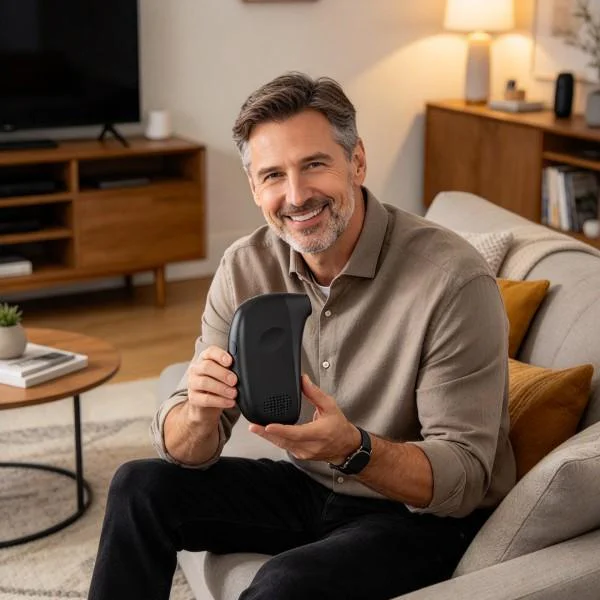
Erectile decline persists because pelvic microvascular congestion, cavernous smooth muscle hypoxia, and deep endothelial dysfunction lock the genital vascular bed into an ongoing metabolic deadlock that temporary pills cannot structurally repair. For men researching what is the latest treatment for erectile dysfunction beyond on-demand pharmaceuticals, targeted 960nm photobiomodulation (PBM) offers a non-invasive physical therapy method that passes straight through dense pelvic fascia and muscular layers to restore microvascular perfusion and cellular bioenergetics. Unlike oral PDE5 inhibitors that burden cardiovascular pathways, this physical light technology delivers zero metabolic toxicity to your heart, liver, or kidneys while providing the cellular stimulation necessary to rebuild natural vascular responsiveness.
The Daily Toll of Performance Decline and First-Line Treatment Limits
Experiencing persistent sexual decline creates a silent, demoralizing burden that reaches far beyond the bedroom. It begins with erratic firmness, progressing until morning erections vanish and spontaneous intimacy turns into an exercise in high performance anxiety.
The emotional toll creeps into daily life. You second-guess your masculinity, withdraw emotionally from your partner, and carry a quiet dread that your body is breaking down. At work, lingering frustration saps mental focus and drive. Over time, physical intimacy is avoided altogether because the anticipation of failure feels worse than the absence of closeness.
Men exploring home remedies for erectile dysfunction and impotence or evaluating common natural remedies for erectile dysfunction often hit clear biological roadblocks with conventional solutions:
Oral PDE5 inhibitors: Provide temporary chemical vasodilation for a few hours, but they do nothing to reverse underlying smooth muscle fibrosis or microvascular loss, frequently causing headaches, facial flushing, nasal congestion, and dangerous blood pressure drops in men with cardiovascular issues.
Vacuum constriction devices and constriction rings: Mechanically pull venous blood into the shaft, but the resulting erection is often cold, bruised, and uncomfortable, failing to address the deep arterial inflow problem in the perineal tissue bed.
Over-the-counter herbal supplements: Unregulated formulas carry inconsistent dosages, risk liver enzyme strain, and lack the physical energy to alter deep endothelial nitric oxide bioavailability within pelvic tissue.
The Pathological Reality: Endothelial Hypoxia and Pelvic Congestion
Persistent erectile difficulties are fundamentally a vascular and cellular issue rather than just a psychological state.
Chronic Microvascular Endothelial Injury
  ↓
Pelvic Deep Venous Stasis & Smooth Muscle Hypoxia
  ↓
Mitochondrial ATP Depletion & Blunted Nitric Oxide Production
  ↓
Cavernous Smooth Muscle Fibrosis & Loss of Penile Tumescence
The erectile response relies on rapid arterial influx through deep cavernosal arteries accompanied by the complete relaxation of trabecular smooth muscle. With age, repetitive pelvic tension, and subclinical metabolic changes, local microcapillaries undergo endothelial blunting.
Deprived of steady oxygen delivery, endothelial cells cannot produce sufficient baseline nitric oxide to trigger cGMP-mediated relaxation. Meanwhile, cellular byproducts and acidic metabolites linger within the dense pelvic floor musculature, leaving smooth muscle fibers rigid, fibrotic, and unable to trap arterial blood against the tunica albuginea. Superficial treatments fail because they lack the physical energy to reach through dense perineal fascia and deep cavernosal roots.
The 960nm Breakthrough: Rebuilding Microcirculation Below Dense Pelvic Fascia
When physical medicine and rehabilitation specialists evaluate regenerative physical modalities for pelvic vascular health, wavelength penetration depth determines clinical success.
Optical Physics: Why 960nm Reaches Where Red Light Stops
Common visible red wavelengths (630nm to 660nm) encounter intense absorption from dermal melanin and capillary hemoglobin, losing their energy within the first few millimeters of superficial skin. While 850nm near-infrared light travels deeper, it still experiences substantial optical scatter when confronting the dense, multi-layered fibrous sheets of the perineum, bulbospongiosus muscle, and tunica albuginea.
Targeted 960nm near-infrared light operates within an optimal optical transmission window for human musculoskeletal and urogenital structures. It exhibits low scatter against dense, fibrous connective tissue and deep fascial interfaces, allowing photons to penetrate smoothly through the perineal skin and pelvic floor musculature directly into the corpus cavernosum and internal pudendal vascular pathways.
Photobiological Mechanisms: Cellular Energy and Vascular Drainage
Once photons arrive at the congested pelvic core, they activate a precise photobiological cascade:
Cytochrome c Oxidase Photo-Activation: Photons bind to unit IV of the mitochondrial respiratory chain within endothelial and smooth muscle cells, clearing inhibitory nitric oxide bonds and restoring cellular respiration.
Adenosine Triphosphate (ATP) Resynthesis: Endothelial cells and myocytes regain the energy reserves required to fuel active ion pumps, maintain cellular repair, and resist fibrotic remodeling.
Nitric Oxide (NO) Vasodilation: Controlled photodissociation of nitric oxide dilates deep cavernous microvessels, flushing out accumulated acidic byproducts, improving interstitial venous drainage, and priming the vascular bed for natural blood engorgement.
Multi-Factorial Treatment Comparison
Evaluation Metric
Oral PDE5 Inhibitors
Vacuum Pumps & Tension Bands
Targeted 960nm Deep Pelvic PBM
Tissue Penetration Depth
Systemic distribution via circulation; no localized structural repair
Non-invasive, non-ionizing physical modality; zero chemical or organ load
Home Usability
Oral pills taken on strict pre-intercourse timelines
Bulky cylinders, lubricants, and constriction rings
Ergonomic handheld positioning during quiet daily routines
Cost Over 1 Year
Recurring prescriptions and clinic visit fees
Low initial purchase; ongoing replacement parts
Single hardware acquisition; reusable across multi-year home use
Clinical and Home Application Case Record
The following structured tracking log documents a real-world home rehabilitation program monitoring changes across an eight-week intervention cycle.
Patient Profile and Baseline Assessment
Participant: Male, 54 years old, Civil Engineering Project Director.
Diagnostic Assessment: Moderate vasculogenic erectile dysfunction (symptoms persisting for 14 months; loss of spontaneous morning erections; poor response to oral sildenafil due to severe facial flushing and headaches).
Baseline Markers: International Index of Erectile Function (IIEF-5) score: 11/25 (moderate dysfunction). Erection Hardness Score (EHS): Grade 2 (penis is larger, but not hard enough for penetration). Visual Analog Scale (VAS) for pelvic tightness: 6/10.
Structured Protocol
Intervention: Non-invasive 960nm near-infrared deep photobiomodulation (handheld unit).
Application Sites: Perineal base (between scrotum and anus targeting bulbospongiosus and cavernosal crus) and lower suprapubic pelvic floor.
Dosage Schedule: 8 minutes per site, once daily in the evening for 14 consecutive days; reduced to 3 sessions per week during weeks 3 through 8, accompanied by gentle pelvic floor relaxation routines.
Progressive Metric Tracking Log
Follow-up Milestone
IIEF-5 Score (5–25)
EHS Grade (1–4)
Spontaneous Tumescence & Blood Flow
User Experience & Compliance
Day 1 (Baseline)
11 / 25
Grade 2
No morning erections; deep pelvic muscle stiffness; sexual distress
Protocol initiated; soothing, deep radiant warmth noted
Return of firm morning erections 3 to 4 days per week; rigidity suitable for intercourse
Shifted to 3x weekly regimen; stopped reliance on oral tablets
Day 30
20 / 25
Grade 3–4
Consistent rigidity; natural spontaneous arousal without performance panic
Continued 3x weekly sessions; zero skin or tissue irritation
Day 60 (Follow-up)
22 / 25
Grade 4
Full functional recovery; firm, sustainable rigidity; restored intimacy
Maintenance use once weekly; zero adverse events reported
“When pills started giving me blinding migraines and my doctor told me it was just part of getting older at fifty-four, it felt like a door had slammed shut on my marriage. The vacuum pumps felt clinical and awkward, and herbal pills did nothing. Holding the 960nm device against the perineal area felt like a gentle, deep soothing warmth soaking straight into the core of my pelvis. Within two weeks, I woke up with my first real morning erection in over a year. The constant pelvic tension vanished, and my body began responding naturally again without having to schedule intimacy around a pill.”
Physical Sensation and Clinical Safety Boundaries
Applying a targeted 960nm unit does not feel like an aggressive cold laser or a superficial hot pad. As the near-infrared energy penetrates into the pelvic floor and cavernosal base, you will feel a comfortable, deep soothing warmth that gradually relaxes pelvic muscular tightness. There are no painful prickling sensations, no electric shocks, and no skin burning.
Ideal Candidates
Men managing age-related or vascular-related decline in firmness, morning tumescence, and physical endurance.
Individuals seeking a non-pharmacological, drug-free supportive physical therapy method to avoid medication side effects.
Those dealing with chronic pelvic floor tension or sedentary lifestyle-induced microvascular congestion.
Clear Safety Boundaries and Contraindications
Active Malignancies: Never apply the device directly over known, active, or suspected pelvic, prostate, or testicular tumors.
Implanted Medical Electronics: Do not shine the unit directly over sacral nerve stimulators, penile prostheses with electronic components, or cardiac pacemakers.
Active Hemorrhage: Avoid treatment immediately following severe pelvic trauma or recent urological surgery prior to complete tissue healing.
Acute Genitourinary Infections: If you experience painful urination, urethral discharge, acute testicular swelling, or fever, consult a urologist immediately to rule out acute bacterial prostatitis or epididymitis before applying physical therapy.
Biological Recovery Milestones and Economic Reality
Vascular and smooth muscle remodeling requires adherence to biological timelines rather than looking for unrealistic overnight solutions.
Weeks 1–2: Microvascular Awakening
Deep pelvic circulation improves; local muscular tension decreases; nocturnal tumescence reappears.
  ↓
Weeks 3–4: Endothelial Restoration
Mitochondrial ATP synthesis accelerates; baseline nitric oxide production rises; firmness rebounds.
  ↓
Weeks 5–8+: Long-term Structural Fortification
Cavernous smooth muscle elasticity stabilizes; maintenance sessions protect against recurring decline.
The Cost Equation
Navigating chronic erectile decline across urology clinics, ongoing specialist copays, diagnostic Doppler ultrasound scans, and monthly prescriptions of brand-name PDE5 inhibitors routinely costs between $1,200 and $3,500 every year. Adding a dedicated 960nm handheld wellness device gives you an evidence-based clinical modality right in the comfort of your home, providing convenient long-term care for vascular and pelvic vitality across your life without ongoing pharmacy bills.
Practical Application and Frequently Asked Questions
Can I use this device if I also perform pelvic floor (Kegel or reverse Kegel) exercises?
Yes. Using your 960nm device right before gentle pelvic floor stretching or relaxation exercises is highly beneficial. The near-infrared photons open local microvascular flow, relieve muscular spasms in the pelvic diaphragm, and improve tissue elasticity, allowing you to perform your exercises with better control and awareness.
How does this technology differ from clinic-based low-intensity shockwave therapy?
Clinic-based shockwave therapy (Li-ESWT) utilizes mechanical acoustic shockwaves to cause micro-trauma and induce neo-vascularization, which can sometimes cause localized soreness or bruising. In contrast, 960nm photobiomodulation works via pure photochemical energy. It directly energizes mitochondrial respiratory enzymes without mechanical micro-tearing or procedural pain.
How long does each session take, and when should I use it?
A standard application requires 8 minutes per targeted zone, meaning an entire session takes about 16 minutes. It is best used consistently during a quiet evening routine or before bed, allowing the relaxed microvascular beds to support restorative nighttime blood flow.
Lateral epicondylalgia, commonly known as tennis elbow, lingers because the common extensor tendon has virtually no direct blood flow, leaving micro-tears trapped in metabolic stagnation. Targeted 960nm photobiomodulation bypasses superficial skin...
Chronic nasal congestion, dull facial pressure, and non-stop airway irritation persist because swollen venous networks and trapped lymphatic fluid lock the nasal turbinates into a physical metabolic stalemate. Conventional antihistamines and corti...
Persistent nasal congestion, itchy eyes, and unrelenting morning drainage persist because swollen mucosal tissue and sluggish microvascular flow create a physical bottleneck inside the nasal passages. While daily antihistamines and steroid sprays ...
 Handheld Home-Use Therapy Device