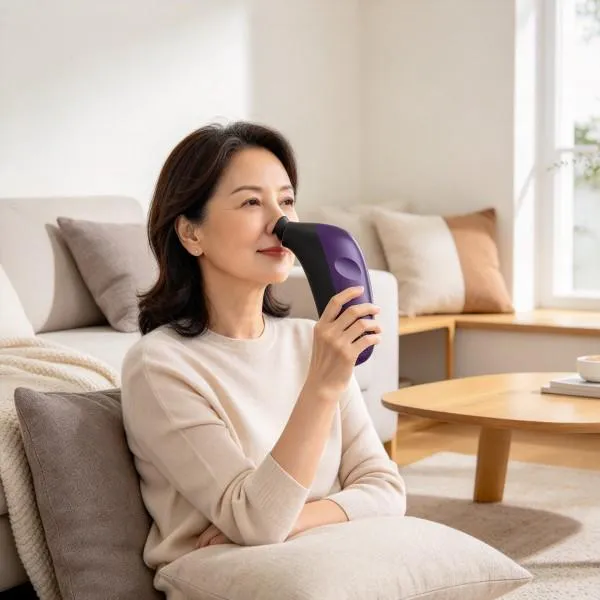
Chronic sinus congestion refuses to clear because swollen mucosal linings pinch shut tiny sinus drainage channels, trapping thick fluid and starving deep tissues of oxygen. Targeted 960nm photobiomodulation (PBM) transmits specific near-infrared wavelengths through facial cartilage and thin sinus bone to boost cellular ATP production and reopen natural drainage pathways. Unlike oral decongestants, pain relievers, or medicated nasal sprays, this non-invasive physical approach carries zero systemic metabolic toxicity and eliminates rebound swelling.
How Stubborn Sinus Pressure Hijacks Your Routine
Anyone who lives with recurring sinus congestion knows how quickly a blocked head ruins an ordinary day. You wake up with a heavy, tight ache sitting right under your cheekbones and behind your brow, as if someone pressed a thumb against your face all night. Leaning forward to pick up a bag or tie your shoes sends an immediate pulse of pressure behind your eyes.
At work, constant facial fullness makes even routine tasks feel exhausting. You struggle to stay sharp during afternoon meetings while thick post-nasal drip forces you to clear your throat every few minutes. When night falls, lying flat lets fluid pool inside your maxillary and frontal sinuses, sealing your nose shut and forcing dry, restless mouth-breathing until morning.
Most people searching for effective sinusitis relief home remedies end up rotating through familiar pharmacy products that fall short in predictable ways:
Medicated Decongestant Sprays: Topical oxymetazoline shrinks swollen nasal lining within minutes, yet using it beyond three days frequently triggers rhinitis medicamentosa—a painful rebound cycle where tissues swell tighter the moment the spray wears off.
Oral Decongestants and Pain Relievers: Systemic pills commonly cause jitteriness, elevated blood pressure, or stomach upset, while doing nothing to reopen physically blocked sinus channels.
Hot Towels and Steam Inhalers: Traditional sinus homemade treatment habits like warm washcloths or facial steamers feel soothing on the outer skin for a few minutes, but surface warmth dissipates fast and cannot cross facial bone into deep sinus cavities.
The Hidden Bottleneck: Deep Mucosal Hypoxia and Stagnant Drainage
To understand why finding the best way to clear sinuses requires reaching beneath the skin, look at how paranasal sinuses drain. Your maxillary sinuses (behind your cheeks) and frontal sinuses (above your eyebrows) connect to the nasal cavity through narrow drainage passages called ostia—openings often narrower than a pencil lead.
When prolonged irritation from dry indoor heating, dust, allergens, or lingering post-viral inflammation causes the mucosal lining around these passages to swell, the drainage openings pinch closed. Once sealed, three self-reinforcing physiological roadblocks lock the congestion in place:
Microvascular Compression: Fluid-swollen mucosal tissue squeezes local micro-capillaries shut, cutting off fresh, oxygen-rich blood flow into the sinus walls.
Cellular Oxygen Starvation: Deprived of oxygen, local epithelial and immune cells shift toward inefficient anaerobic metabolism, accumulating lactic acid and pro-inflammatory signaling molecules that cause dull facial ache.
Sluggish Lymphatic Outflow: Restricted microcirculation slows venous return and lymphatic drainage, trapping thick mucus and inflammatory byproducts inside the closed sinus cavities.
Surface sprays rarely diffuse past the front of the nose into swollen ostia, and conventional heating pads lose their thermal energy in the outermost millimeter of facial skin.
Why 960nm Wavelengths Reach Where Surface Light Fails
In physical medicine and rehabilitation (PMR) engineering, specific optical wavelengths are selected to deliver therapeutic energy to exact tissue depths without chemicals or invasive tools. Photobiomodulation applies calibrated doses of non-ionizing light to trigger restorative photochemical reactions inside stressed human cells.
Wavelength choice determines whether photons actually reach deep sinus structures. Common 630nm–660nm red LEDs used in beauty face masks get absorbed almost completely by skin melanin and surface hemoglobin within the first 1 to 2 millimeters. Even standard 810nm–850nm near-infrared light scatters heavily when passing through dense nasal cartilage and facial bone.
A targeted 960nm near-infrared wavelength occupies an optical window engineered to traverse facial skin, nasal cartilage, and thin maxillary sinus bone to reach deep mucosal linings. At 960nm, photons also interact gently with intracellular water molecules, creating a mild, controlled micro-thermal effect alongside direct mitochondrial stimulation.
The Cellular Recovery Chain
Once 960nm photons reach hypoxic sinus and nasal mucosa, a well-documented biochemical sequence begins:
Clearing Mitochondrial Roadblocks: Inside inflamed mucosal cells, excess nitric oxide binds to Cytochrome c Oxidase (CcO), blocking the enzyme from using oxygen to generate fuel. Absorption of 960nm photons breaks this inhibitory bond, restarting normal cellular respiration.
Rebuilding ATP Reserves: With oxygen utilization restored, mitochondria ramp up adenosine triphosphate (ATP) synthesis, giving mucosal and vascular cells the energy required to tighten leaky capillary walls.
Localized Microvascular Dilation: Displaced nitric oxide acts as a natural vasodilator, widening constricted micro-vessels and restoring healthy blood perfusion to starved sinus tissues.
Reopening Natural Sinus Drainage: Improved capillary circulation and gentle deep warmth stimulate lymphatic clearance, reducing mucosal swelling around the sinus ostia so trapped fluid drains naturally down the back of the throat.
Clinical photomedicine research confirms that targeted near-infrared PBM downregulates inflammatory markers like TNF-alpha and IL-6 while supporting mucosal barrier recovery—grounding this approach in measurable biophysics rather than temporary symptom masking.
Multi-Dimensional Comparison for Sinusitis Relief Home Remedies
Evaluating sustainable sinusitis relief home remedies requires comparing how each approach performs across tissue penetration, cellular action, dependency risk, home convenience, and yearly expense.
Evaluation Metric
Oral Medications & Medicated Sprays
Warm Compresses & 650nm Red Light
Targeted 960nm Deep Photobiomodulation
Tissue Penetration Depth
Surface contact only (nasal sprays) or diffuse bloodstream circulation (oral pills).
Superficial (0.5mm to 2mm); blocked by skin, nasal cartilage, and maxillary bone.
Deep penetration (30mm–40mm), reaching nasal turbinates and paranasal sinus walls.
Cellular Mechanism
Blocks histamine receptors, dulls pain signals, or forces chemical vasoconstriction.
Surface skin warming or shallow epidermal stimulation with zero deep ATP impact.
Activates Cytochrome c Oxidase, boosts ATP output, and improves microcirculation.
Side Effect & Dependency Risk
High risk of rebound congestion, nasal dryness, nosebleeds, drowsiness, or stomach upset.
Minimal risk, though repeated hot wet cloths can irritate sensitive facial skin.
Drug-free, zero chemical dependency, and no rebound mucosal swelling.
Home Usability
Quick to take, but demands ongoing dose tracking and pharmacy refills.
Messy (towels cool within 3 minutes) or bulky panels awkward to aim at facial contours.
Compact handheld form (155mm × 50mm × 100mm) contoured for targeted cheek and nose placement.
Cost Over 1 Year
$350 – $920+ annually across sprays, decongestants, pain relievers, and clinic visits.
$50 – $230 for heating pads or basic LED face masks with weak deep-sinus reach.
One-time hardware purchase with zero recurring cartridge or medication expenses.
Clinical Case Record & Home Application Documentation
The following structured clinical tracking table documents a real-world home rehabilitation protocol for an adult patient managing chronic recurrent maxillary and frontal sinusitis.
Clinical Tracking Parameter
Documented Case Details
Patient Profile
42-year-old female, elementary school speech therapist, non-smoker
Clinical Diagnosis & Grade
Grade II Recurrent Chronic Rhinosinusitis Without Polyps (bilateral maxillary and frontal sinus congestion, 5-year history)
Prior Failed Interventions
Fluticasone nasal spray (caused persistent nasal dryness and minor epistaxis), oral pseudoephedrine (palpitations and insomnia), daily steam bowls
15 / 110 — Uninterrupted bilateral nasal breathing during sleep; morning facial ache resolved; shifted to 3x/week maintenance
6-Month Follow-Up Status
Remained free of acute sinus pressure episodes across fall and winter classroom heating seasons without medicated sprays
Real-World Home Use Log: Patient Perspective
“As a school speech therapist, talking clearly all day with blocked sinuses felt like trying to speak through a pillow. For five years, every shift in indoor heating left my cheeks throbbing and my throat raw from post-nasal drip. I tried every sinus homemade treatment I could find—hot compresses, spicy tea, saline rinses, and nasal sprays that always triggered awful rebound stuffiness two days later. When I started using the handheld 960nm device, I kept my expectations realistic. Within ninety seconds of resting it gently against my cheek just under my eye, I felt a calm, steady warmth sinking deep behind the bone—not hot on the skin, just a relaxing heat that seemed to melt deep tightness. By day eight, I felt my sinuses actually draining naturally instead of staying locked up. Four months later, I use it three evenings a week before bed, and waking up clear-headed has made a huge difference in my workday.”
— Claire B., 42 (Verified Home User Log)
Honest Guidance: Sensation, Ideal Candidates, and Safety Boundaries
Establishing genuine trust in home physical rehabilitation requires clear, candid facts about physical sensations, appropriate users, and clinical contraindications.
What Does a 960nm Session Feel Like?
Unlike low-power red light wands that produce zero tactile sensation, 960nm near-infrared photons interact gently with tissue water content. Within 60 to 90 seconds of placing the smooth treatment aperture against your cheek, nasal wall, or brow ridge, you will experience a gradual, soothing deep warmth beneath the skin. There is no electrical tingling, vibration, or sharp needle-like heat. Integrated thermal duty cycles keep the skin surface comfortable while delivering steady energy into deeper sinus structures.
Who Is a Good Fit for Home 960nm Sinus Care?
Adults dealing with recurring cheek pressure, forehead heaviness, nasal stuffiness, or thick post-nasal drip triggered by dry indoor air, dust, seasonal pollen, or lingering congestion.
Individuals who cannot tolerate oral decongestants due to blood pressure, heart rate sensitivity, or stomach irritation from frequent pain relievers.
People weaning off medicated nasal sprays who need a safe, non-pharmacological physical tool to support natural mucosal drainage.
Contraindications and Clinical Safety Boundaries
Photobiomodulation is non-invasive, yet strict clinical boundaries must be respected:
Active Malignancy: Never apply light therapy directly over known or suspected cancerous lesions or tumors in the head, face, or neck region.
Implanted Electronic Devices: Avoid direct placement over pacemakers, cochlear implants, or electronic facial neurostimulators unless cleared by your physician.
Active Nasal Bleeding (Epistaxis): Because 960nm light promotes localized vasodilation and blood flow, wait at least 48 hours after an active nosebleed has completely clotted before resuming sessions.
Acute Febrile Bacterial Sinusitis: If you develop a high fever, severe one-sided facial swelling, vision changes, or acute dental/cheek pain requiring antibiotics, consult an ENT specialist before starting local thermal-photonic therapy.
Progressive Recovery Timeline and the Economics of Home Care
Chronic mucosal swelling builds up over months or years, so tissue recovery follows a realistic biological schedule rather than an instant switch.
Weeks 1–2 (Microcirculation & Drainage Activation): Nitric oxide release eases microvascular constriction around swollen sinus openings. Users typically notice lighter cheek pressure, easier drainage after saline rinses, and shorter stretches of total nostril blockage.
Weeks 3–4 (Mucosal Barrier Repair): Rising cellular ATP levels support epithelial recovery and calm hyper-reactive mucosal linings. Nighttime mouth-breathing drops sharply, and uninterrupted sleep cycles return.
Month 2 and Beyond (Preventive Maintenance): Once comfortable sinus drainage becomes your daily norm, twice-daily sessions are no longer needed. Applying 960nm light 2 to 3 evenings per week—or right after dry flights or high-pollen days—prevents fluid stagnation from rebuilding.
Calculating the Practical Value of Handheld Care
Scheduling repeated appointments at a specialized physical therapy clinic or integrative ENT office for in-office phototherapy typically costs $85 to $155 per visit, quickly exceeding $1,200 across a standard 12-session clinical course—plus commuting time and missed work hours.
By comparison, keeping a dedicated handheld device—engineered with compact, ergonomic contours (155mm × 50mm × 100mm) that fit comfortably along the cheekbones, nasal bridge, brow ridge, or even tense neck and jaw joints—gives an entire household unlimited access at home. Over two years of regular use, the per-session cost drops to pennies, turning an expensive clinical modality into a practical daily routine. For complete technical specifications, anatomical placement diagrams, and step-by-step home guides, visit https://neurolumax.com/sinusitis-rhinitis-treatment-at-home/.
Frequently Asked Questions About 960nm Sinus Light Therapy
1. How do I position the device safely around my eyes when treating my brow and cheeks?
For maxillary sinuses, rest the smooth treatment head gently on the fleshy part of your cheekbone roughly one inch below the center of your eye, and along the outer side of your nostril (the nasal ala). For frontal sinuses, place it gently along the inner eyebrow ridge just above the bridge of your nose. Always keep your eyes closed or wear the provided protective eyewear whenever treating near the brow or upper cheek.
2. Should I use my saline sinus rinse before or after a 960nm light session?
Perform your saline spray or sinus rinse first to clear out thick surface mucus, crusts, and airborne irritants. Gently blow your nose, pat your facial skin dry, and then apply your 12-minute 960nm session. Clearing surface debris beforehand ensures clean skin contact and allows increased local microcirculation to soothe the freshly rinsed sinus passages.
3. Why doesn’t a standard heating pad or red LED face mask relieve deep sinus pressure?
A conventional heating pad relies on conductive heat, which warms the outer epidermis but gets dispersed by superficial blood flow before reaching deep sinus walls. Similarly, beauty LED face masks emit low-power 630nm–660nm red light designed for surface skin collagen rather than penetrating facial bone and cartilage. A dedicated 960nm handheld unit concentrates higher optical power density at a longer near-infrared wavelength specifically calibrated to reach deep sinus mucosa.
Reclaiming Clear-Headed Days and Restful Nights
Living with constant sinus pressure quietly drains your focus, patience, and sleep quality every single day. Whether you want to get through a full workday without a throbbing ache behind your eyes, speak clearly without post-nasal throat irritation, or lie down at night without your sinuses sealing shut, restoring natural drainage changes how you feel from morning to night.
When you address the underlying vascular stagnation and cellular energy deficit inside your sinus linings rather than relying on temporary chemical decongestants, your body finally gets the support it needs to clear congestion naturally. Having a compact, drug-free 960nm therapy unit within reach on your nightstand means calm, clear-headed breathing is always ready whenever you need it.
Subjective ringing persists because microvascular hypoperfusion and cellular hypoxia trap inner ear auditory cells in an ongoing metabolic deadlock. Patients continually ask is tinnitus curable while trialing endless remedies for tinnitus, but tru...
Peripheral facial nerve palsy lingers because the inflamed seventh cranial nerve swells inside the narrow, unyielding Fallopian canal, crushing its own microvascular supply and trapping axons in metabolic paralysis. Targeted 960nm photobiomodulati...
Lateral epicondylitis, commonly called tennis elbow, is not a sudden swelling that disappears overnight; it is a structural metabolic stall inside dense connective tissue. When conventional options fall short, non-invasive photobiomodulation (PBM)...
Stubborn milk duct blockages persist because localized microvascular edema compresses internal lobular lumens, trapping milk secretions in a hypoxic state that superficial compresses cannot resolve. When looking for how to treat a clogged milk duc...
 Handheld Home-Use Therapy Device