Persistent pelvic heaviness, frequent nighttime bathroom trips, and deep perineal soreness rarely improve on their own because non-bacterial prostate inflammation traps deep pelvic tissues in microvascular congestion, local oxygen deprivation, and stalled lymphatic clearance. Because the prostate gland sits behind dense pelvic floor muscles and thick fascial layers, surface heating pads and ordinary red-light panels cannot reach the congested tissue bed. Targeted 960nm photobiomodulation (PBM) delivers near-infrared photons past superficial skin barriers directly into deep pelvic structures to stimulate cellular ATP synthesis and nitric oxide-mediated blood flow. Unlike long-term oral alpha-blockers or daily anti-inflammatories, this non-invasive physical approach relieves deep tissue stagnation without liver processing, blood pressure drops, or sexual side effects.
The Daily Toll of Stubborn Pelvic Pressure
Men researching natural remedies for prostate discomfort are seldom looking for a quick fix to a minor annoyance. Chronic pelvic pain syndrome and non-bacterial prostatitis feel like a heavy, persistent ache lodged deep behind the pubic bone—quietly controlling how long you can sit, how well you sleep, and how much energy you have left by afternoon.
The everyday disruption reaches into nearly every routine:
Fragmented Nighttime Sleep: Waking up three or four times between midnight and dawn with an urgent urge to urinate—only to stand waiting for a weak, hesitant stream—shatters restorative REM cycles. Waking up exhausted becomes the default.
The Sitting Penalty: Commuting in traffic, sitting at a desk, or riding in a car compresses the perineal floor. Within half an hour, a dull, radiating pressure spreads across the lower back, groin, and inner thighs.
Personal and Social Withdrawal: Mapping out errands around restroom access and dealing with post-ejaculatory soreness adds quiet stress, leading many men to give up cycling, long road trips, or intimacy.
When men turn to conventional first-line treatments, they frequently encounter frustrating limits:
Prescription Alpha-Blockers (e.g., Tamsulosin, Silodosin): While these medications relax smooth muscle at the bladder neck to ease urine flow, they commonly cause lightheadedness upon standing, nasal stuffiness, and retrograde ejaculation. Worse, they mask mechanical resistance without resolving the underlying tissue congestion.
Repeated Antibiotic Courses and NSAIDs: Over 90% of chronic prostatitis cases involve no bacterial infection, so repeated antibiotics disrupt gut flora without calming the gland. Meanwhile, frequent ibuprofen or naproxen use irritates the stomach lining and places cumulative strain on kidney filtration.
Warm Sitz Baths and Standard Heating Pads: Soaking in hot water relaxes outer skin and superficial gluteal muscles temporarily, but conductive heat dissipates within a few millimeters. Surface warmth alone cannot penetrate the dense perineal body and pelvic fascia to reach the prostatic capsule.
The Root Bottleneck: Microvascular Stasis Deep in the Pelvis
To understand what makes a chronic prostatitis treatment work at the cellular level, you have to examine the vascular and muscular environment around the prostate. The gland is enclosed in a firm fibromuscular capsule and surrounded by a dense network of small draining veins known as the prostatic venous plexus.
When prolonged sitting, pelvic floor hypertonicity, or prior irritation triggers localized swelling, three biological bottlenecks lock the tissue into a self-sustaining cycle:
Venous Congestion and Local Hypoxia: Chronically tight pelvic floor muscles compress the thin-walled veins draining the prostate. As venous outflow slows down, fresh oxygenated arterial blood struggles to enter, leaving glandular and stromal cells starved of oxygen.
Trapped Metabolic Irritants: Sluggish lymphatic drainage allows pro-inflammatory cytokines (including IL-1β, IL-6, and TNF-α), bradykinin, and lactic acid to pool inside the interstitial spaces. These biochemical waste products continuously sensitize local pelvic nerve endings, causing persistent aching even when lab cultures show zero bacteria.
Smooth Muscle Guarding: Constant irritation from sensitized nociceptors signals the surrounding pelvic floor and prostatic smooth muscle to stay partially contracted. That mechanical tightness further squeezes local capillaries, reinforcing the exact oxygen deficit driving the pain.
Oral pain relievers temporarily mute nerve signals traveling up the spinal cord, but they do nothing to clear pooled venous blood, flush out trapped cytokines, or restore energy production inside oxygen-starved pelvic cells.
Biophysics of 960nm Light: Reaching Deep Pelvic Tissues
In Physical Medicine and Rehabilitation (PMR), breaking a deep ischemic cycle requires delivering non-ionizing energy directly to compromised mitochondria without overheating the overlying skin. Wavelength selection determines whether photons scatter harmlessly at the surface or penetrate to the target zone.
Most consumer LED pads use 630nm to 660nm red diodes, or occasionally 810nm to 850nm wavelengths. While 650nm light works well for superficial skin repair, melanin and hemoglobin in the upper dermis absorb most of those photons within the first 2 to 3 millimeters.
A 960nm near-infrared laser wavelength occupies a distinct optical window that minimizes superficial scattering while preserving strong bio-stimulatory affinity for intracellular chromophores. When applied externally against the perineum or lower suprapubic abdomen, 960nm photons travel past the epidermis, subcutaneous adipose layer, and dense pelvic floor fascia to reach deep muscular and glandular tissues.
The Cellular Recovery Cascade
Once 960nm photons reach oxygen-deprived pelvic cells, they trigger a well-documented biochemical sequence:
Cytochrome c Oxidase Photodissociation: Under chronic inflammatory stress, nitric oxide (NO) binds tightly to Cytochrome c Oxidase (Complex IV) inside the mitochondria, blocking oxygen from completing cellular respiration. The 960nm light energy breaks this inhibitory bond.
Mitochondrial ATP Restoration: Freed from nitric oxide blockade, the electron transport chain resumes oxygen consumption and accelerates adenosine triphosphate (ATP) synthesis. Higher intracellular ATP supplies the metabolic fuel needed for overactive smooth muscle fibers to release chronic spasms and for cellular ion pumps to reduce interstitial swelling.
Endothelial Nitric Oxide Vasodilation: The liberated nitric oxide diffuses into adjacent arterioles and venules, relaxing vascular smooth muscle. Microcirculation opens up, bringing fresh oxygenated blood into the congested prostatic bed while helping lymphatic vessels clear accumulated inflammatory byproducts.
Grounded in established rehabilitation biophysics, this optical pathway offers a practical, drug-free way to support prostate natural comfort alongside routine medical oversight.
Comparing Chronic Prostate Management Approaches
Evaluating daily management options across penetration depth, cellular mechanism, and cumulative annual cost clarifies why targeted 960nm photobiomodulation fills a critical gap in home care.
Evaluation Dimension
Oral Alpha-Blockers & Daily NSAIDs
Warm Sitz Baths & Standard 650nm Red Light
Targeted 960nm Deep Photobiomodulation
Tissue Penetration Depth
Systemic bloodstream delivery; no localized physical energy transfer
Superficial epidermis and upper dermis only (1–3 mm max)
Deep subcutaneous, pelvic floor fascia, and prostatic capsule window (30–50 mm optical reach)
Cellular Mechanism
Blocks alpha-1 adrenergic receptors or inhibits systemic COX pain pathways
Mild surface conductive warming; negligible deep mitochondrial stimulation
Dissociates NO from Cytochrome c Oxidase, boosts ATP synthesis, and restores local microcirculation
Side Effect & Dependency Risk
Moderate to high: orthostatic dizziness, retrograde ejaculation, GI upset, rebound symptoms
Minimal: mild skin dryness or time-consuming water preparation
Very low: drug-free, non-invasive, zero chemical dependency or liver/kidney burden
Home Usability
Simple to swallow, though tied to strict daily schedules and prescription refills
Low convenience: messy tub prep; flat LED panels cannot contour to the perineum
$240 – $650+ (recurring pharmacy co-pays, prescriptions, and gastric buffers)
$80 – $250 (low initial spend, though weak deep relief often leads to abandoned use)
One-time hardware investment ($300 – $600 range) with zero recurring consumable expenses
Clinical Case Record: Non-Bacterial Pelvic Pain and Nocturia
To show how structured home photobiomodulation works in everyday life, the following clinical record documents a six-week home protocol utilizing a compact 960nm handheld device engineered for deep tissue therapy.
Clinical Parameter
Documented Case Details
Patient Profile
61-year-old male, retired university archivist (non-smoker, avid gardener and long-distance driver, 7+ hours daily seated reading/computer work)
6-week course of ciprofloxacin (no improvement), tamsulosin 0.4mg (discontinued due to morning lightheadedness and fatigue), saw palmetto extract, and nightly warm baths
Device & Protocol
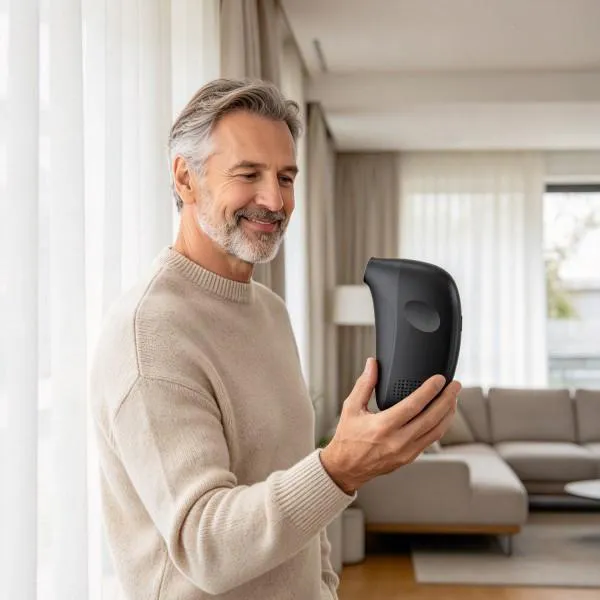
Handheld 960nm near-infrared PBM unit (compact portable chassis, 155mm × 50mm × 100mm; thermal-regulated output for safe deep muscular and glandular reach)
Anatomical Target Zones
1. Perineal midline (between the base of the scrotum and anus, angled gently upward toward the pelvic floor) 2. Lower suprapubic midline (directly above the pubic symphysis)
Session Parameters
5 minutes per anatomical zone (10 minutes total per session), applied twice daily (after morning shower and 30 minutes before bedtime)
Week 1 Outcome
NIH-CPSI Total Score improved from 25/43 to 19/43. Deep perineal ache after seated reading eased noticeably by day 5; morning urinary hesitation began softening.
Week 3 Outcome
NIH-CPSI Total Score dropped to 11/43. Nighttime awakenings fell from 4 times per night to 1; patient completed a 2.5-hour road trip without pelvic soreness.
Week 6 Outcome
NIH-CPSI Total Score stabilized at 5/43. Patient transitioned to a 2-to-3-times-weekly maintenance routine with zero reliance on prescription alpha-blockers or oral analgesics.
Real-World Patient Account: In His Own Words
“At sixty-one, I assumed waking up four times a night and feeling a dull ache every time I sat in my armchair was just something I had to accept. My urologist confirmed my PSA was normal and there was no infection, yet the alpha-blocker left me so dizzy when standing up in the morning that I stopped taking it. Switching to the handheld 960nm unit at home felt completely different—no pills, no messy baths, just ten quiet minutes before bed with a steady, comforting warmth that reaches deep past the skin. By week three, I was sleeping six hours straight before needing the bathroom, and after six weeks I could drive to visit my grandkids without shifting around on a cushion the entire trip.”
Honest Boundaries: Sensations, Suitability, and Safety Limits
Responsible clinical guidance requires clarity about what home photobiomodulation feels like, who benefits most, and when strict medical precautions apply.
What Does 960nm Therapy Feel Like?
Unlike electrical TENS units or percussive massage guns, 960nm near-infrared therapy produces no electrical tingling, no vibration, and no sharp pinprick sensations. Because 960nm photons interact gently with tissue water while penetrating deep into the pelvic fascia, you feel a calm, gradual deep warmth spreading beneath the skin. If the surface ever feels warmer than comfortable, shifting the emitter slightly or pausing briefly keeps the session completely relaxed.
Who Is an Ideal Candidate?
Men evaluated by a physician for non-bacterial chronic prostatitis (CPPS) or mild-to-moderate pelvic congestion seeking drug-free daily relief.
Older adults, retirees, drivers, and desk professionals experiencing recurring perineal heaviness, sitting intolerance, and frequent nighttime urination.
Individuals looking for a dependable, non-invasive home modality to pair with gentle pelvic floor relaxation and steady hydration habits.
Strict Contraindications and Clinical Boundaries
Observe these essential safety boundaries before starting home sessions:
Confirm Diagnosis With a Urologist First: Always complete a standard medical evaluation—including urinalysis and age-appropriate PSA screening—to rule out acute bacterial infection, urinary retention, or malignancy before beginning any home therapy.
Active Malignancy: Never apply light therapy directly over known or suspected cancerous tumors or active oncological sites, as increasing local blood flow and cellular metabolism is contraindicated.
Active Bleeding: Avoid use during active hematuria (blood in the urine) or acute rectal bleeding until evaluated and cleared by a physician.
Implanted Electronic Devices & Thermal Precautions: Do not apply directly over implanted pelvic neurostimulators, pacemakers, or across areas where a physician has restricted localized heat due to vascular or sensory impairment.
Gradual Recovery Timeline and the Economics of Home Care
Deep vascular and muscular recovery follows biological clocks rather than overnight promises. When integrating a dedicated home unit—such as the clinical-grade handheld photobiomodulation systems detailed on the NeuroLumax enlarged prostate and pelvic wellness guide—improvements typically unfold across three predictable stages:
Phase 1: Microcirculatory Activation (Weeks 1–2)
During the first fourteen days, nitric oxide release helps open constricted pelvic venules and capillaries. The sharp, bruised tightness after prolonged sitting softens first, while bladder-neck irritation calms enough to reduce nighttime bathroom trips.
As sustained mitochondrial ATP production supports normal cellular recovery, interstitial fluid retention around the prostatic capsule diminishes. Chronically guarded pelvic floor muscles begin releasing, resulting in a steadier urinary stream and less post-ejaculatory soreness.
Phase 3: Preventative Maintenance (Week 5 and Beyond)
Once baseline comfort returns, twice-daily sessions are no longer necessary. Applying the handheld device for 10 minutes two or three times per week—or right after long drives, gardening, or extended desk hours—keeps local microcirculation active and prevents minor pelvic congestion from escalating into a flare-up.
Weighing Clinic Bills Against Home Ownership
Outpatient pelvic floor rehabilitation or clinical therapeutic laser appointments typically run $125 to $185 per session, requiring 10 to 12 visits over two months—easily exceeding $1,500 alongside travel time and scheduling hassles. Keeping a compact, solid-state 960nm handheld unit at home consolidates that targeted wavelength into a single upfront investment. With no replacement cartridges, gels, or ongoing fees, it remains ready in your nightstand whenever early pelvic tension appears.
Frequently Asked Questions
How should I position the 960nm device for optimal pelvic reach?
In my clinical consultations, I recommend splitting a 10-minute session between two external contact points because the prostate sits roughly 3 to 4 centimeters beneath both surfaces. Spend 5 minutes holding the smooth emitter gently against the perineum (the midline area between the base of the scrotum and the anus) while seated on the edge of a firm chair or lying on your side with knees bent. Spend the remaining 5 minutes directly over the lower abdominal midline just above the pubic bone to target the anterior prostatic capsule and bladder neck.
Does the 960nm light work if applied over thin underwear?
Direct contact against clean, dry skin always delivers the highest photon transmission because fabric fibers scatter a small percentage of near-infrared light. However, if applying it over a single layer of thin, white cotton underwear is more comfortable for your routine, the 960nm wavelength will still penetrate effectively—simply avoid thick seams, dark synthetic fabrics, or damp skin that could trap surface heat.
Can I pair 960nm photobiomodulation with pelvic floor physical therapy exercises?
Yes, pairing them in sequence works remarkably well. Performing 5 to 10 minutes of gentle pelvic floor relaxation—such as deep diaphragmatic breathing or happy baby stretches—helps release superficial muscular guarding first. Following immediately with your 10-minute 960nm session allows the deep near-infrared warmth and microcirculatory boost to reach the prostatic bed without competing against tight outer muscles.
Persistent breast inflammation lingers because microvascular congestion and interstitial edema compress delicate ductal networks from the outside, trapping fluids in an ongoing metabolic standstill that surface compresses and oral pills fail to pe...
Lateral epicondylalgia persists because micro-shearing creates an avascular, degenerative core at the common extensor origin that passive rest and topical creams cannot reach. When searching for how to cure tennis elbow fast or trying to determine...
Lateral epicondylalgia, commonly known as tennis elbow, lingers because the common extensor tendon has virtually no direct blood flow, leaving micro-tears trapped in metabolic stagnation. Targeted 960nm photobiomodulation bypasses superficial skin...
 Handheld Home-Use Therapy Device