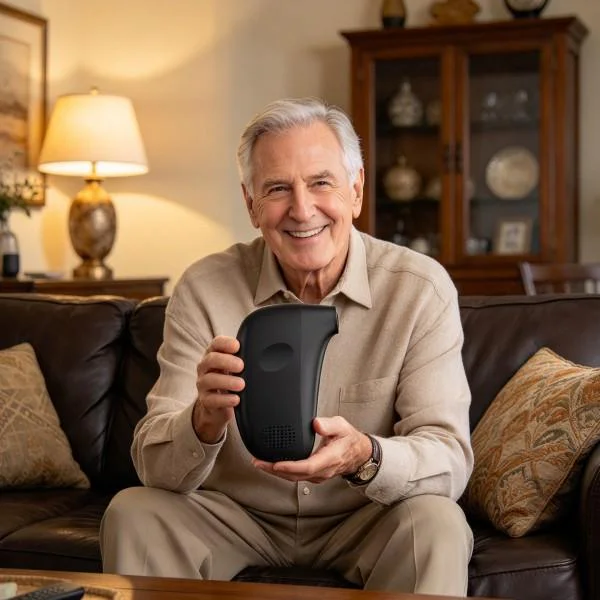
Chronic pelvic ache and hesitant urination persist when microvascular congestion traps inflammatory fluid inside the fibrous prostate capsule, starving stromal cells of oxygen and triggering continuous smooth muscle spasm. While many men look for a natural cure for enlarged prostate symptoms or ask what is the treatment for prostatitis, standard herbal blends and anti-inflammatory pills cannot penetrate this localized circulatory bottleneck. Targeted 960nm photobiomodulation (PBM) delivers deep near-infrared photons through dense perineal musculature directly into hypoxic glandular tissue. This physical intervention reignites mitochondrial respiration, clears stagnant fluid, and restores tissue compliance without pharmaceutical side effects, hormone disruption, or metabolic toxicity.
The Silent Burden of Pelvic Tension and Urinary Hesitancy
Living with persistent prostate congestion and pelvic floor hypertonicity turns everyday routines into a constant calculation. Commuting or sitting in long planning sessions creates a dull, grinding ache between your hips that feels like sitting on a firm tennis ball. Nights offer little rest: waking up three to five times leaves you completely drained, standing over the bowl in the dark waiting for a weak, hesitant stream to start. The ongoing worry about bathroom locations, coupled with interrupted sleep and low energy, gradually chips away at daily confidence and peace of mind.
Alpha-1 adrenergic blockers ease bladder neck resistance for moderate flow improvement, but frequently cause orthostatic hypotension, fatigue, and retrograde ejaculation.
5-alpha reductase inhibitors (5-ARIs) reduce glandular volume over many months, yet often carry long-term risks of decreased libido, erectile dysfunction, and mood changes.
Non-steroidal anti-inflammatory drugs (NSAIDs) temporarily quiet dull perineal aches, but long-term daily use poses serious risks to gastric mucosa and renal health.
Sitz baths and electric heating pads deliver temporary comfort to surface skin, yet conductive heat drops off within two millimeters of the epidermis, unable to reach pelvic organs shielded behind dense fascia.
The Pathological Bottleneck: Intracapsular Hypoxia and Spasm
The persistence of non-bacterial pelvic tension and benign glandular enlargement lies in an anatomical trap. The human prostate is enclosed by a rigid, fibroelastic capsule. When low-grade inflammatory insults or stromal proliferation occur, localized capillary walls become hyperpermeable, spilling plasma into interstitial spaces faster than low-pressure venous plexuses and lymphatics can drain it.
This swelling drives up intracapsular hydrostatic pressure, compressing delicate microcapillaries and venules. Deprived of normal blood flow, tissue oxygen tension ($pO_2$) plummets. Glandular and smooth muscle cells exhaust their adenosine triphosphate (ATP) reserves, locking the surrounding pelvic floor in constant contraction. Oral medications and superficial remedies circulate around or float over this stagnant biological dead zone, leaving the deep hypoxic core untouched.
960nm Photobiology: Bypassing the Perineal Fascial Barrier
Delivering therapeutic photon density to the deep pelvis requires overcoming significant tissue attenuation. Visible red light (630–660nm) absorbs heavily into epidermal melanin and superficial blood vessels, disappearing within the first two millimeters of skin. Shorter near-infrared light (810–850nm) scatters widely when hitting the thick collagen bundles of the perineal membrane and levator ani muscles.
Targeted 960nm radiation occupies a distinct optical therapeutic window. It combines low scattering through dense collagen matrices with balanced tissue transmission, passing through skin, fat, and pelvic floor fascia directly into the glandular bed:
Tissue Depth
 Perineal Skin    │ 650nm (Red Light)    ──► Quenched by epidermal melanin (<2mm)
                  │
 Pelvic Fascia    │ 850nm (Short NIR)    ──► Scattered by thick collagen bundles (3–5mm)
                  │
 Glandular Stroma │ 960nm (Targeted Deep)──► Traverses fascia into deep tissue (15–25mm)
                  ▼
The Biological Action Chain
Cytochrome c Oxidase Excitation: 960nm photons hit mitochondrial Complex IV, dislodging inhibitory nitric oxide and restoring the inner-membrane proton pump.
ATP Synthesis Surge: Cellular adenosine triphosphate generation climbs, giving membrane ion pumps the energy needed to reestablish osmotic balance and halt interstitial fluid leakage.
Endothelial Nitric Oxide Release: Photonic liberation of nitric oxide prompts regional microvascular vasodilation, reopening collapsed capillary networks and flushing out acidic metabolic waste.
Lymphatic Decompression: Restored microvascular drainage lowers intracapsular pressure, allowing boggy, swollen glandular tissue to soften and relieving pressure on the prostatic urethra.
Comparative Assessment: Conventional vs. Targeted PBM
Baseline Status: International Prostate Symptom Score (IPSS) of 19/35, National Institutes of Health Chronic Prostatitis Symptom Index (NIH-CPSI) score of 26/43, nocturia 4 times per night, severe perineal burning during extended desk work. Past treatments included silodosin (halted due to severe retrograde ejaculation) and saw palmetto supplements (minimal clinical change after 12 months).
Treatment Protocol: Application of a calibrated 960nm handheld photobiomodulation device across perineal and suprapubic acoustic windows, 10 minutes per session, once daily for 8 consecutive weeks.
Longitudinal Recovery Tracker
Treatment Phase
Frequency
Objective Clinical Metrics
Functional Observations & Symptoms
Baseline
Intake assessment
IPSS: 19; NIH-CPSI: 26; Nocturia: 4x
Severe perineal sitting discomfort, broken sleep, hesitant weak stream
Week 2
7 sessions/wk
IPSS: 15; NIH-CPSI: 19; Nocturia: 3x
Reduced pressure while seated; less straining required to start urination
Week 4
7 sessions/wk
IPSS: 9; NIH-CPSI: 11; Nocturia: 1–2x
Significant drop in pelvic floor tightness; stream continuity improved
Week 8
4 sessions/wk
IPSS: 5; NIH-CPSI: 4; Nocturia: 0–1x
Normal urinary flow rate; comfortable sitting for hours; deep uninterrupted sleep
“Sitting at my desk for coding sprints became miserable—it felt like a burning weight was wedged right in my pelvic floor. The prescription pills messed with my intimacy and gave me brain fog, while herbal supplements changed nothing. When I switched to 960nm therapy, the application was just a smooth, deep, gentle warmth radiating upward through the perineum. By the fourth week, that heavy golf-ball sensation had completely vanished, I stopped waking up every two hours to urinate, and my daytime energy came back.”
Application Experience, Boundaries, and Medical Precautions
A session with a calibrated 960nm device produces a gentle, deeply comforting thermal sensation across the pelvic base. Because this wavelength avoids high-heat cutting lasers and electrical current, it produces zero stinging, electrical pulsing, or dermal burns.
Safe Application Boundaries
Target Users: Adult men seeking a sustainable home physical therapy approach for non-bacterial pelvic floor congestion, urinary hesitancy, and discomfort from prolonged sitting without pharmaceutical dependence.
Strict Contraindications: Do not apply the light over known active prostate adenocarcinoma or pelvic malignancies, over areas with implanted electronic hardware (such as sacral nerve stimulators), across active open hemorrhages, or during acute febrile bacterial urinary infections requiring systemic antibiotics.
Phased Recovery Timeline and Cost Economics
Phased Functional Milestones
Phase 1 (Weeks 1–2): Microcirculatory Recruitment
  └─ Capillary blood flow improves; initial reduction in perineal heaviness, post-void dribbling, and sitting aches.

Phase 2 (Weeks 3–4): Interstitial Decompression
  └─ Trapped fluid drains; pelvic floor smooth muscle relaxes, dropping nocturia to 1–2 times per night.

Phase 3 (Week 5+): Long-Term Stability
  └─ Transition to twice-weekly maintenance sessions to sustain microvascular resilience and prevent flare-ups.
The Cost Reality
Managing chronic pelvic and prostate discomfort through recurring urologist visits, specialized imaging, and continuous prescription refills easily reaches $1,800 to $3,600 each year, without accounting for lost working hours and sleep deprivation. Investing in a clinical-grade 960nm handheld system provides targeted optical therapy at home with zero ongoing prescription expenses, delivering reliable support whenever pelvic tension reappears.
Using a calibrated device with verified optical power density and broad spatial coverage provides fast relief across the pelvic floor, helping men maintain active, comfortable lives without drug dependency.
Frequently Asked Questions
Can 960nm photobiomodulation permanently cure an enlarged prostate?
Photobiomodulation does not alter your underlying genetics or act as an instant cure. Rather than making unrealistic claims, it addresses the underlying physical drivers of symptoms: it drains pooling interstitial fluid, restores cellular energy, and eases chronic smooth muscle tension around the urethral channel to restore healthy urinary function.
How does 960nm light differ from an ordinary heating pad?
Heating pads warm only the outer epidermal layers, with thermal energy dissipating within 2 millimeters of superficial tissue. A targeted 960nm device emits near-infrared photons that travel 15 to 25 millimeters through dense pelvic fascia and muscle, directly stimulating cellular mitochondria.
Can I use 960nm therapy alongside pelvic floor physical therapy?
Yes. Using 960nm light immediately prior to pelvic floor stretches or physical therapy exercises warms and oxygenates the deep musculature, making manual release techniques significantly more comfortable and effective.
Persistent prostate swelling and lower urinary tract discomfort linger because deep pelvic tissues become trapped in a cycle of venous congestion, localized oxygen deprivation, and non-bacterial stromal inflammation. Targeted 960nm photobiomodulat...
Peripheral facial nerve palsy persists because the swollen seventh cranial nerve remains physically compressed within the narrow Fallopian canal of the temporal bone, choking its microvascular supply and trapping motor axons in an ischemic state. ...
Persistent ductal obstruction is driven by localized microvascular edema compressing the ductal network from the outside, creating an ischemic loop that topical warmth and aggressive massage cannot undo. When nursing mothers search for how to trea...
Effective pt for golf elbow requires breaking the cycle of deep microvascular starvation at the medial epicondyle where the pronator-flexor group fuses to the bone. Chronic medial epicondylalgia persists because repetitive mechanical traction comp...
 Handheld Home-Use Therapy Device