 家庭用携帯型治療機器











なぜ960nmのターゲット光を照射することで、テニス肘のリハビリテーションの転帰が変わるのか
476頑固な肘の外側の痛みが持続するのは、反復的な引張応力によって、橈側手根伸筋短頭の起始部で微小血管の閉塞や腱のリモデリングの失敗が生じ、その結果、結合組織が酸素不足に陥るためである。一方、患者は…….
詳細を見る商品を検索投稿を検索
Stubborn sinus pressure persists because swollen mucosal linings seal off narrow drainage openings, trapping fluid and starving deep tissues of oxygen. Targeted 960nm photobiomodulation (PBM) penetrates through facial bone and cartilage to stimulate cellular energy production and reopen natural sinus drainage pathways. Unlike oral decongestants, pain relievers, or medicated nasal sprays, this non-invasive physical therapy carries zero systemic metabolic toxicity and avoids rebound swelling.
Anyone who has woken up with a throbbing ache behind their cheekbones and forehead knows how quickly sinus congestion hijacks an entire day. Bending over to tie your shoes sends a sudden wave of heavy pressure behind your eyes. Focusing on a computer screen feels nearly impossible when your head feels packed with wet cotton and every swallow clicks in your ears.
Nighttime brings its own exhaustion. Lying flat causes fluid to pool inside the maxillary and frontal sinus cavities, forcing you to breathe through your mouth until your throat feels dry and raw by 3:00 AM. You prop yourself up on extra pillows, toss and turn, and start the morning already drained before your day even begins.
When searching for practical sinusitis relief home remedies, most people cycle through the same bathroom-cabinet options—only to hit frustrating physical limits:
To understand why finding the best way to clear sinuses requires more than surface moisture, look at how paranasal sinuses actually drain. Your maxillary sinuses (behind your cheeks) and frontal sinuses (above your eyebrows) connect to the nasal cavity through tiny drainage channels called ostia—openings often narrower than a pencil lead.
When prolonged irritation from dry indoor air, allergens, dust, or lingering post-viral inflammation causes the mucosal lining around these channels to swell, the drainage openings pinch shut. Once sealed, three self-reinforcing physiological problems lock the congestion in place:
Surface nasal sprays rarely reach past the front of the nose into swollen ostia, and standard heating pads lose their thermal energy in the top millimeter of facial skin.
In physical medicine and rehabilitation (PMR) engineering, specific optical wavelengths are selected to deliver energy to precise tissue depths without drugs or invasive procedures. Photobiomodulation uses calibrated doses of non-ionizing light to trigger restorative photochemical reactions inside stressed human cells.
Wavelength choice determines whether light actually reaches deep facial anatomy. Standard 630nm–660nm red LEDs used in skincare masks get absorbed almost completely by melanin and surface hemoglobin within the first 1 to 2 millimeters of skin. Even common 810nm–850nm near-infrared light scatters heavily when hitting dense nasal cartilage and facial bone.
A targeted 960nmの近赤外波長 operates in an optical window capable of traversing skin, nasal cartilage, and thin maxillary sinus bone to reach deep mucosal linings. At 960nm, photons also interact gently with intracellular water molecules, generating a mild, controlled micro-thermal effect alongside direct mitochondrial stimulation.
Once 960nm photons penetrate into hypoxic sinus and nasal mucosa, a well-documented biochemical sequence begins:
Clinical rehabilitation research confirms that targeted near-infrared PBM downregulates inflammatory markers like TNF-alpha and IL-6 while supporting mucosal barrier recovery—grounding this method in measurable biophysics rather than guesswork.
Choosing sustainable sinusitis relief home remedies means evaluating how each option performs across tissue depth, cellular mechanism, dependency risk, home convenience, and yearly expense.
| 評価の側面 | 内服薬および薬用スプレー | 温湿布と650nmの赤色光 | 960nmのターゲットを絞った深部光生体調節 |
| 組織への浸透深度 | Topical sprays coat outer nasal lining only; pills circulate diffusely through the bloodstream. | Superficial (0.5mm to 2mm); blocked by skin, cartilage, and maxillary bone. | Deep tissue reach (30mm–40mm), reaching nasal turbinates and paranasal sinus walls. |
| 細胞のメカニズム | Blocks histamine receptors, dulls pain signals, or forces chemical vasoconstriction. | Surface skin warming or shallow epidermal stimulation with zero deep ATP impact. | Reactivates Cytochrome c Oxidase, boosts ATP synthesis, and restores microcirculation. |
| 副作用および依存リスク | High risk of rebound congestion, nasal dryness, nosebleeds, drowsiness, or stomach upset. | Minimal risk, though repeated hot wet towels can chap sensitive facial skin. | Non-pharmacological, zero chemical dependency, and no rebound mucosal swelling. |
| ホームのユーザビリティ | Easy to swallow or spray, but requires ongoing dose tracking and pharmacy refills. | Messy (towels cool down in 3 minutes) or bulky panels hard to aim at facial contours. | Compact handheld form (155mm × 50mm × 100mm) contoured for targeted cheek and nose placement. |
| 1年間の費用 | $360 – $900+ annually across sprays, decongestants, pain relievers, and clinic visits. | $50 – $220 for heating pads or basic LED masks with weak deep-sinus penetration. | One-time device purchase with zero recurring cartridge or medication costs over years of use. |
The following detailed clinical tracking record documents a real-world home rehabilitation protocol for an adult managing chronic recurrent maxillary and frontal sinus congestion.
| Clinical Tracking Field | Documented Case Parameters |
| 患者のプロフィール | 47-year-old male, commercial HVAC estimator, non-smoker |
| Clinical Diagnosis & Grade | Grade II Recurrent Chronic Sinusitis Without Polyps (bilateral maxillary and frontal sinus pressure, 7-year history) |
| Prior Failed Interventions | Oral pseudoephedrine (caused insomnia and elevated heart rate), oxymetazoline spray (triggered severe rebound blockage), daily steam bowls |
| Device & Optical Protocol | Handheld 960nm PBM therapy unit (ergonomic 155mm × 50mm × 100mm housing), pulsed thermal-regulated output |
| 解剖学的標的領域 | Infraorbital maxillary sinus cheeks, lateral nasal walls (nasal alae), and medial brow ridge (frontal sinuses) |
| Treatment Schedule | 12 minutes per session (4 minutes per zone), twice daily (morning and 1 hour before sleep) for 4 weeks |
| Baseline SNOT-22 Score | 64 / 110 (heavy facial pressure, blocked nose, thick post-nasal drip, waking up tired, reduced focus) |
| Week 2 Assessment (SNOT-22) | 37 / 110 — Cheekbone pressure noticeably lighter; spontaneous post-nasal drainage resumed; stopped oral decongestants |
| Week 4 Assessment (SNOT-22) | 17 / 110 — Clear bilateral nasal airflow during sleep; morning facial ache resolved; transitioned to 3x/week maintenance |
| 6-Month Follow-Up Status | Remained free of acute sinus flare-ups through dry winter heating and spring weather shifts without medicated sprays |
“For seven years, every seasonal weather change left my cheekbones aching like I had been hit with a softball. I tried every sinus homemade treatment on the internet—hot towels, eucalyptus steam bowls, spicy broths, and three different nasal sprays. The sprays worked for two hours and then locked my sinuses up twice as tight. When I started using the handheld 960nm unit, I kept my expectations grounded. Within two minutes of resting it gently against my cheek just below my eye, I felt a calm, steady warmth sinking deep behind the bone—nothing harsh on the skin, just a relaxing heat that felt like it was loosening deep pressure. About ten minutes after my third session, I felt my right maxillary sinus finally pop and start draining naturally down the back of my throat. By week three, I was sleeping through the night without waking up gasping for water. I keep it on my nightstand now and use it three evenings a week whenever the air feels dry.”
— Marcus T., 47 (Verified Home User Log)
Building genuine confidence in physical rehabilitation means being upfront about what a session feels like, who benefits most, and when to avoid use.
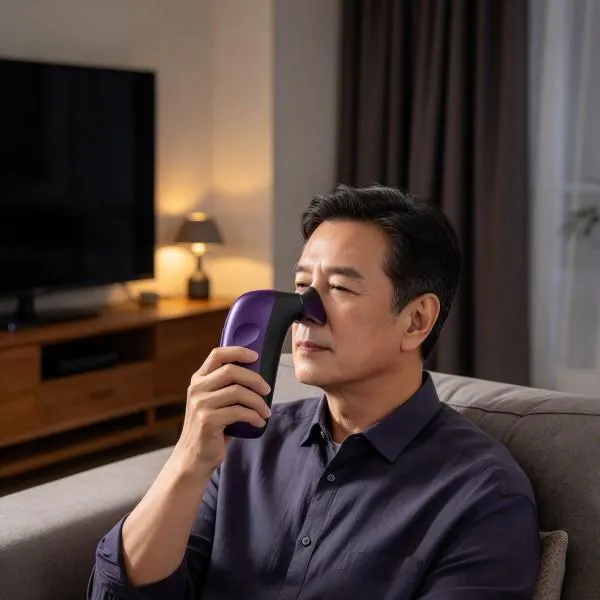
Unlike low-power red light wands that produce no tactile sensation, 960nm near-infrared photons interact gently with tissue water content. Within 60 to 90 seconds of placing the smooth treatment aperture against your cheek, nasal wall, or brow ridge, you will experience a gradual, soothing deep warmth beneath the skin. There is no electrical tingling, vibration, or sharp needle-like heat. Integrated thermal duty cycles keep the skin surface comfortable while delivering consistent energy into deeper sinus structures.
Photobiomodulation is non-invasive, yet clear clinical boundaries must be respected:
Chronic mucosal swelling develops over months or years, so tissue recovery follows a realistic biological schedule rather than an instant switch.
Scheduling repeated appointments at a specialized physical therapy clinic or integrative ENT office for in-office phototherapy typically costs $85 to $155 per visit, quickly exceeding $1,200 across a standard 12-session clinical course—plus commuting time and missed work hours.
By contrast, keeping a dedicated handheld device—engineered with compact, ergonomic contours (155mm × 50mm × 100mm) that fit comfortably along the cheekbones, nasal bridge, brow ridge, or even tense neck and jaw joints—gives an entire household unlimited access at home. Over two years of use, the per-session cost drops to pennies, turning an expensive clinical modality into a practical daily habit. For complete technical specifications, anatomical placement diagrams, and step-by-step home guides, visit https://neurolumax.com/sinusitis-rhinitis-treatment-at-home/.
For maxillary sinuses, rest the smooth treatment head gently on the fleshy area of your cheekbone roughly one inch below the center of your eye, and also along the outer side of your nostril (the nasal ala). For frontal sinuses, place it gently along the inner eyebrow ridge just above the bridge of your nose. Always keep your eyes closed or wear the provided protective eyewear when treating near the brow or upper cheek.
Yes, and sequencing them properly improves comfort. Use your saline spray or sinus rinse first to flush out thick surface mucus, crusts, and airborne irritants. Gently blow your nose, pat your facial skin dry, and then apply your 12-minute 960nm session. Clearing surface debris first ensures clean skin contact and allows increased local microcirculation to soothe the freshly rinsed sinus passages.
A conventional heating pad relies on conductive heat, which warms the outer skin but gets dispersed by superficial blood flow before reaching deep sinus walls. Similarly, cosmetic LED face masks use low-power 630nm–660nm red light designed for surface skin collagen rather than penetrating facial bone and cartilage. A dedicated 960nm handheld unit concentrates higher optical power density at a longer near-infrared wavelength specifically calibrated to reach deep sinus mucosa.
Living with constant sinus pressure quietly drains your focus, patience, and sleep quality every single day. Whether you want to get through a full workday without a throbbing ache behind your eyes, enjoy an outdoor walk without mouth-breathing, or lie down at night without your sinuses sealing shut, restoring natural drainage changes how you feel from morning to night.
When you address the underlying vascular stagnation and cellular energy deficit inside your sinus linings rather than relying on temporary chemical decongestants, your body finally gets the support it needs to clear congestion naturally. Having a compact, drug-free 960nm therapy unit within reach on your nightstand means calm, clear-headed breathing is always ready whenever you need it.
頑固な肘の外側の痛みが持続するのは、反復的な引張応力によって、橈側手根伸筋短頭の起始部で微小血管の閉塞や腱のリモデリングの失敗が生じ、その結果、結合組織が酸素不足に陥るためである。一方、患者は…….
詳細を見る肘の内側に持続的な痛みが残るのは、密度の高い総屈筋腱が、血管の供給が少ない「分水界」と呼ばれる領域に位置しているためです。この領域では、微小な断裂がエネルギーの行き詰まりに陥り、外用鎮痛剤や内服薬ではその部位まで届かないのです。もしあなたが……
詳細を見る慢性外側上顆痛は、手首の反復的な伸展によって伸筋総起始部に血管線維芽細胞性の微小断裂が生じ、血管が乏しい腱付着部が虚血性変性の状態となることで持続する。従来の治療法では…….
詳細を見る絶え間ない副鼻腔のうっ血は、緻密な顔面構造内に閉じ込められた間質液、停滞したリンパ液の排出、および微小血管の痙攣に起因しています。標的を絞った960nmの光生体調節(PBM)は、表層の障壁を迂回して細胞を刺激し……
詳細を見る