 家庭用携帯型治療機器













毎日の服薬による副作用を伴わない前立腺肥大症の治療法の選び方
83良性前立腺肥大症(BPH)は、前立腺周囲の良性間質細胞の増殖が、平滑筋の緊張、深部の微小血管うっ血、および局所的な組織低酸素症と相まって、尿流を阻害し、持続的な骨盤部の満腹感を引き起こす。
詳細を見る商品を検索投稿を検索
Stubborn facial congestion and recurring sinus pressure persist when deep paranasal sinus linings remain trapped in venous stagnation, tissue hypoxia, and swollen drainage channels that oral pills and surface sprays cannot clear. Targeted 960nm photobiomodulation (PBM) transmits near-infrared photons through overlying skin and thin facial bone to stimulate mitochondrial ATP synthesis and restore natural sinus drainage without systemic drugs. Unlike recurring pain relievers or medicated nasal sprays, 副鼻腔炎の治療 with this non-invasive physical approach carries zero gastrointestinal toxicity and eliminates the risk of chemical rebound swelling.
Living with recurrent sinus inflammation alters how you sleep, work, and feel from the moment your alarm rings. You wake up with a dull, pressurized ache across your cheekbones, behind your eyes, and along your upper teeth, accompanied by a parched throat from breathing through your mouth all night.
The friction carries straight through your day:
Standard first-line options often bring trade-offs when used repeatedly:
To understand why conventional 副鼻腔炎の治療法 frequently fall short, look inside the narrow ostia—the tiny millimeter-wide channels connecting your paranasal sinuses to your nasal cavity. Healthy sinus linings depend on synchronized microscopic hair cells (cilia) and brisk submucosal blood flow to sweep mucus out continuously.
When prolonged irritation—from seasonal allergens, dry indoor heating, barometric pressure swings, or lingering post-viral inflammation—inflames those linings, microvascular control breaks down. Rapid arterial-venous exchange slows into sluggish venous pooling.
This circulatory bottleneck starves deep mucosal cells of oxygen, creating localized tissue hypoxia. Deprived of oxygen, cells shift toward inefficient anaerobic metabolism, accumulating lactic acid, pro-inflammatory cytokines (such as IL-1β and TNF-α), and pain-sensitizing bradykinin. Meanwhile, sluggish lymphatic vessels fail to drain excess interstitial fluid, swelling the narrow sinus ostia shut.
Once those drainage channels seal off, pressure builds inside the closed sinus cavity—producing a throbbing facial ache. Surface sprays never travel past blocked ostia, leaving hypoxic, swollen tissue trapped in a self-perpetuating cycle.
In physical medicine and rehabilitation engineering, optical wavelength governs biological reach. Standard consumer red light panels rely on 630nm to 660nm wavelengths, which scatter rapidly in skin melanin and superficial hemoglobin within 1 to 2 millimeters. Even common 810nm or 850nm near-infrared diodes lose substantial photon density when encountering facial cartilage and the thin anterior walls of the maxillary and frontal sinuses.
その 960nmの近赤外波長 occupies a distinct optical window that pairs low melanin scattering with controlled water-chromophore interaction. This optical behavior allows therapeutic photon density to pass through facial skin, traverse thin maxillary and frontal bone plates, and reach the deep mucosal linings of the paranasal sinuses.
Once 960nm photons reach oxygen-starved sinus cells, three well-documented biophysical events restore normal tissue function:
Modern rehabilitation science treats photobiomodulation as a calibrated, dose-dependent biophysical modality rather than superficial heat. Applying focused 960nm optical energy directly over external sinus landmarks addresses the exact microcirculatory stagnation driving recurring facial pressure.
Evaluating a sinus headache treatment becomes far clearer when you compare tissue penetration depth, cellular impact, and long-term safety across common approaches.
| 評価の側面 | Oral Painkillers & Nasal Sprays | Warm Compress & Standard 660nm Light | 960nmのターゲットを絞った深部光生体調節 |
| 組織への浸透深度 | Surface nasal mucosa only (sprays) or systemic bloodstream (oral pills). | Superficial (0.5mm to 2mm); blocked by skin barrier and facial bone. | Deep reach (15mm–30mm), penetrating maxillary and frontal sinus linings. |
| 細胞のメカニズム | Blocks pain receptors, constricts vessels, or suppresses immune signaling. | Surface skin warmth or shallow epidermal photostimulation. | Activates Cytochrome c Oxidase, boosts ATP synthesis, and clears venous pooling. |
| 副作用および依存リスク | Stomach irritation, rebound congestion, mucosal bleeding, and drowsiness. | Minimal; occasional skin dryness from prolonged hot compresses. | Non-pharmacological; zero chemical dependency, GI strain, or rebound swelling. |
| 毎日の家庭での便利さ | Easy to carry, yet tied to dosing intervals and recurring pharmacy refills. | Compresses cool within minutes; wide LED panels lack focused sinus placement. | Compact handheld design enables dry, targeted 10-minute home sessions. |
| Cumulative 1-Year Cost | $270 to $620+ annually in recurring medications, sprays, and co-pays. | $50 to $200 upfront, with minimal impact on deep paranasal sinus edema. | Single one-time device purchase; zero ongoing consumable or refill expenses. |
The following structured observation record tracks an adult patient managing recurrent non-bacterial chronic rhinosinusitis at home using a handheld 960nm therapy device (155mm × 50mm × 100mm ergonomic form factor designed for targeted facial sinus and joint placement).
| Observation Metric | Documented Clinical & Home Details |
| Case Tracking ID | PMR-ENT-2026-1209-TS |
| 患者のプロフィール | 49-year-old Male, Civil Site Inspector (Non-smoker) |
| 臨床分類 | Recurrent Chronic Non-Bacterial Rhinosinusitis with Maxillary & Ethmoid Pressure; 4-year history; aggravated by outdoor dust, seasonal shifts, and dry truck cabin air; CT-confirmed mucosal thickening without polyps. |
| Baseline Status (Week 0) | SNOT-22 Score: 52/110; Facial Pressure/Pain VAS: 7.0/10 during flares (3–4 days/week). Morning cheekbone tenderness, broken sleep from nasal blockage, reliance on oral NSAIDs 3–4 times weekly plus daily saline rinses. |
| Home Application Protocol | External 960nm near-infrared PBM applied gently over bilateral maxillary sinus zones (beside nasal bridge/under cheekbones) and supraorbital frontal zones. 10 minutes per session (5 minutes per side), once nightly, 5 days/week. |
| Week 2 Assessment | SNOT-22 Score: 36/110; Facial Pain VAS: 4.5/10. Patient reported comforting deep warmth across cheekbones during sessions followed by easier sinus drainage and reduced morning facial tightness. |
| Week 6 Assessment | SNOT-22 Score: 20/110; Facial Pain VAS: 2.0/10. Weekly sinus pressure days dropped from 4 days/week to 1 mild episode every two weeks; oral pain reliever use reduced by over 80%. |
| Week 12 Assessment | SNOT-22 Score: 11/110; Facial Pain VAS: 0.5/10. Sustained clear breathing during outdoor site inspections and uninterrupted sleep. Transitioned to preventive maintenance (3 sessions/week, 10 minutes each). |
| Safety & Adverse Events | None reported. Mild, relaxing internal warmth noted during sessions with zero skin irritation or mucosal dryness. |
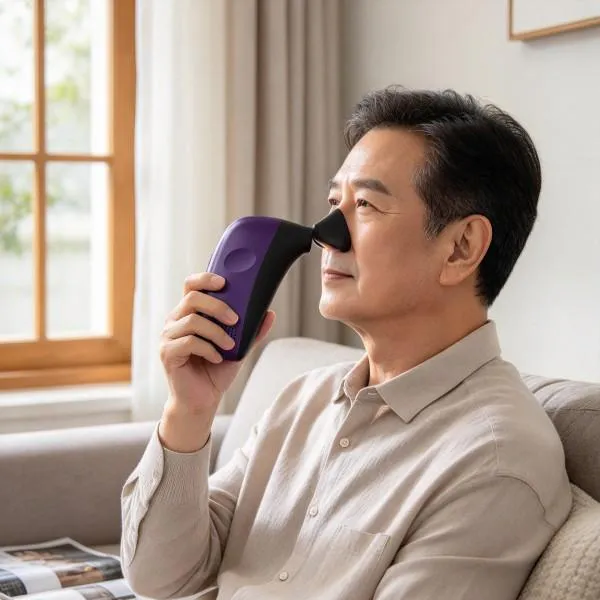
Clear expectations build lasting trust in any physical rehabilitation routine. Because 960nm near-infrared light interacts gently with tissue water while penetrating deeply beneath facial bones, it creates a distinct physical sensation compared to cold red LED lights.
Deep mucosal recovery follows natural biological pacing rather than overnight shortcuts. Consistent sessions allow cellular ATP levels and lymphatic drainage to build cumulative momentum.
Visiting an outpatient physical therapy or integrative ENT clinic for targeted photobiomodulation typically runs $70 to $125 per session, totaling $840 to $1,500 for a standard 12-session course—before factoring in commuting and missed work hours.
Owning a dedicated handheld 960nm therapy unit changes that equation completely. A compact device engineered for precise anatomical placement lets you complete a quiet 10-minute session on the couch before bed without booking appointments or buying monthly painkiller refills. Plus, because the exact same 960nm penetration depth also relieves stiffness in sore knees, shoulders, and wrists, one unit supports practical pain and inflammation care for your entire household over many years.
“Working outdoors around dust and dry truck heaters all day left my cheekbones aching and my nose locked up almost every night. Taking ibuprofen three or four times a week upset my stomach, and nasal sprays always caused worse rebound stuffiness by the weekend. When I started using a 960nm handheld light device over my cheekbones and brow each evening, the deep, gentle warmth felt like it was finally loosening that heavy pressure inside my face. By week three, I woke up realizing my head felt clear and light—no bruised tenderness when washing my face, and no afternoon brain fog. Now I just use it three nights a week while relaxing, and those stubborn sinus flare-ups rarely bother me.”
— Brian H., 49, Denver, CO
If you are ready to establish a steady, drug-free physical care routine for stubborn facial pressure and recurring sinus congestion, review the technical parameters and step-by-step placement protocols on the https://neurolumax.com/sinusitis-rhinitis-treatment-at-home/ resource page to see how targeted 960nm photobiomodulation fits into daily home recovery.
1. How should I position a 960nm handheld device when treating sinusitis discomfort at home? I recommend dividing your 10-minute session across the main paranasal sinus zones: hold the emitter gently against clean skin beside the bridge of your nose and just under your cheekbones (maxillary sinuses) for 3 to 4 minutes per side, then spend 1 to 2 minutes along the inner brow ridge above your nose (frontal sinuses) with your eyes closed.
2. Can I pair 960nm light therapy with daily saline sinus rinses? Yes, combining them works very well. I always suggest performing your saline rinse first to flush out thick surface mucus and dust, gently patting your face completely dry with a towel, and then applying the 960nm light so near-infrared photons penetrate clean skin without scattering off water droplets.
3. Why does 960nm light reach deeper than standard red LED face masks? Consumer red light masks rely on low-power 630nm to 660nm LEDs that scatter within the top 2 millimeters of skin. Because 960nm sits in a deeper optical penetration window with higher targeted energy density, photons pass through thin facial bone to warm and stimulate underlying sinus linings directly.
Few everyday discomforts wear down your focus faster than carrying a dull, throbbing ache behind your cheekbones from morning until night—wincing when you bend forward, losing deep sleep to nasal blockage, and relying on pills that only mute pain temporarily. Watching someone finally put away the bottle of pain relievers, sleep comfortably through the night again, and wake up with a clear, light head shows what happens when you restore deep tissue circulation instead of masking symptoms. With ten minutes of targeted 960nm support each evening, calm, comfortable sinus relief can become part of your regular routine.
良性前立腺肥大症(BPH)は、前立腺周囲の良性間質細胞の増殖が、平滑筋の緊張、深部の微小血管うっ血、および局所的な組織低酸素症と相まって、尿流を阻害し、持続的な骨盤部の満腹感を引き起こす。
詳細を見る慢性副鼻腔うっ血が持続するのは、上顎洞および前頭洞内の炎症を起こした粘膜組織が、微小循環の悪化、局所的な酸素欠乏、およびリンパ液の排出停滞という悪循環に陥っているためである。960nmの光生物学的治療を標的として…
詳細を見る腫れた粘膜組織が自然な排液路を塞ぐと、顔面に持続的な圧迫感が生じ、副鼻腔炎は悪循環に陥ってしまいます。従来の副鼻腔炎の治療法は、一時的な効果しか得られない化学的な血管収縮薬に依存していますが……
詳細を見る勃起不全の治療法を理解するには、一時的な化学的血管拡張にのみ頼るのではなく、微小血管機能不全や海綿体平滑筋の線維化に対処することが必要である。血管障害が再発し続けるのは、慢性的な…….
詳細を見る