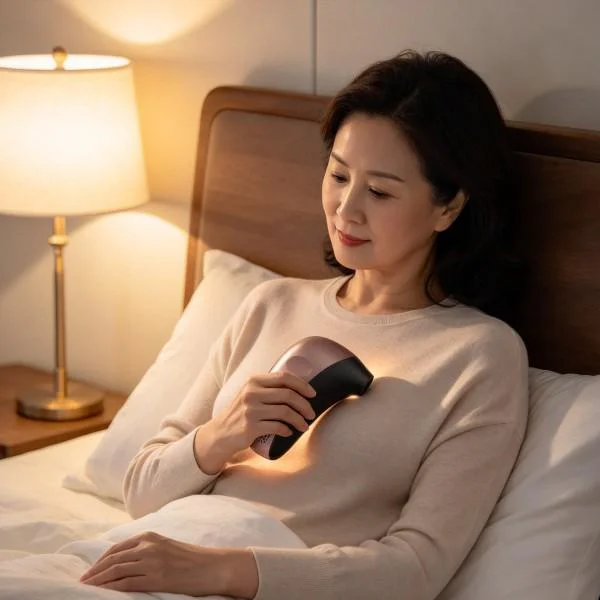
Effective lactational mastitis management and supportive care for subacute non-lactational breast inflammation depend on breaking the microvascular compression cycle within deep parenchymal lobules. Persistent swelling occurs when dense interstitial edema crushes low-pressure venous and lymphatic vessels, depriving alveolar tissues of oxygen and halting natural cellular drainage. Targeted 960nm photobiomodulation (PBM) penetrates directly through dense fibroglandular tissue to jumpstart mitochondrial respiration and restore microvascular perfusion. Unlike systemic medications that burden maternal hepatic systems or disrupt delicate gut biomes, non-invasive 960nm light triggers deep fluid clearance without chemical toxicity or infant feeding interruptions.
Daily Struggles With Breast Inflammation and Clinical Pitfalls
Living with localized breast inflammation turns daily life into an exhausting routine of pain management. The issue begins as a subtle, firm wedge deep within the tissue, but quickly escalates into a radiant, burning ache that makes simple physical contact agonizing. Even the soft friction of a loose cotton top, a car seatbelt, or leaning over a desk triggers sharp, nauseating pain across the chest wall.
Rest becomes severely fractured. Sleeping on your stomach or affected side is out of the question, while lying flat creates a heavy, throbbing sensation that wakes you throughout the night. If nursing or pumping, the stress compounds: watching the clock while anticipating a feed brings profound anxiety, especially when milk flow stalls on the congested side despite painful latch attempts.
Whether navigating acute lactating mastitis treatment or exploring non lactational mastitis treatment for recurrent periductal flare-ups, conventional frontline strategies often run into strict physical limitations:
Routine Antibiotics: While mandatory for confirmed systemic bacterial infections accompanied by high fevers, antibiotics alter maternal and infant microbiomes without clearing non-bacterial, sterile interstitial fluid accumulation.
NSAIDs & Systemic Analgesics: Ibuprofen can tamp down perceived pain pathways, but oral pills do not relieve the physical mechanical pressure compressing delicate ductal walls.
Aggressive Deep Massage: Firm rubbing, vibrating massage guns, or hard manual rolling crush fragile capillary arches, triggering secondary capillary bleeding and worsening ductal lumen compression.
Prolonged Heat Packs: Scalding wet washcloths dilate superficial arterioles on the skin, flooding swollen glandular lobes with additional interstitial fluid while failing to reach deep parenchymal beds.
The Pathological Impasse: Parenchymal Hypoxia and Metabolic Entrapment
The mechanical foundation of ongoing breast inflammation centers on microvascular collapse inside the dense fibroglandular matrix.
When milk drainage stalls or periductal inflammation sets in, internal lobular pressure climbs. This structural expansion quickly overpowers the ultra-thin walls of regional venules and lymphatic capillaries.
Without microcirculatory outflow, tissue oxygen drops steeply. Hypoxic parenchymal cells run out of adenosine triphosphate (ATP), causing active cellular sodium-potassium pumps to fail and trapping extracellular fluid inside the tissue spaces. Trapped metabolic waste products—including bradykinin, substance P, and lactic acid—pool around local nociceptors, locking the tissue into extreme hypersensitivity. Surface skin creams and external heat packs cannot penetrate this deep, pressurized compartment.
Resolving deep parenchymal stagnation requires an optical wavelength capable of traveling through cutaneous tissue, subcutaneous fat, and dense connective Cooper’s ligaments without scattering into surface heat.
While 650nm visible red light aids superficial skin cracks and 850nm light assists shallow skeletal muscles, both scatter rapidly when encountering dense fibroglandular tissue and adipose layers. A calibrated 960nm wavelength takes advantage of a proven optical transmission window with low melanin absorption and minimal water scatter in glandular structures. This allows photons to penetrate 15mm to 30mm directly into inflamed lobular beds.
Upon reaching oxygen-depleted parenchymal cells, 960nm light initiates a targeted biological cascade:
Mitochondrial Enzyme Excitation: Photons bind to Cytochrome c Oxidase in the mitochondrial inner membrane, displacing inhibitory nitric oxide and restoring the cellular electron transport chain.
Surge in ATP Output: Energized alveolar epithelial cells restore active ion balance, reducing intracellular swelling and opening compressed duct channels.
Endothelial Nitric Oxide Release: Photodissociation releases localized nitric oxide (eNO), which dilates collapsed micro-capillaries to flush away trapped acidic byproducts.
This methodology is anchored in physical rehabilitation engineering, delivering targeted biophysical energy to congested soft tissue without introducing chemical foreign agents.
Comparison of Clinical Approaches
Evaluation Parameter
Oral Antibiotics & NSAIDs
Hot Compresses & Aggressive Massage
Targeted 960nm Photobiomodulation
Tissue Penetration Depth
Systemic distribution via digestive circulation
Surface skin (1–3 mm); blocked by adipose layers
Deep parenchymal reach (15–30 mm); reaches glandular lobules
Cellular Mechanism
Antibacterial action or chemical COX inhibition
Superficial sensory masking via surface heat
Cytochrome c Oxidase activation & lymphatic fluid drainage
Side Effect & Safety Profile
GI distress, maternal and infant microbiome disruption
High risk of tissue bruising and worsened duct edema
Favorable safety profile; non-invasive and non-chemical
Daily Home Usability
Oral pills at home; prescription refills required
High convenience with standard household items
High; ergonomic handheld sessions on your schedule
1-Year Cumulative Cost
Recurring clinic visits and prescriptions ($150–$500+)
Minimal cash spend; high rate of recurring flare-ups
One-time equipment investment; multi-joint family use
Documented Clinical Recovery Record
The following real-world clinical log documents measured physiological improvements during a home-based photobiomodulation protocol paired with physiological drainage principles.
Clinical Diagnosis: Recurrent left lower outer quadrant lactational engorgement and acute inflammatory mastitis (Duration of flare: 36 hours)
Initial Evaluation: Visual Analog Scale (VAS) Pain Score: 8/10; palpably firm 5.0 x 3.5 cm wedge of consolidation; localized erythema; low-grade temperature of 100.2°F without systemic sepsis; infant unlatching and crying due to severe tissue tension
Protocol Parameters: Handheld 960nm PBM unit; gentle non-compressive contact perpendicular to the affected lower outer quadrant; 5 minutes per point across two positions (10 minutes total per session); twice daily prior to nursing
Clinical Progress Tracking Log
Tracking Milestone
VAS Pain Score (0–10)
Palpable Consolidation Size
Clinical Observations & Nursing Ease
Hour 0 (Baseline)
8 / 10
5.0 x 3.5 cm (firm, tender)
Skin taut, severe pain upon infant latch; milk expression yields minimal drops
Hour 12 (Day 1)
5 / 10
3.8 x 2.2 cm (softening margins)
Internal throbbing subsides; steady milk stream noted during feeding
Breast tissue completely soft on examination; symmetric milk expression restored
Day 7 (Follow-up)
0 / 10
Normal glandular tissue
Zero recurrence of swelling; nursing sessions proceed completely pain-free
“By day two of that hard lump, I was sobbing before every feed. The skin was so hot and tight that just wearing a bra felt unbearable, and using an electric massager only left my breast bruised and more swollen. The 960nm wand felt completely different. It gave off a soothing, deep warmth that did not sting, and within a few hours, the rock-hard wedge finally started to soften. By the next morning, my milk drained easily without any forceful squeezing. It completely rescued my feeding journey.”
— Documented home protocol participant feedback
Treatment Sensation, Safe Application, and Usage Boundaries
Using a medical-grade 960nm handheld device creates a gentle, deeply relaxing warmth within dense glandular tissue. Because this method uses non-ablative photobiomodulation rather than surgical cutting beams or high-voltage electric currents, you will not experience electrical shocks, sharp skin stinging, or thermal burns.
Who Benefits Most from Home Light Care
Postpartum mothers seeking a structured protocol for lactational mastitis management.
Nursing parents who want a gentle, non-chemical approach for lactating mastitis treatment before secondary complications emerge.
Clear Medical Boundaries and Precautions
Systemic Bacterial Infection: If you develop a fever exceeding 101°F, chills, nausea, confusion, or red streaking spreading through the breast, seek immediate physician evaluation for antibiotic therapy.
Active Cancerous Tissue: Never direct the light beam over suspected or known skin lesions or tumors.
Fluctuant Abscess: Avoid treating areas displaying localized collections of fluid requiring clinical drainage.
Implanted Medical Electronics: Do not place the light output directly over cardiac pacemakers or implanted nerve stimulators.
Staged Recovery Protocol and Long-Term Value
Restoring healthy lymphatic drainage and parenchymal tissue balance requires respecting natural biological healing stages. Combine daily light therapy with physiological feeding strategies for optimal results:
Stage 1: Microvascular Activation & Decongesting (Days 1 - 2)
├── Twice-daily 960nm sessions (10 mins) to clear ischemic metabolic waste
├── Gentle cool compresses between feeds to reduce inflammatory fluid flow
└── Calming of sharp latching pain and softening of localized hard wedges

Stage 2: Restoring Ductal Clearance (Days 3 - 5)
├── Apply 960nm light directly before infant nursing to encourage milk flow
├── Continue unforced, normal feeding on demand without excess pumping
└── Steady clearance of residual induration and return of symmetric drainage

Stage 3: Maintenance & Recurrence Prevention
└── 2-3 sessions weekly during times of missed feeds or engorgement
The Cost Reality of Managing Nursing Complications
Repeated visits to outpatient lactation consultants, emergency room evaluations for mastitis scares, and prescription medications easily run between $200 and $600 per incident. A dedicated 960nm handheld device provides professional physical therapy parameters at home, delivering repeatable relief for postpartum breast tissue strain as well as common family joint and tendon problems.
Practical Questions Answered
Should I pump aggressively while using the light device?
No. Pumping on maximum suction irritates delicate ductal tissue and can trigger excess milk production that worsens tissue swelling. Use your 960nm device to relax tissue and open microvascular channels, then allow your baby to nurse or pump at comfortable, gentle pressure.
Why does 960nm light work better than a standard hot compress?
A warm cloth transfers heat only to superficial skin layers, which dilates cutaneous capillaries and can increase fluid pooling in swollen breast tissue. The 960nm near-infrared beam bypasses surface water absorption, depositing therapeutic photons directly into deep parenchymal lobules to clear interstitial edema.
How soon will milk flow freely after a session?
Most individuals notice a reduction in tissue firmness and an easing of sharp latching pain within one to two sessions. Milk typically flows more easily during the very next feeding as deep microvascular swelling recedes and relieves mechanical pressure on duct walls.
Chronic lateral epicondylitis persists because the extensor carpi radialis brevis tendon suffers from poor blood flow, trapping damaged collagen in an ongoing metabolic stall. Instead of masking signals with oral medication, targeted 960nm photobi...
Chronic nasal inflammation lingers because engorged venous sinusoids and sluggish lymphatic drainage trap the mucosal lining in an ongoing metabolic standstill. If you are exploring a rhinitis natural treatment without dependency on ongoing medica...
Chronic lateral epicondylalgia persists when repetitive wrist extension produces angiofibroblastic micro-tearing at the common extensor origin, leaving the hypovascular tendon attachment in a state of ischemic degeneration. While conventional prot...
 Handheld Home-Use Therapy Device