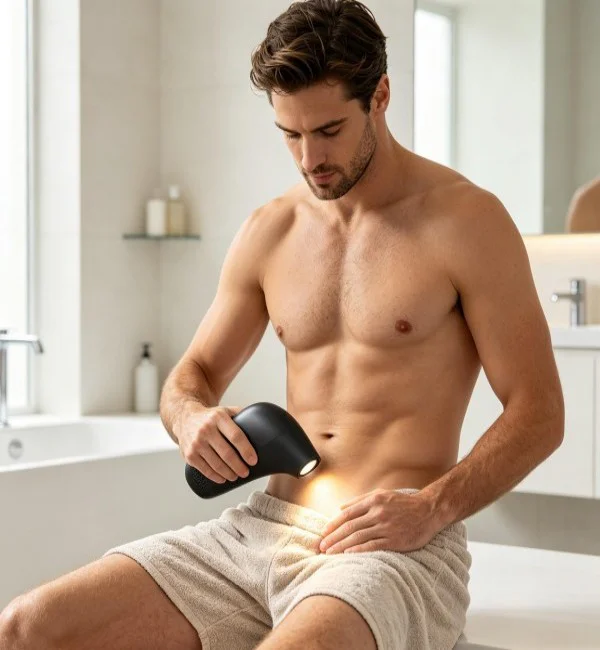
Benign prostatic hyperplasia and chronic pelvic congestion linger because the transition zone of the prostate sits deep within a rigid pelvic floor, where microvascular compression causes localized ischemia and fluid entrapment. Targeted 960nm photobiomodulation bypasses superficial tissue and pelvic bone to deliver concentrated near-infrared photon density straight into congested glandular stromata, restoring cellular energy and promoting microvascular clearance. Unlike systemic pharmaceutical regimens that cause liver metabolism stress, orthostatic dizziness, and sexual dysfunction, this targeted optical modality clears local venous stagnation without chemical toxicity, establishing an evidence-based physical approach alongside enlarged prostate natural medicine options.
When Daily Routine Centers on the Restroom: The Reality of Pelvic Strain
Chronic lower urinary tract symptoms and persistent pelvic floor tightness steadily erode everyday independence, sleep quality, and mental focus.
The Broken Sleep Cycle: Waking up three to five times every night to shuffle to the bathroom, straining for minutes just to produce a thin, hesitating trickle that leaves you feeling half-empty.
The Interrupted Road Trip: Scanning highway exits for rest stops during simple family drives, living with the dread of a sudden, painful urinary urge that cannot be delayed.
The Seat Cushion Ache: Sitting through a business meeting or an evening dinner triggers a deep, hot, pressurized ache between the rectum and scrotum, turning normal sitting into an endurance test.
The Loss of Vitality: Struggling with diminished erectile firmness and involuntary post-void dribbling that leaves underwear damp, creating silent embarrassment and psychological exhaustion.
Men searching for lasting relief frequently navigate conventional first-line therapies that hit physical or physiological limits:
Alpha-Blockers (e.g., Tamsulosin): While they relax the bladder neck, they commonly cause lightheadedness, retrograde ejaculation, and nasal congestion without altering the underlying glandular inflammation.
5-Alpha Reductase Inhibitors (e.g., Finasteride): These alter hormonal profiles to shrink volume, but they require months to work and often carry long-term risks of lowered libido and erectile dysfunction.
Over-the-Counter Herbal Extracts: While saw palmetto and beta-sitosterol are widely consumed, their poor gastrointestinal absorption means very little active compound reaches deep prostatic capillary beds.
The Root Pathology: Pelvic Floor Ischemia and Fluid Entrapment
Understanding how to restore glandular comfort requires recognizing that chronic enlargement is driven by microvascular stagnation, tissue hypoxia, and sterile stromal inflammation.
The male gland is encased in a dense, non-compliant fibromuscular capsule. As glandular and stromal cells proliferate, interstitial fluid pressure rises, pinching delicate microcapillary beds shut.
This mechanical compression causes localized tissue hypoxia. Deprived of normal blood flow, stromal fibroblasts and smooth muscle cells deplete their adenosine triphosphate (ATP) reserves. Cellular ion pumps stall, preventing the reabsorption of excess interstitial fluid. Metabolic byproducts, such as lactic acid, bradykinin, and inflammatory cytokines, pool within the capsule. This trapped inflammatory fluid forms an inward compressive cuff around the prostatic urethra. Surface therapies fail because they cannot reach this deep, encapsulated anatomical region.
The 960nm Bio-Optical Advantage: Penetrating Deep Pelvic Structures
Resolving deep glandular congestion requires an optical wavelength that traverses dense muscle and bone structures without burning cutaneous tissue.
Optical Transmission Physics: Why 960nm Reaches Deep Glandular Tissue
Superficial red wavelengths (630nm–660nm) scatter heavily within skin melanin, while standard near-infrared (810nm–850nm) encounters high absorption from superficial capillary hemoglobin.
The targeted 960nm wavelength operates within a unique bio-optical transmission window. It combines minimal tissue scattering with balanced water absorption characteristics. This allows collimated photons to traverse the perineum, dense pubic fascia, and pelvic floor musculature, penetrating 30mm to 50mm deep directly into the congested glandular lobes and surrounding periurethral zones.
The Mitochondrial Cascade: Photon Absorption to Pelvic Decompression
When 960nm photons reach the hypoxic prostatic stroma, they trigger an evidence-based cellular recovery sequence:
Activation of Cytochrome c Oxidase: Photons target Unit IV of the mitochondrial electron transport chain, displacing inhibitory nitric oxide (NO) from catalytic binding pockets.
Reactivation of ATP Synthesis: Relieved of nitrosative blockage, the electron transport chain resumes normal output, generating the ATP necessary for stromal cells to restore active fluid transport.
Endogenous Microvascular Dilation: Liberated nitric oxide diffuses into local vascular walls, prompting constricted pelvic capillary loops and venous sinusoids to relax and drain.
Lymphatic Flush and Tissue Decompression: Stimulated microcirculation washes out pooled acidic byproducts and inflammatory mediators, relieving mechanical pressure on the urethra and supporting natural tissue balance alongside advanced prostate immunotherapy research.
Multi-Dimensional Modality Comparison
Evaluation Metric
Oral Alpha-Blockers & Inhibitors
Superficial Heat & 650nm Red Light
Targeted 960nm Deep Photobiomodulation
Tissue Penetration Depth
Systemic circulatory distribution
1 mm to 3 mm (surface perineal skin)
30 mm to 50 mm (penetrates pelvic floor & capsule)
Cellular Mechanism
Blocks receptors / suppresses DHT
Transient surface thermal dilation
Activates CCO, restores ATP, flushes venous edema
Side Effect / Dependency Risk
Erectile dysfunction, dizziness, libido loss
Minimal; superficial skin redness
Non-invasive, zero systemic toxicity, zero habituation
Home Usability
High (daily oral pill ingestion)
High (sitz baths, standard heating pads)
High (compact, targeted handheld administration)
Annual Cumulative Cost
$300 – $800 (ongoing prescriptions & co-pays)
$40 – $120 (consumable pads, bath salts)
Single hardware investment, shared long-term use
Documented Clinical Case Record
The following data tracks the documented clinical care of a patient suffering from moderate-to-severe lower urinary tract symptoms associated with chronic pelvic congestion.
Clinical Parameter
Documented Patient Case Profile
Patient Profile
Male, 58 years old, Commercial Airline Pilot & Long-Distance Driver
Clinical Diagnosis
Grade 2 Benign Prostatic Hyperplasia with Chronic Non-Bacterial Pelvic Congestion
IPSS stabilized at 7/35 (Mild); post-void residual volume on ultrasound dropped from 85 mL to 22 mL
Long-Term Protocol
Twice-weekly 10-minute maintenance sessions; zero symptom flare-ups documented at 12-month follow-up
Patient Perspective: A Real-World Experience
“Sitting in the cockpit for six-hour flights was turning into torture. I had this constant, heavy ache deep in my groin, and my stream was so weak that I was constantly stressed about bathroom breaks. The medications my doctor prescribed made me dizzy and ruined my intimacy with my wife, so I stopped taking them. When I started using the 960nm device, the feeling was completely unexpected. It isn’t a cold laser, and it doesn’t scorch your skin like an electric heating pad. It gives off this steady, deep, soothing warmth that feels like it completely relaxes your entire pelvic floor. Within three weeks, I went from waking up four times a night down to just once, and the heavy sitting pressure completely disappeared. It gave me my confidence and my sleep back.”
Realistic Expectations: Sensations, Candidacy, and Safety Boundaries
Understanding practical boundaries ensures safe and effective home application:
Sensory Experience: Patients experience a comfortable, deep-soaking warmth. It is a non-cold, photo-thermal therapeutic modality without electric shocks, stinging, or muscle twitching.
Appropriate Candidates: Men managing chronic non-bacterial pelvic tension, mild-to-moderate benign prostatic enlargement, weak urinary stream, or frequent nighttime waking seeking a drug-free routine.
Contraindications: Do not apply over known active pelvic or prostatic malignancies, unexplained hematuria (blood in urine), active perineal skin infections, or directly over implanted electronic devices such as sacral nerve stimulators. If acute urinary retention occurs (inability to pass urine), seek immediate emergency medical care.
Progressive Recovery Timeline and Real-World Economics
Decompressing dense pelvic glandular tissue follows a structured biological process:
[Weeks 1 - 2: Microvascular Induction]
- Nitric oxide release opens compressed microcapillaries
- Pelvic floor hypertonicity and sitting ache drop by 30% to 45%
- Nocturia frequency decreases from 3-4 times down to 1-2 times
                         │
                         ▼
[Weeks 3 - 4: Stromal Decongestion]
- Restored ATP generation powers fluid clearance
- Urethral compression eases, producing a stronger, fuller urinary stream
- Post-void residual volume declines measurably
                         │
                         ▼
[Long-Term: Structural Maintenance]
- Weekly or bi-weekly 10-minute maintenance sessions
- Shields pelvic vasculature against prolonged sitting and sedentary strain
- Prevents chronic relapse loops without medication dependence
Financial Analysis: Specialist Clinic Visits vs. Personal Home Care
Outpatient urology consultations, repeat urodynamic flow tests, and ongoing prescription refills routinely cost $1,800 to $3,800 annually. Adding in travel time, missed work, and ongoing medication side effects makes clinical reliance an ongoing burden.
A dedicated at-home 960nm device changes this balance. The one-time hardware investment delivers unlimited, on-demand sessions in the privacy of your home, while offering shared utility for family members managing joint stiffness, tendon strains, or everyday muscular tension.
Safe Home Care Integration
To achieve lasting pelvic comfort, integrate light therapy into a structured daily wellness routine. Ensure the perineal area is clean and dry. Position the emitter head in gentle, direct contact with the perineal zone (between the scrotum and anus) or the suprapubic area for 10 to 12 minutes per session, keeping your breathing relaxed.
Pair your light sessions with simple lifestyle modifications: avoid excessive caffeine after 6 PM, stay hydrated throughout the day, and perform gentle pelvic floor relaxation stretches rather than forceful clenching.
To examine clinical beam spot footprints, energy density ratings, and certified protocols for managing chronic glandular strain, explore the verified enlarged prostate natural medicine hardware specifications and practical home care guidelines.
Frequently Asked Questions
Can 960nm photobiomodulation be used alongside saw palmetto or beta-sitosterol?
Yes. Nutritional approaches provide plant phytosterols to support overall hormonal balance, while 960nm light addresses the physical microvascular collapse and stagnant interstitial fluid deep within the tissue. Combining oral nutritional support with localized light therapy creates a synergistic, multi-target routine.
Why does 960nm light feel warm during application?
Unlike low-power red LEDs, the 960nm wavelength has a minor, physiologically beneficial water absorption coefficient. As collimated photons travel deep into dense pelvic musculature and glandular tissue, a small fraction of photon energy converts into a mild, soothing endogenous warmth that aids local vascular dilation without overheating superficial skin layers.
How quickly will I notice an improvement in nighttime urination?
Many individuals experience a noticeable reduction in nighttime waking within the first 10 to 14 days of consistent daily sessions, dropping from three or four trips down to one or two. Continued biological repair and structural decompression of the prostatic urethra typically reach peak stability over 4 to 8 weeks of regular use.
Targeted 960nm photobiomodulation addresses chronic upper airway congestion by delivering near-infrared energy through dense nasal cartilage directly into the hypoxic respiratory mucosa. Unlike conventional therapies that only temporarily shrink b...
Stubborn milk duct blockages persist because localized microvascular edema compresses internal lobular lumens, trapping milk secretions in a hypoxic state that superficial compresses cannot resolve. When looking for how to treat a clogged milk duc...
Chronic rhinitis persists because vascular dysregulation and stagnant mucosal microcirculation leave deep nasal passages trapped in an ongoing inflammatory loop. When searching for an elusive allergic rhinitis cure, patients often discover that co...
A stubborn blocked milk duct is rarely a simple mechanical plug; it is an inflammatory cascade of localized interstitial edema, vascular compression, and stagnant lymphatic flow around delicate mammary lobules. When looking for a dependable clogge...
 Handheld Home-Use Therapy Device