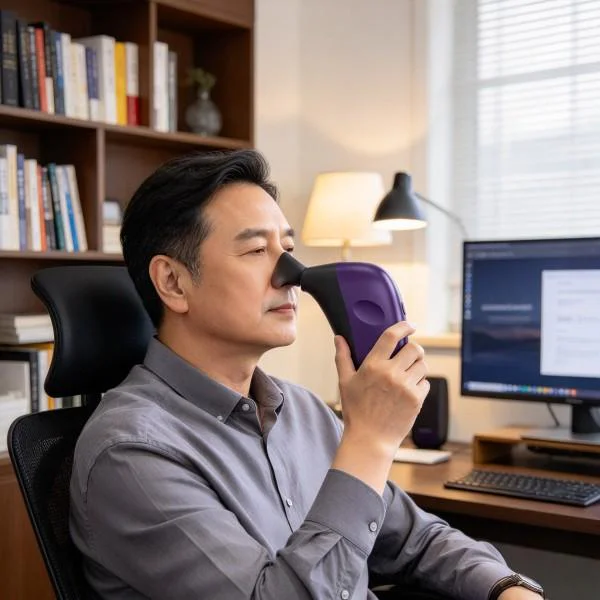
Chronic sinus pain persists when constricted microvessels and trapped fluids lock the mucosal lining into a low-oxygen state behind facial bones. Targeted 960nm photobiomodulation (PBM) delivers coherent optical energy through cortical bone structures, stimulating mitochondrial energy pathways to ease stubborn swelling and encourage normal mucus clearance. Free from drug-induced rebound effects, systemic chemical processing, and digestive irritation, this non-invasive approach offers a clean, dependable path for treating chronic sinus infections right at home.
The Relentless Grind of Unresolved Sinus Pressure
Living with ongoing sinus distress is a quiet, continuous energy drain. You wake up with heavy tenderness pressed beneath your eye sockets and across your dental arches. Bending down to pick up laundry triggers an uncomfortable surge of throbbing fluid behind your forehead.
By mid-afternoon, concentration slips as tension builds between your eyes. Breathing through swollen, dry nasal tissue takes conscious effort, making extended phone calls or quiet focus frustrating. When night comes, congested passages force shallow mouth-breathing, causing throat irritation and interrupted, unrefreshing rest.
Common everyday fixes regularly run into dead ends:
Over-the-counter medicated decongestants rapidly tighten surface blood vessels, but using them for more than three days risks severe rebound swelling (rhinitis medicamentosa) that leaves passages tighter than before.
Routine pain tablets offer brief symptom dampening while taxing the digestive tract, leaving the thick, sticky mucosal plug completely untouched.
Warm face cloths and steamy showers offer momentary comfort on surface skin, but surface heat dissipates quickly and cannot penetrate the bony barriers where stagnant fluid pools.
Finding an enduring treatment for sinus infection episodes requires moving past surface-level tricks to address the trapped physiological bottleneck.
The Biological Bottleneck: Hypoxia and Paralysis in the Mucosa
Healthy sinus cavities depend on continuous fluid motion through microscopic channels called the ostia. The entire surface is carpeted with microscopic cilia that sweep a thin layer of fluid out toward the throat. When chronic inflammation settles in:
Capillary networks contract, depriving deep epithelial cells of the oxygen and glucose needed to function.
Ciliary motion grinds to a halt, turning a self-clearing canal into a stagnant pool of thick, static fluid.
Lymphatic drainage shuts down, trapping inflammatory waste products against sensory nerve endings inside rigid facial bone cavities.
Because the sinus lining sits behind dense facial bones, superficial heating or surface sprays fail to restore this broken transport cycle. Restoring drainage demands a targeted physical mechanism capable of reaching these deep-seated structures.
The Science of 960nm Wavelengths in Facial Tissue
Not all light therapy delivers the same results. Visible red wavelengths (around 630nm to 660nm) and standard near-infrared light (810nm to 850nm) perform well on surface skin and superficial soft tissue, but they disperse rapidly across dermal layers and struggle to penetrate dense structures.
Penetration Capabilities Through Bone & Mucosa:
650nm Red Spectrum      |=== (Surface skin depth: 1-2mm)
850nm Near-Infrared     |====== (Superficial soft tissue: 4-6mm)
960nm Targeted NIR      |=============== (Traverses facial bone into sinus cavity: 15-22mm)
The 960nm wavelength sits in an optical window where scattering by melanin and hemoglobin is minimized. This unique physical profile allows photon streams to travel cleanly through the thin anterior walls of the maxillary and frontal bones to reach the inflamed mucosal lining directly.
Cellular Cascades in Action
When 960nm light reaches the stalled mucosal layer, it initiates an orderly, natural biological response:
Mitochondrial Enzyme Stimulation: Photons activate Cytochrome c Oxidase inside cellular mitochondria, accelerating ATP generation so exhausted epithelial cells can resume self-repair.
Microvascular Dilation via Nitric Oxide: Optical absorption stimulates localized nitric oxide release, relaxing tight micro-capillaries to flush out trapped metabolic waste and bring fresh oxygen into the tissue.
Restoration of Ciliated Transport: As energy reserves rebound, microscopic cilia resume their rhythmic waving motion, breaking up thick mucus plugs and clearing pathways naturally without forceful suction.
This established biophysical pathway represents a reliable, evidence-based cornerstone in the non-pharmacological treatment of sinus disease.
Multidimensional Comparison of Common Sinus Therapies
Evaluating common alternatives alongside targeted photobiomodulation highlights practical differences in performance, safety, and long-term convenience.
Modality
Tissue Penetration Depth
Cellular Mechanism
Side Effect / Dependency Risk
Home Usability
Cost Over 1 Year
Oral Drugs & Medicated Sprays
Systemic circulation (indirect reach)
Chemical constriction of vessels or temporary pain masking
High (rebound congestion, mucosal drying, gastric upset)
High
$350 – $700+ (constant refills)
Warm Compresses & Basic Red Light (650nm)
1 – 2 mm (superficial skin only)
Temporary surface blood flow without cellular ATP generation
Low (minor risk of superficial burns from hot water)
Moderate (messy, rapid temperature loss)
$40 – $130
Targeted 960nm Deep PBM
15 – 22 mm (traverses facial bone to mucosa)
Cytochrome c Oxidase activation, nitric oxide release, restored ciliary motion
Negligible (non-thermal, non-chemical, zero rebound)
High (compact, handheld session at home)
One-time investment (~$300 – $500)
Documented Case Study: Reversing Chronic Ethmoid and Maxillary Congestion
Concrete symptom tracking demonstrates how consistent light application restores clear breathing and daily comfort.
Clinical Background
Individual: Male, 52 years old, Civil Engineer
Clinical History: Recurrent maxillary and ethmoid sinus congestion lasting 5 years, exacerbated by outdoor dust and air conditioning
Baseline Presentation: Constant periorbital tightness, heavy morning headaches, frequent dry coughing from post-nasal drip, dependence on decongestant nasal sprays
Home Protocol: Targeted 960nm handheld light therapy applied directly over the maxillary regions and the bridge of the nose (6 minutes per zone, 18 minutes total per day, once daily in the evening), complemented by basic hypertonic saline rinses.
Visual Analog Scale (VAS) Discomfort Tracking (0–10 Scale):
Baseline (Day 0): [#########.] 8.6/10 (Severe tightness, frequent eye strain)
End of Week 2:   [######....] 5.4/10 (Morning congestion loosens, drainage begins)
End of Week 4:   [###.......] 2.6/10 (Throbbing headaches resolved, no daytime brain fog)
End of Week 8:   [#.........] 0.9/10 (Clear nasal breathing, free from spray reliance)
Evaluated Parameter
Baseline (Day 0)
Intermediate Review (Week 4)
Post-Regimen (Week 8)
SNOT-22 Severity Score
64 (Marked functional disruption)
24 (Mild, manageable presence)
9 (Normal physiological baseline)
Secretions & Drainage
Thick, discolored, trapped mucus
Loosened, cloudy secretions
Clear, fluid physiological drainage
Sleep Disruption
Waking 3–4 times nightly from dryness
1 minor awakening per night
7.5 hours continuous uninterrupted sleep
Rescue Spray Frequency
3 to 4 doses every 24 hours
Discontinued entirely
Zero use
“Working on job sites with concrete dust while fighting constant sinus pressure felt like carrying an anvil on my forehead. My ears popped constantly, and I went through nasal spray bottles every single week just to get through my shifts. After about two weeks with the 960nm device, I felt a deep warmth settle in, and my nasal passages began clearing on their own without burning. For the first time in five years, I sleep flat on my back without choking on post-nasal drip.”
Daily Sensations and Responsible Safety Boundaries
Knowing what the therapy feels like and observing proper precautions guarantees a safe, comfortable daily habit.
Application Experience
Sessions do not produce sharp sensations, electric tingling, or freezing cold. Instead, you experience a mild, soothing warmth radiating deep into the cheekbones and nasal bridge. It is quiet, comfortable, and simple to perform while relaxing on the couch or reading before bed.
Ideal User Profiles
Individuals experiencing stubborn, recurring facial pressure or seasonal congestion.
Professionals seeking relief from the brain fog, eye strain, and headaches caused by sinus swelling.
Anyone seeking to break free from continuous cycles of drying antihistamines and addictive decongestants.
Clear Contraindications
Never shine the therapeutic beam directly into open, unprotected eyes; keep eyes closed and wear protective eyewear during sessions near the orbital rim.
Do not apply directly over areas with diagnosed or suspected malignant tumors.
Avoid direct application over implanted cardiac pacemakers or delicate electronic stimulators.
Do not apply over active bleeding, and consult your physician if you are pregnant or recovering from recent facial surgery.
Recovery Milestones and Financial Sense
Cellular rehabilitation requires steady consistency over several weeks rather than a single rapid fix.
Phased Progress Timeline
Weeks 1 to 2 (Microvascular Awakening): Local blood flow picks up through congested tissues. Stagnant fluids begin thinning and shifting, relieving that rigid, over-inflated sensation behind the cheekbones.
Weeks 3 to 4 (Tissue Soothing): Mucosal swelling subsides considerably. Morning face puffiness and tension headaches disappear, while natural nasal airflow feels open and smooth.
Week 5 and Beyond (Maintenance): Restored cellular energy and ciliary function protect against chronic relapse. Using the device two to three times per week provides reliable preventive care against environmental irritants.
Long-Term Value
Frequent specialist visits, repeated diagnostic imaging, and endless pharmacy trips add up to substantial recurring costs every year. A personal 960nm handheld unit offers a durable, non-invasive wellness tool kept at home, delivering professional-grade photobiomodulation whenever sinus fullness begins.
Practical Questions Answered
Should I blow my nose immediately after a light therapy session?
Yes, but do so gently. The gentle warmth and stimulated ciliary motion encourage trapped fluid to loosen and drain into the nasal cavities. Gentle blowing clears loosened secretions without exerting dangerous backward pressure on delicate eustachian tubes.
Can I use this device if I have dental fillings or implants?
Yes. Dental fillings and standard titanium dental implants sit well below the therapeutic soft-tissue absorption window for 960nm light. The energy targets microvascular networks and mucosal lining in the paranasal spaces without heating or interacting with stable dental work.
How often should I complete sessions once my breathing clears?
Once your symptoms drop to a comfortable baseline, you can taper from daily use down to two or three sessions per week. This maintenance schedule keeps mucosal microcirculation active, helping prevent sudden flare-ups during cold weather or seasonal pollen spikes.
Persistent pelvic ache, urinary urgency, and deep perineal heaviness rarely resolve on their own because chronic non-bacterial prostatitis traps the prostate gland and pelvic floor in a cycle of poor microcirculation, localized tissue hypoxia, and...
A persistent blocked duct is not a hardened plug of dried milk; it is an inflammatory condition characterized by localized microvascular congestion, interstitial fluid accumulation, and external compression of the milk duct lumen. When evaluating ...
 Handheld Home-Use Therapy Device