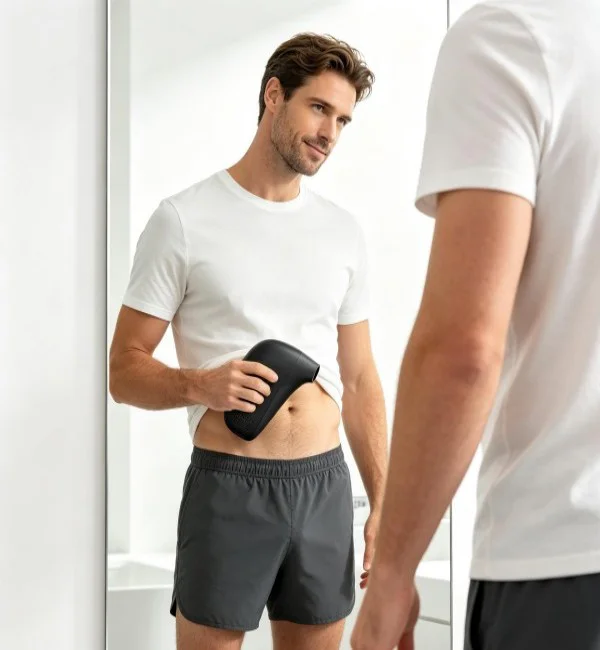
When patients ask what is the treatment for prostatitis or look for a sustainable natural cure for enlarged prostate discomfort, they are confronting an underlying vascular and metabolic stall. Chronic non-bacterial pelvic inflammation and progressive stromal growth persist because compressed pelvic micro-vessels create localized tissue hypoxia and fluid stagnation. Targeted 960nm photobiomodulation (PBM) delivers concentrated near-infrared photons deep through the pelvic floor to stimulate microcirculation, reduce interstitial swelling, and boost mitochondrial energy inside congested stromal tissue. Unlike continuous pharmaceutical therapies that burden the gastrointestinal tract and liver, this non-invasive modality offers targeted physical recovery with zero systemic chemical load.
When Pelvic Pressure Takes Over Every Hour of Your Day
Prostatic discomfort alters every facet of daily life. The transition from unconscious bodily ease to constant vigilance happens gradually, then dominates your routine.
The daily friction takes predictable, exhausting forms:
Fragmented Sleep Cycles: Waking up three to five times every night, standing over the toilet waiting out agonizing hesitation, only to produce a weak, interrupted trickle.
Perineal Heaviness: Enduring a constant, dull, golf-ball sensation between your legs that makes sitting at an office desk, driving home in traffic, or dining out painful.
Urgency Anxiety: Keeping mental maps of every restroom along your commute, constantly calculating whether you can sit through a sixty-minute business meeting without a sudden dash.
Chronic Daytime Exhaustion: Facing professional deadlines and family commitments on disrupted sleep, weighed down by nagging pelvic ache and mental fog.
First-line medical interventions often introduce difficult trade-offs. Alpha-blockers relax the bladder neck, but frequently cause postural dizziness, chronic fatigue, and retrograde ejaculation.
5-alpha reductase inhibitors can reduce glandular volume over six to twelve months, but carry clinical warnings for reduced libido, erectile issues, and mood shifts.
Meanwhile, common home options like sitz baths and surface heating pads dissipate thermal energy within the upper 2 millimeters of skin, never reaching the prostate gland buried deep within the pelvic cavity.
The Root Physiology: Pelvic Congestion and the Metabolic Bottleneck
Finding what is the best treatment for enlarged prostate symptoms requires understanding the microvascular anatomy of the male pelvic floor:
The prostate is encapsulated by dense fibrous connective tissue and wrapped in the venous networks of Santorini’s plexus. As cellular proliferation or chronic muscular guarding constricts these micro-vessels, blood flow stagnates.
This creates a localized hypoxic pocket where metabolic waste products—such as prostaglandins, bradykinin, and cellular debris—pool without functional lymphatic clearance.
Starved of oxygen and glucose, local stromal and smooth muscle cells suffer an acute shortage of adenosine triphosphate (ATP), the vital cellular fuel required to maintain healthy membrane polarization and muscle relaxation.
Instead of draining naturally, the gland remains congested and firm, exerting persistent mechanical pressure on the prostatic urethra.
Surface salves and chemical blockers merely numb discomfort or alter systemic hormones without resolving the dense vascular deadlock locked deep in the pelvis.
The Physics of 960nm: Overcoming the Deep Tissue Barrier
Standard consumer wellness panels rely on 630nm to 660nm visible red light. These wavelengths scatter immediately in the epidermis, failing to traverse perineal subcutaneous fat and pelvic musculature.
Standard near-infrared light at 850nm penetrates deeper, yet encounters significant absorption by microvascular hemoglobin.
A calibrated 960nm near-infrared beam operates in a dedicated optical window. It features low melanin scatter and bypasses high water-absorption barriers, allowing active photon packets to pass smoothly through dense perineal skin, fascia, and the levator ani muscle straight into the congested prostatic stroma.
Perineal Skin & Dermis (0–3 mm):   ████████████████████████████████████████
                                   ▼ 650nm: Energy captured in outer dermis
Pelvic Floor Muscle (3–25 mm):     ▒▒▒▒▒▒▒▒▒▒▒▒▒▒▒▒▒▒▒▒▒▒▒▒▒▒▒▒▒▒▒▒▒▒▒▒▒▒▒
                                   ▼▼▼ 850nm: Power drops across dense muscle
Prostatic Glandular Bed (25–55 mm):░░░░░░░░░░░░░░░░░░░░░░░░░░░░░░░░░░░░░░░
                                   ▼▼▼▼▼▼ 960nm: Direct optical penetration to deep stroma
Once 960nm photons reach the congested glandular bed, they trigger a biological repair sequence:
Cytochrome c Oxidase Excitation: Near-infrared light targets complex IV of the mitochondrial electron transport chain, photodissociating inhibitory nitric oxide (NO) and restoring cellular oxygen respiration.
Accelerated ATP Synthesis: Cellular energy generation increases, providing smooth muscle cells with the metabolic energy needed to release involuntary pelvic spasms and restore muscular compliance.
Microvascular Redistribution: Liberated nitric oxide diffuses into surrounding capillary walls, promoting vasodilation, easing interstitial fluid pressure, and clearing stagnant inflammatory metabolites from the pelvic floor.
This targeted biological mechanism provides clear physical medicine logic, proving that light therapy relieves symptoms by restoring cellular bioenergetics rather than relying on abrasive physical manipulation.
Objective Method Comparison for Pelvic Support
Evaluation Dimension
Prescription Alpha-Blockers & 5-ARIs
Sitz Baths & Superficial Heating Pads
Targeted 960nm Deep Photobiomodulation
Tissue Penetration Depth
Systemic chemical circulatory distribution
1 to 2 mm (confined to perineal skin)
35 to 55 mm (traverses pelvic floor to prostate)
Cellular Mechanism
Blocks receptor sites or alters DHT synthesis
Surface thermal relaxation of skin
Excites Cytochrome c Oxidase; elevates ATP
Side Effect & Toxicity Risk
Sexual dysfunction, orthostatic dizziness
Low risk, but risks superficial scalds
Zero systemic toxicity; non-invasive physical energy
Home Usability
Oral dosage with ongoing pharmacy refills
Messy water preparation, immobile setup
Handheld, quiet, portable 12–15 min daily sessions
Cost Over 1 Year
$320 – $800 (recurring prescriptions, visits)
$40 – $95 (basins, bath salts, heating pads)
Single equipment investment; zero recurring costs
Documented Clinical Observation: Pelvic Rehabilitation Record
The following observational data comes from a structured clinical tracking log evaluating an outpatient using targeted light therapy alongside basic pelvic health modifications.
Patient Background: 54-year-old male, senior financial analyst and corporate consultant.
Clinical Presentation: Chronic pelvic pain syndrome (CPPS / Category IIIa non-bacterial prostatitis) accompanied by mild BPH (2-year history; prolonged sitting pain, nocturnal frequency, stopped tamsulosin due to severe morning dizziness).
Baseline Diagnostic Metrics: NIH-Chronic Prostatitis Symptom Index (NIH-CPSI) total score: 28/43 (severe range: Pain 13/21, Urinary 7/10, Quality of Life 8/12). International Prostate Symptom Score (IPSS): 19/35. Nighttime awakenings: 3.8 times per night.
Structured 8-Week Rehabilitation Progression
Weeks 1–2 (Microvascular Decongestion Phase): Targeted 960nm beam applied to the perineal midline for 15 minutes once daily before evening rest.
Results: Sitting discomfort along the perineum softened by day 10. Nighttime bathroom trips dropped from 3.8 to 2.2 per night.
Results: Urinary stream initiation time shortened noticeably; NIH-CPSI pain domain dropped from 13 to 6. Nighttime awakenings stabilized at 1 per night.
Weeks 5–8 (Maintenance & Stability Phase): Application frequency shifted to 3 sessions per week for long-term pelvic maintenance.
Results: Final NIH-CPSI score reached 8/43 (mild range; QoL improved to 2/12). IPSS dropped to 6/35. Patient completed 8-hour desk workdays without perineal cushioning.
“Sitting through morning board meetings felt like perching directly on a hot rock. The throbbing between my legs made focus impossible, and waking up four times a night left me running on pure adrenaline. The pills made me lightheaded every time I stood up from my desk.
Using the 960nm device was completely different from hot sitz baths. There was no water mess or skin burning—just a calm, deep warmth that seemed to sink straight into the pelvic floor. By the fourth week, I was sleeping through the night until 5 AM, and that heavy ache was finally gone.”
— Recorded User Case Log, Pelvic Health Follow-up
Operating Sensations, Safety Boundaries, and Contraindications
Applying a calibrated 960nm optical device does not produce electric shocks, abrasive vibration, or skin irritation. Users experience a comfortable, deep thermal sensation that gradually spreads through the pelvic floor as local blood vessels dilate and muscle tension eases.
Appropriate Candidates
Men managing persistent urinary hesitancy, nighttime awakenings, or perineal pressure associated with non-bacterial pelvic stasis.
Individuals seeking a non-drug home method to support their daily pelvic comfort and bladder outflow.
Clear Safety Boundaries & Contraindications
Active Malignancies: Do not apply active light beams directly over diagnosed prostate cancer, pelvic tumors, or active bladder lesions.
Implanted Electronic Devices: Avoid positioning active optical units directly over sacral nerve modulators or cardiac electronic implants.
Acute Bacterial Prostatitis: If sudden high fever, chills, severe acute urinary retention, or cloudy urethral discharge develop, seek immediate emergency medical care for antibiotic intervention.
Medical Heat Restrictions: Consult an attending urologist if you have a medical diagnosis contraindicating localized deep warmth in the pelvic region.
Phased Recovery Timeline and Financial Practicality
Pelvic tissues and congested microvascular networks recover along predictable physiological milestones:
Weeks 1 to 2 (Vascular Priming): Deep blood flow expands through the pelvic floor. Stagnant fluid begins draining from congested stromal spaces, easing perineal pressure.
Weeks 3 to 4 (Muscular Relaxation): Restored cellular ATP relieves involuntary smooth muscle spasms around the bladder neck. Nighttime bathroom trips decrease, and urine stream velocity improves.
Week 5 and Beyond (Routine Maintenance): Treatments shift to two or three sessions weekly, protecting pelvic tissues against recurring congestion from long periods of sitting.
The Real Cost: Specialty Visits vs. Home Management
Managing chronic pelvic and prostate conditions through ongoing clinic appointments and monthly prescriptions creates significant cumulative expenses:
Ongoing Clinical Consultations & Prescriptions:
[Urology Follow-ups] + [Monthly Prescription Copays] + [Specialist Labs] = $1,100–$2,400+ annually

Dedicated At-Home 960nm Light Device:
A single one-time setup that equips your entire household for consistent, stress-free daily use.
If you are evaluating safe home protocols, reviewing the technical parameters of deep-tissue photobiomodulation is an essential step. Learn more about beam spot dimensions, optical power density, and step-by-step instructions by visiting the guide to what is the best treatment for enlarged prostate discomfort for complete technical specifications.
Practical Questions and Real-World Answers
Can photobiomodulation replace my prescribed urological medications?
No. Photobiomodulation is a supportive physical modality designed to relieve tissue congestion, boost ATP, and improve local microcirculation. Never discontinue prescription medications without consulting your prescribing physician. Many men use targeted light alongside their medical plans to reduce reliance on secondary symptom relief.
How is a 960nm device different from sitting on a standard heating pad?
Standard heating pads transfer superficial conductive heat that disperses within the skin and superficial adipose tissue, often causing cutaneous sweat and irritation. A calibrated 960nm near-infrared beam bypasses surface barriers, delivering photon energy deep through the pelvic floor musculature directly to the congested prostatic tissue.
How often should I use the light on the perineal area each day?
Clinical observations show that one 12 to 15-minute daily session applied to the perineal region provides an optimal photon dose. Running extended sessions beyond 20 minutes offers no added therapeutic benefit, as cellular photoreceptors reach natural saturation within that standard timeframe.
Facial motor weakness, eyelid retraction failure, and labial droop persist when cranial nerve VII remains mechanically strangulated inside the Fallopian canal, trapped in microvascular edema, cellular hypoxia, and bioenergetic breakdown. Targeted ...
An inflamed prostate and progressive glandular enlargement persist because impaired pelvic microcirculation and chronic venous stasis trap deep parenchymal tissue in a state of continuous hypoxia. Men searching for a sustainable, natural way to sh...
Persistent nasal congestion, itchy eyes, and unrelenting morning drainage persist because swollen mucosal tissue and sluggish microvascular flow create a physical bottleneck inside the nasal passages. While daily antihistamines and steroid sprays ...
Facial motor asymmetry and prolonged flaccidity persist when the seventh cranial nerve remains trapped in microvascular edema, neural hypoxia, and mitochondrial bioenergetic exhaustion inside the narrow Fallopian canal. Targeted 960nm photobiomodu...
 Handheld Home-Use Therapy Device