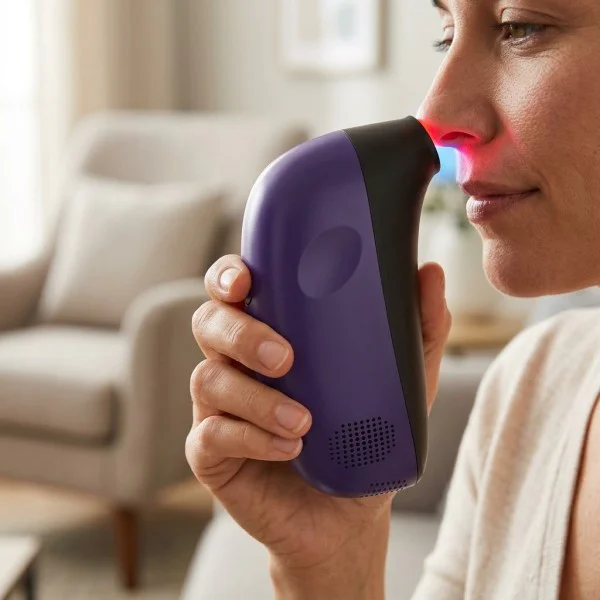
Chronic nasal congestion persists because stagnant interstitial fluid pools within rigid facial bone structures, creating a localized hypoxic state that topical sprays cannot resolve. When evaluating red light therapy for allergic rhinitis alongside typical options like the best homeopathic medicine for allergic rhinitis, surface-level solutions fail to penetrate deep anatomical blockages. Targeted 960nm photobiomodulation (PBM) delivers high-transmittance optical energy directly through facial bones and cartilaginous barriers to stimulate mitochondrial respiration, accelerate microvascular drainage, and downregulate chronic inflammatory mediators. Because this physical modality acts via targeted photon absorption rather than biochemical suppression, it provides zero metabolic burden on the liver and avoids the rebound swelling associated with pharmaceutical decongestants.
The Daily Toll of Chronic Airway Stagnation
Waking up with your jaw tight and your tongue parched from forced mouth breathing sets an exhausting baseline for the day. Trying to navigate client meetings or family responsibilities while stifling violent sneezing fits, constantly reaching for tissues, and pressing your fingers against throbbing cheekbones drains cognitive focus. When your upper respiratory passages remain swollen shut, oxygen delivery drops, compounding daily mental fatigue and irritability.
Many people explore alternative options seeking a rhinitis natural treatment, yet encounter clear physical ceilings:
Decongestant Sprays (Oxymetazoline): Provide rapid temporary shrinkage through aggressive chemical vasoconstriction, but frequently trigger severe rebound swelling (rhinitis medicamentosa) after only three to five days of continuous use.
Homeopathic Remedies & Herbal Extracts: Many patients seek the best homeopathic medicine for allergic rhinitis hoping for gentle support, but highly diluted remedies lack the physical force required to resolve structural turbinate edema and deep vascular pooling.
Oral Antihistamines: Block circulating histamine to reduce itching and rhinorrhea, yet leave the underlying vascular engorgement of the turbinates largely untouched while inducing dry eyes and daytime lethargy.
Warm Compresses & Facial Steamers: Warm air soothes superficial nasal mucosa for twenty minutes, but convective heat dissipates across dermal tissue without reaching deep sinus anatomy.
The Deep Tissue Deadlock: Why Sinus Swelling Refuses to Clear
Chronic nasal obstruction is driven by a localized microcirculatory breakdown:
[Allergenic or Environmental Trigger]
                  │
                  ▼
[Vascular Hyperpermeability & Endothelial Leak]
                  │
                  ▼
[Fluid Trapped in Rigid Maxillary & Ethmoid Cavities]
                  │
                  ▼
[Capillary Compression, Local Hypoxia & Acidosis]
                  │
                  ▼
[Loss of Ciliary Motility & Persistent Lymph Stasis]
When local microcirculation stalls, oxygen cannot reach the mucosal lining. Deprived of oxygen, epithelial cells lose cellular energy, paralyzing the cilia responsible for mucus clearance. Cellular debris, lactic acid, and inflammatory cytokines pool in place, irritating local trigeminal nerve endings and perpetuating a chronic inflammatory loop. Surface remedies fail because they do not restore the microvascular and metabolic balance needed to drain this deep fluid accumulation.
960nm Optical Physics: Bypassing the Surface Barrier
Light therapy cannot help if photons fail to reach target tissues. The human face presents significant optical obstacles: water, melanin, and hemoglobin.
650nm (Visible Red Light): Heavily absorbed by melanin and capillary blood. More than 90% of photons extinguish within 1 to 2 millimeters of skin, making it incapable of reaching deep turbinates.
850nm (Standard Near-Infrared): Penetrates superficial soft tissues well, but scatters significantly when encountering dense cartilage and cortical facial bone.
960nm (Targeted Deep NIR): Sits in an optimal optical transmission window characterized by lower scattering across bone and balanced water absorption. This allows 15 to 25 millimeters of focused penetration through the paranasal skeleton into congested submucosal linings.
Once 960nm light reaches hypoxic tissues, it drives cellular repair through verified photobiological pathways:
Cytochrome c Oxidase Activation: Photons target Complex IV of the mitochondrial respiratory chain, restoring electron flow and driving adenosine triphosphate (ATP) production in stressed mucosal cells.
Nitric Oxide Photodissociation: Targeted light frees nitric oxide (NO) from mitochondrial binding sites, triggering local microvascular dilation to re-establish blood flow without altering systemic pressure.
Lymphatic Evacuation: Energized cells resume active ion pumping, allowing swollen turbinates to clear trapped interstitial fluid and easing pressure on sensory nerve pathways.
Comparing Chronic Airway Interventions
Evaluation Metric
Chemical Sprays & Antihistamines
Surface Heat & 650nm Red Light
Targeted 960nm Photobiomodulation
Tissue Penetration Depth
Topically coats surface epithelium only
1–2 mm (limited to dermal layers)
15–25 mm (penetrates bone, cartilage, and mucosa)
Cellular Mechanism
Blocks receptor sites or forces chemical constriction
Superficial cutaneous thermal transfer
Energizes mitochondrial ATP and triggers microvascular nitric oxide
Dependency & Rebound Risk
High risk of rebound edema and mucosal thinning
None
None; clean biophysical modulation
Daily Home Convenience
Portable, but requires endless daily dosing
Messy preparation with short-lived relief
8–10 minute structured handheld session
Annual Cumulative Cost
$300 – $750 in recurring monthly refills
$40 – $100 for steamers and warm wraps
One-time equipment investment with lasting multi-year utility
Clinical Case Tracking: Monitored Photobiomodulation Protocol
The following case evaluates an individual using high-intensity 960nm photobiomodulation at home for chronic, treatment-resistant nasal symptoms.
Patient Profile and Baseline Diagnostics
Age: 51
Sex: Female
Diagnosis: Chronic perennial allergic rhinitis with bilateral inferior turbinate hypertrophy and secondary ethmoid pressure
Baseline Status: SNOT-22 (Sino-Nasal Outcome Test) score of 64/110. Total Nasal Symptom Score (TNSS) of 10/12. Severe nighttime airway resistance, morning frontal headaches, and complete loss of efficacy from fluticasone propionate sprays.
Protocol: Targeted 960nm emitter positioned over bilateral paranasal regions and canine fossae, 7 minutes per side once daily at an irradiance of 120 mW/cm².
Progress Timeline and Observed Data
Checkpoint
Phase
Documented Structural & Symptomatic Response
SNOT-22 Score
TNSS Score
Day 0
Baseline
Marked bilateral mucosal edema, pale boggy turbinates, total reliance on mouth breathing
64 / 110
10 / 12
Day 14
Microvascular Reset
Softening of deep cheekbone tightness; nasal breathing maintained through 4-5 hours of sleep
44 / 110
7 / 12
Day 30
Edema Clearance
Visible reduction in turbinate volume on anterior rhinoscopy; discontinued all nasal steroid sprays
22 / 110
3 / 12
Day 60
Long-Term Stability
Full daytime and nighttime nasal patency; waking up with clear passages and no recurring headaches
12 / 110
1 / 12
“I spent more than twelve years cycling through steroid sprays, allergy shots, and saline pots, but my cheekbones always felt swollen and tender to the touch. By 3 PM every day, my sinuses felt inflamed, and I couldn’t sleep without propping myself up on three pillows. When I tried 960nm light directly along my nose and cheeks, it didn’t feel like typical red light. It produced a mild, deep, soothing warmth that felt like it worked straight through the bone. After three weeks, the constant throbbing behind my nose settled down. I can finally sleep flat on my back and breathe clearly through both nostrils every morning.”
Sensations, Candid Boundaries, and Clinical Contraindications
Using a high-intensity 960nm device produces a comfortable, deep warming sensation that eases facial tension. It does not cause cutaneous burning, surface stinging, or electrical shocks.
Maintaining realistic boundaries ensures safe and responsible home use:
Contraindications: Never use the device over active malignant tumors, active facial bleeding sites, or near active medical implants like pacemakers or neurostimulators. Always wear wavelength-certified near-infrared safety goggles during every facial application.
Physiological Recovery Timeline and Economic Analysis
Biological tissue repair follows a progressive path rather than an instantaneous fix:
Weeks 1 to 2 (Microvascular Launch): Local microvessels expand, oxygenation improves, and deep facial pressure around the cheekbones softens.
Weeks 3 to 4 (Tissue Decongestion): Trapped interstitial fluid drains, turbinates regain their normal size, and nighttime nasal airflow stabilizes.
Long-Term Management (Weekly Maintenance): Two to three short weekly sessions help maintain ciliary activity and protect tissues against everyday environmental triggers.
Frequent appointments at physical rehabilitation or specialty clinics can run $150 to $280 per session, easily totaling thousands of dollars every year in travel, copays, and missed work. Having a reliable, medical-grade 960nm handheld device provides an accessible, non-pharmacological solution right at home for you and your family.
Frequently Asked Questions
Can 960nm light therapy serve as a rhinitis natural treatment on its own?
It works best as the core biophysical modality in a broader management routine. While 960nm light restores cellular energy and clears trapped fluid beneath facial bones, combining it with high-efficiency particulate air (HEPA) filtration and basic saline rinses helps reduce external allergen exposure, supporting your nasal tissues from both directions.
How does 960nm compare to generic red light therapy for allergic rhinitis clips?
Most commercial nose clips use low-power 650nm visible red LEDs. While 650nm light can calm surface skin, it reflects off facial cartilage and bone. The 960nm wavelength sits in an optimal transmission window that passes cleanly through dense facial bone, delivering therapeutic energy into the deeper cavities where chronic swelling takes hold.
Is this modality safer than looking for the best homeopathic medicine for allergic rhinitis?
Rather than relying on unproven dilutions, 960nm photobiomodulation is based on established biophysical science. It stimulates mitochondrial Cytochrome c Oxidase and boosts microvascular blood flow directly in target tissues, offering a reliable, drug-free way to relieve airway resistance without systemic side effects.
Chronic rhinitis persists when unresolved interstitial swelling paralyzes local mucosal clearance and locks the paranasal passages in a state of stagnant hypoxia. While typical searchers seek an overnight natural cure for rhinitis, lasting stabili...
Chronic rhinitis persists because vascular dysregulation and stagnant mucosal microcirculation leave deep nasal passages trapped in an ongoing inflammatory loop. When searching for an elusive allergic rhinitis cure, patients often discover that co...
Lateral epicondylalgia persists because repetitive mechanical tension triggers microvascular ischemia and angiofibroblastic degeneration at the common extensor tendon origin, locking dense connective fibers in an energy-starved state. While athlet...
Peripheral facial nerve palsy persists because the swollen seventh cranial nerve remains physically compressed within the narrow Fallopian canal of the temporal bone, choking its microvascular supply and trapping motor axons in an ischemic state. ...
 Handheld Home-Use Therapy Device