Persistent pelvic pressure, nighttime waking, and an obstructed urinary flow linger when deep prostatic tissue remains locked in microvascular stagnation, tissue hypoxia, and impaired lymphatic return. Targeted 960nm photobiomodulation (PBM) delivers non-ionizing optical energy through dense perineal muscles, connective fascia, and the fibrous capsule straight into congested glandular tissue, restoring cellular respiration and venous outflow. Unlike pharmaceutical options that require hepatic processing or introduce hormone-blocking consequences, this biophysical method provides targeted tissue decongestion with zero metabolic toxicity or chemical dependency.
Whether you are weighing the physical trade-offs of long-term hormonal therapy for prostate enlargement, searching for answers regarding próstata inflamada síntomas y tratamiento, or evaluating a non-invasive prostate gland natural treatment, delivering calibrated near-infrared energy directly to the pelvic floor addresses the underlying microcirculatory congestion where surface heating fails.
The Daily Toll of Chronic Pelvic Heaviness and Interrupted Sleep
Living with constant pelvic tension alters how you manage every hour of your day. You get out of bed three or four times every night, standing over the toilet in the dark waiting for a slow, hesitant stream that never fully empties your bladder. Daytime is no easier; sitting through an hour-long meeting or driving through traffic triggers a deep, aching fullness between your thighs—a sensation akin to sitting directly on a firm billiard ball—that forces you to shift constantly.
Standard frontline strategies often present frustrating therapeutic compromises:
Alpha-blockers and 5-alpha reductase inhibitors: Often prescribed to relax the bladder neck or shrink glandular volume, but they routinely cause bothersome side effects such as retrograde ejaculation, reduced libido, postural dizziness, and persistent brain fog.
Systemic endocrine modulation: While indicated for severe clinical targets, systemic hormonal therapy for prostate conditions carries systemic metabolic costs, fatigue, loss of muscle mass, and emotional flattening.
Empiric antibiotics: Frequently prescribed for chronic prostatitis, yet over 90% of chronic cases are non-bacterial, meaning repetitive antibiotic cycles wipe out gut microflora without relieving aseptic vascular congestion.
Warm sitz baths and standard heating pads: Offer temporary relaxation at the skin surface, but conductive heat dissipates entirely within the dermis and subcutaneous fat, failing to penetrate the dense pelvic floor musculature to reach the prostate capsule.
Deep-Tissue Stagnation: The Underlying Metabolic Deadlock
Pelvic fullness and chronic urinary hesitancy rarely stem from isolated smooth muscle tension alone. Instead, they reflect a self-perpetuating vascular and metabolic deadlock deep within the pelvic bowl:
Because the prostate is anatomically shielded behind the pubic bone, thick perineal transverse muscles, and dense fibrous fascia, shallow remedies cannot alter this stagnant microenvironment. Breaking this pattern requires a biophysical stimulus capable of penetrating deep tissue barriers to restore cellular respiration and autonomous vascular flow.
The 960nm Optical Advantage for Deep Pelvic Structures
Photobiomodulation depends entirely on wavelength-specific optical penetration. Shorter wavelengths in the visible red spectrum (630nm–660nm) scatter heavily across melanin and dermal hemoglobin, losing virtually all their therapeutic energy within the first two to four millimeters of tissue.
Targeted 960nm near-infrared light operates within an optimal optical window characterized by minimal scattering through dense fibrous fascia, skeletal muscle, and glandular capsules:
OPTICAL TRANSMISSION DEPTH IN HUMAN PELVIC TISSUE
========================================================================
Wavelength Spectrum     Primary Tissue Scatter           Effective Penetration
------------------------------------------------------------------------
650nm (Visible Red)     Melanin & Superficial Dermis     Shallow (2-4mm)
850nm (Standard NIR)    Dermal Collagen & Hemoglobin     Moderate (6-10mm)
960nm (Targeted NIR)    Deep Perineal Muscle & Fascia    Deep (15-25mm)
========================================================================
Cellular Mechanisms of Recovery
When 960nm photons reach hypoxic stromal, glandular, and vascular endothelial cells, they initiate documented biochemical repair pathways:
Cytochrome c Oxidase Photo-Activation: Photons are absorbed by unit IV of the mitochondrial respiratory chain, displacing inhibitory nitric oxide and restoring the flow of electrons.
ATP Resynthesis: Cellular energy rebounds, giving exhausted pelvic floor and vascular smooth muscle cells the fuel needed to operate ion pumps and balance fluid exchange.
Targeted Nitric Oxide Release: Photodissociation releases controlled, physiological levels of nitric oxide into local micro-vessels, dilating the periprostatic venous plexus without producing excess inflammatory heat.
Lymphatic Decongestion: Normalizing microvascular pressure allows accumulated metabolic byproducts and trapped interstitial fluids to drain into regional pelvic lymphatic channels, softening tight, swollen tissue.
Comparing Pelvic and Prostate Care Modalities
Evaluation Parameter
Daily Oral Medications (Alpha-blockers / 5-ARIs)
Warm Sitz Baths & 650nm Surface Light
Targeted 960nm Photobiomodulation
Tissue Penetration Depth
Systemic absorption; limited local concentration
1–3 mm (arrested in perineal skin layers)
15–25 mm (transits pelvic floor to prostate)
Cellular Mechanism
Receptor blockade or hormonal conversion enzyme inhibition
Superficial dermal vasodilation; zero ATP generation
Cytochrome c Oxidase activation and lymphatic clearance
Side Effect & Risk Profile
High (sexual dysfunction, dizziness, gut dysbiosis)
Negligible
Non-invasive, zero chemical rebound, non-thermal
Home Usability
Quick administration, but requires indefinite refills
Messy, labor-intensive, and provides short-lived relief
10–12 minute quiet, non-invasive home sessions
Annual Cumulative Cost
$400–$1,100 recurring in prescriptions and co-pays
$30–$60 (minimal therapeutic return)
Single device acquisition with multi-year household utility
Detailed Clinical Case Record
The following data outlines an 8-week structured home protocol monitored for a 59-year-old male regional sales manager presenting with chronic non-bacterial prostatitis (Category IIIa CPPS) and symptomatic benign prostatic enlargement.
Patient Profile and Baseline Parameters
Age / Biological Sex: 59 / Male
Clinical Presentation: Severe perineal aching worsened by highway driving, nocturia (4 times per night), post-void dribbling, poor urinary stream
Prior Therapies: Tamsulosin 0.4mg daily (discontinued due to severe dizziness and dry ejaculation), two rounds of oral levofloxacin (negative cultures), hot water sitz baths
Application Target: Direct perineal contact between the base of the scrotum and the anus, along with suprapubic placement over the lower bladder margin.
Treatment Schedule: 12 minutes per session once daily for weeks 1 through 4; tapering to 3 maintenance sessions per week during weeks 5 through 8.
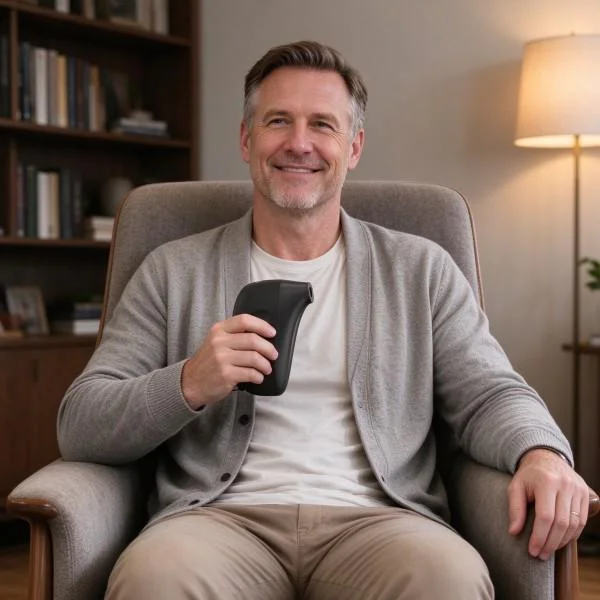
“Driving four hours between customer visits had become unbearable. I had this constant, throbbing tightness in my lower pelvis, and waking up four times every single night left me exhausted by midday. Prescription pills caused sexual side effects and dizzy spells I simply could not live with, and hot tubs only felt soothing while I was sitting in the water. Using the 960nm handheld unit was an entirely different experience. There was no vibration, pinching, or sharp heat—just a deep, soothing warmth that felt like it reached deep into the center of my pelvic floor. By the third week, my urinary stream started without hesitation, and I was waking up only once a night. Being able to drive without pain and sit through business dinners comfortably has given me my life back.”
Sensory Expectations and Clinical Safety Boundaries
Applying 960nm photobiomodulation to the pelvic area is gentle, comfortable, and straightforward, but recognizing its physical profile and clinical boundaries ensures safe and responsible use.
Expected Physical Sensation
The near-infrared energy is non-thermal and non-ablative. Within two to three minutes of starting a session, users notice a deep, soothing sensation of warmth across the perineum as microvascular blood flow expands. There is no stinging, electric twitching, vibration, or surface burning. The pelvic floor feels noticeably relaxed rather than irritated.
Clinical Contraindications
Active Malignancies: Never apply photobiomodulation directly over confirmed, suspected, or untreated prostate cancer, bladder tumors, or pelvic malignancies.
Acute Bacterial Prostatitis: High fever, chills, acute urinary retention, and severe burning upon urination indicate an acute bacterial infection requiring emergency urological care and intravenous antibiotics.
Active Pelvic Bleeding: Do not use light fields over acute hematuria, unhealed transurethral surgical wounds, or active hemorrhoidal bleeding.
Implanted Electronics: Men with implanted sacral nerve stimulators or cardiac pacemakers situated close to the pelvic or lower abdominal axis must consult their physician before using near-infrared light fields.
Recovery Milestones and Financial Value
Restoring vascular balance in deep pelvic tissue follows a steady physiological repair schedule. Photobiomodulation does not force sudden chemical shifts; it helps microvascular beds clear trapped fluid, lower tension, and rebuild cellular efficiency.
PROGRESSIVE RECOVERY MILESTONES
========================================================================
Phase 1: Weeks 1–2 (Microvascular Decongestion)
* Noticeable reduction in perineal burning, sitting tenderness, and fullness
* Reduced nighttime urinary frequency; improved comfort on morning waking

Phase 2: Weeks 3–4 (Tissue Drainage & Fluid Clearance)
* Increased urinary stream velocity and reduction in post-void dribbling
* Tolerance of long car rides and standard office chairs without flare-ups

Phase 3: Weeks 5+ (Long-Term Maintenance)
* Transition from daily sessions to 2-3 weekly maintenance applications
* Sustained pelvic floor comfort, steady nighttime sleep, and restored stamina
========================================================================
Visiting specialized physical therapy clinics or outpatient pelvic health centers for pelvic laser sessions typically costs between $100 and $180 per visit. Over a standard ten-week care program, clinic copays, travel time, and missed work hours frequently add up to over $1,500. Having an ergonomic, multi-wavelength 960nm handheld system at home provides clinical-grade optical support whenever discomfort begins, offering immediate peace of mind and long-term utility for the whole household.
Practical Setup and Expert FAQ
When exploring supportive care alongside dietary adjustments, such as eliminating bladder irritants and maintaining proper hydration, near-infrared light therapy delivers deep cellular support. Reviewing device technical parameters, broad beam coverage, and gentle positioning methods ensures you deliver effective optical energy directly to the affected pelvic floor tissue without creating mechanical irritation.
Frequently Asked Questions
Can 960nm light therapy help if my prostate symptoms are non-bacterial?
Yes. In fact, more than 90% of chronic prostatitis cases are non-bacterial (Category III CPPS), driven by pelvic floor hypertonicity, venous stagnation, and local tissue hypoxia rather than an active pathogen. The 960nm wavelength bypasses surface barriers to stimulate cellular ATP production, release localized nitric oxide, and drain stagnant fluid from the periprostatic plexus.
How does 960nm photobiomodulation differ from a standard pelvic heating pad?
Heating pads rely on thermal conduction, which transfers heat only into the epidermis and superficial fat before blood flow carries it away. Calibrated 960nm light uses specialized near-infrared photons that travel 15 to 25 millimeters deep through skin and pelvic floor muscle without surface burns, activating mitochondrial enzymes directly inside deep tissues.
How often should I use the light once my pelvic pain subsides?
Once you achieve consistent comfort, an open urinary stream, and uninterrupted sleep—typically around week 4 or 5—you can step down from daily sessions to a maintenance schedule of two or three 10-minute sessions per week. This prevents venous stagnation from rebuilding and maintains healthy local microcirculation.
Chronic sinonasal congestion persists because the submucosal venous sinusoids in the nasal turbinates remain locked in vascular engorgement and fluid stagnation, starving local tissues of oxygen. Targeted 960nm photobiomodulation bypasses superfic...
Navigating what to do for mastitis requires addressing localized interstitial edema before milk stasis triggers an acute inflammatory cascade. Recurrent plugged ducts stem from microvascular compression within alveolar parenchyma, which pinches na...
 Handheld Home-Use Therapy Device