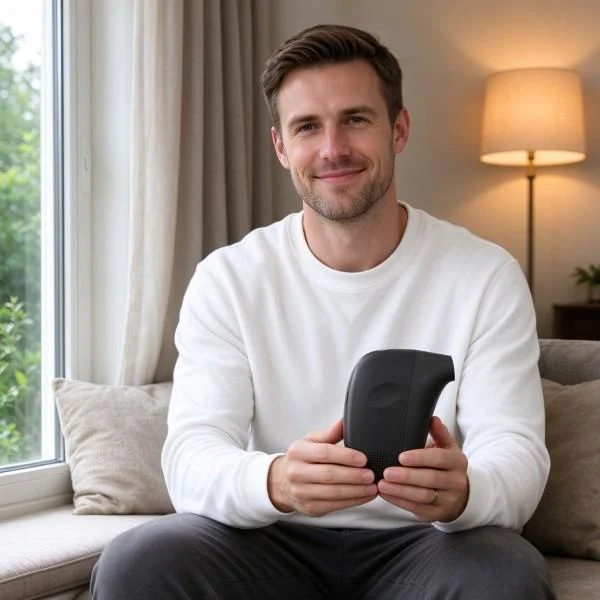
Chronic pelvic pain and persistent urinary obstruction refuse to clear because microvascular networks inside the dense prostatic capsule collapse under interstitial fluid pressure, starving deep stromal tissue of oxygen. While countless men search for an elusive cura definitiva para la próstata or cycle through antibiotics trying to find an effective treatment for prostatitis, standard systemic pills cannot penetrate this localized circulatory bottleneck. Targeted 960nm photobiomodulation (PBM) introduces an evidence-based biophysical intervention: near-infrared photons pass directly through perineal musculature to reactivate mitochondrial cellular respiration and clear trapped fluids. This targeted modality provides lasting tissue decompression without hepatic metabolic toxicity, gastrointestinal erosion, or hormonal disruptions.
The Hidden Strain of Pelvic Pain and Disrupted Sleep
Living with chronic pelvic floor tension turns ordinary daily routines into constant physical torment. Sitting through lengthy meetings or driving during rush hour triggers a deep, throbbing ache between the thighs that feels like perching on an unyielding wooden block. Nights offer no genuine recovery: you wake up three to five times, stumbling to the bathroom only to strain against a weak, interrupted stream that never fully empties the bladder. The lingering fatigue, paired with the quiet anxiety of mapping out restrooms during family outings or social events, gradually erodes your work focus and peace of mind.
Extended courses of empirical antibiotics wipe out beneficial gut microbiota and trigger chronic gastrointestinal distress without clearing non-bacterial inflammatory fluid.
Alpha-blockers loosen the smooth muscle tone of the bladder neck for temporary flow relief, yet frequently trigger lightheadedness, nasal stuffiness, and retrograde ejaculation.
Oral NSAIDs blunt acute nerve irritation, but chronic daily administration risks severe gastric ulceration, renal stress, and cardiovascular strain.
Sitz baths and surface heating pads provide fleeting topical comfort, yet conductive surface warmth drops off sharply within two millimeters of the skin, completely blocked by dense perineal muscles and fascia.
Root Pathology: The Encapsulated Metabolic Bottleneck
The stubborn recurrence of non-bacterial pelvic inflammation stems from an anatomical trap within the pelvic base. The prostate is tightly encased within a thick, fibroelastic connective-tissue capsule. When low-grade sterile inflammation or neurovascular dysregulation occurs, localized capillary walls become hyperpermeable, spilling plasma into the interstitial matrix faster than the local low-pressure venous plexuses and lymphatic vessels can carry it away.
This swelling drives up intracapsular hydrostatic pressure, physically compressing delicate microcapillaries and low-pressure venules. As blood perfusion stalls, local tissue oxygenation ($pO_2$) plummets. Starved of oxygen, prostatic smooth muscle and stromal cells exhaust their adenosine triphosphate (ATP) reserves, locking the surrounding pelvic floor and levator ani musculature into sustained contraction. Ingested tablets merely wash past this stagnant biological dead zone, leaving the deep hypoxic core untouched.
960nm Photobiology: Bypassing the Dense Perineal Fascia
Delivering effective photon density into the deep pelvic bowl requires precise optical physics. Visible red light (630–660nm) absorbs heavily into epidermal melanin and microvascular hemoglobin, dissipating in the first few millimeters of dermal tissue. Shorter near-infrared light (810–850nm) scatters intensely across the dense collagen bundles of the perineal membrane and pelvic floor musculature.
Targeted 960nm near-infrared radiation operates in an optimal optical window, achieving high photon transmission through dense fascial layers, tendon structures, and deep pelvic tissues:
Tissue Layer
 Perineal Skin   │ 650nm (Red Light)       ──► Absorbed in dermal melanin (<2mm)
                 │
 Pelvic Fascia   │ 850nm (Standard NIR)    ──► Scattered by thick collagen fibers (3–5mm)
                 │
 Prostatic Tissue│ 960nm (Targeted Deep)   ──► Transmits through fascia to deep tissue (15–25mm)
                 ▼
The Cellular Healing Sequence
Cytochrome c Oxidase Photostimulation: 960nm photons excite mitochondrial Complex IV, dislodging inhibitory nitric oxide and restoring the inner-membrane proton gradient.
ATP Synthesis Surge: Adenosine triphosphate production jumps, providing cellular ion pumps with the energy needed to reestablish osmotic balance and halt interstitial fluid leakage.
Endothelial Nitric Oxide Release: Photonic liberation of nitric oxide prompts regional microvascular vasodilation, opening collapsed capillaries and washing out acidic pain metabolites.
Lymphatic Decompression: Restored vascular outflow lowers interstitial hydrostatic pressure, allowing boggy, enlarged tissues to retract naturally and relieving mechanical pressure on the urethral channel.
Clinical Comparison: Modalities for Pelvic Floor Relief
Evaluation Parameter
Long-Term Antibiotics & Alpha-Blockers
Superficial Sitz Baths & Heat Pads
Targeted 960nm Photobiomodulation
Tissue Penetration Depth
Systemic chemical circulation
1–3 mm (dissipates within perineal skin)
15–25 mm (transmits through pelvic fascia)
Cellular Mechanism
Receptor blockade; systemic bacterial suppression
Superficial conductive warmth
Mitochondrial activation, ATP restoration, lymphatic clearance
Side Effect & Safety Profile
High; gut dysbiosis, sexual dysfunction, dizziness
Negligible; temporary cutaneous skin flushing
None; non-ionizing, non-thermal, zero hormonal disruption
Home Usability
High, though requires ongoing prescription refills
Moderate; messy water preparation or short-range pads
Exceptional; compact handheld ergonomic session at home
Annual Financial Impact
$500–$1,200 on recurring prescriptions and copays
$40–$100 on basins, salts, and heating pads
Single hardware acquisition; zero recurring consumable fees
Baseline Status: National Institutes of Health Chronic Prostatitis Symptom Index (NIH-CPSI) score of 29/43, International Prostate Symptom Score (IPSS) of 19/35, nocturia 4 times per night, severe pain while sitting for more than 30 minutes. Past treatments included two 6-week courses of ciprofloxacin (no improvement; caused Achilles tendonitis) and alfuzosin (discontinued due to severe postural dizziness).
Treatment Protocol: Application of a calibrated 960nm handheld photobiomodulation device across perineal and suprapubic acoustic windows, 10 minutes per session, once daily for 8 consecutive weeks.
Longitudinal Progress Log
Timeline
Frequency
Key Measured Metrics
Functional Outcomes & Patient Presentation
Baseline
Intake assessment
NIH-CPSI: 29; IPSS: 19; Nocturia: 4x
Severe perineal ache, fragmented sleep, weak hesitant stream
Week 2
7 sessions/wk
NIH-CPSI: 21; IPSS: 14; Nocturia: 3x
Perineal tightness softened; sitting tolerance extended to 1 hour
Normal sitting tolerance; undisturbed sleep; daytime stamina restored
“For seven years, sitting through project reviews felt like resting on a burning stone. Antibiotics wrecked my digestion, and prescription relaxers made me dizzy at work. The first time I positioned the 960nm device over the perineum, it felt entirely different—just a deep, soothing warmth spreading through the pelvic base without vibration or pinching. By week four, the burning weight had dissipated, I was sleeping through until sunrise without getting up, and my stream was strong and steady. It gave me back normal days.”
Treatment Sensation, Boundaries, and Medical Precautions
A session with a calibrated 960nm device produces a gentle, deeply comforting thermal sensation across the perineum and pelvic base. Because this wavelength operates outside ionizing radiation and extreme thermal cutting parameters, there is no electric shock, skin stinging, or tissue burning.
Safe Application Boundaries
Target Users: Adult men seeking a sustainable home physical therapy approach for non-bacterial pelvic floor congestion, urinary hesitancy, and discomfort from prolonged sitting without pharmaceutical dependence.
Strict Contraindications: Do not apply the light over known active prostate adenocarcinoma or pelvic malignancies, over areas with implanted electronic hardware (such as sacral nerve stimulators), across active open hemorrhages, or during acute febrile bacterial urinary infections requiring systemic antibiotics.
Phased Recovery Timeline and Cost Economics
Phased Functional Milestones
Phase 1 (Weeks 1–2): Microcirculatory Recruitment
  └─ Capillary blood flow improves; initial reduction in perineal heaviness, post-void dribbling, and sitting aches.

Phase 2 (Weeks 3–4): Interstitial Decompression
  └─ Trapped fluid drains; pelvic floor smooth muscle relaxes, dropping nocturia to 1–2 times per night.

Phase 3 (Week 5+): Long-Term Stability
  └─ Transition to twice-weekly maintenance sessions to sustain microvascular resilience and prevent flare-ups.
The Cost Perspective
Managing chronic pelvic and prostate discomfort through recurring urologist visits, specialized imaging, and continuous prescription refills easily reaches $1,800 to $3,600 each year, without accounting for lost working hours and sleep deprivation. Investing in a clinical-grade 960nm handheld system provides targeted optical therapy at home with zero ongoing prescription expenses, delivering reliable support whenever pelvic tension reappears.
Using a calibrated device with verified optical power density and broad spatial coverage provides fast relief across the pelvic floor, helping men maintain active, comfortable lives without drug dependency.
Frequently Asked Questions
Can 960nm light provide a permanent cure for chronic prostatitis?
Photobiomodulation does not alter genetic predispositions or act as an instant miracle. Instead of relying on unverified claims, it addresses the physical drivers of pelvic distress: it drains pooling interstitial fluid, restores cellular energy, and eases chronic smooth muscle tension around the urethral channel to restore healthy urinary function.
How does 960nm light differ from an ordinary heating pad?
Heating pads warm only the outer epidermal layers, with thermal energy dissipating within 2 millimeters of superficial tissue. A targeted 960nm device emits near-infrared photons that travel 15 to 25 millimeters through dense pelvic fascia and muscle, directly stimulating cellular mitochondria.
Can I use 960nm therapy alongside pelvic floor physical therapy?
Yes. Using 960nm light immediately prior to pelvic floor stretches or physical therapy exercises warms and oxygenates the deep musculature, making manual relaxation techniques significantly more comfortable and effective.
Erectile decline persists because pelvic microvascular congestion, cavernous smooth muscle hypoxia, and deep endothelial dysfunction lock the genital vascular bed into an ongoing metabolic deadlock that temporary pills cannot structurally repair. ...
Subjective ringing persists because microvascular hypoperfusion and cellular hypoxia trap inner ear auditory cells in an ongoing metabolic deadlock. Patients continually ask is tinnitus curable while trialing endless remedies for tinnitus, but tru...
Stubborn milk duct blockages persist because localized microvascular edema compresses internal lobular lumens, trapping milk secretions in a hypoxic state that superficial compresses cannot resolve. When looking for how to treat a clogged milk duc...
Navigating what to do for mastitis requires addressing localized interstitial edema before milk stasis triggers an acute inflammatory cascade. Recurrent plugged ducts stem from microvascular compression within alveolar parenchyma, which pinches na...
 Handheld Home-Use Therapy Device